

New York City has always been a hotbed of organized crime. The Italian Mafia gets most of the attention, thanks to movies and shows like The Godfather, Goodfellas, and The Sopranos. Names like John Gotti, Carlo Gambino, and Paul Castellano have become part of American criminal folklore. But for several decades, operating in a small section of Manhattan, there was another criminal organization that managed to distinguish itself through a level of violence that would make even the most hardened Mafia killer uncomfortable.
They were known as the Westies.
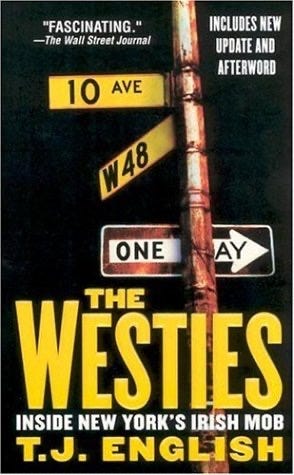
In his 1990 book, The Westies: Inside New York’s Irish Mob, T. J. English tells the story of the Irish-American gangsters who controlled much of the criminal activity in Manhattan’s Hell’s Kitchen neighborhood during the 1970s and 1980s. It is a story of murder, extortion, loan-sharking, corruption, and betrayal, but it is also a fascinating examination of a New York City neighborhood that no longer exists.
For those of us who remember New York before Rudy Giuliani became mayor, the city became a playground for wealthy tourists, luxury condominiums, and overpriced restaurants, The Westies offers a glimpse into a much different Manhattan. This was a time when neighborhoods were controlled not by real estate developers, but by criminals who maintained their authority through intimidation and, when necessary, extraordinary brutality.
To understand the Westies, you first have to understand Hell’s Kitchen. Located on Manhattan’s West Side, the neighborhood was historically home to generations of working-class Irish immigrants and their descendants. It was a tough neighborhood, filled with longshoremen, construction workers, bartenders, and families struggling to make a living.
It was also a neighborhood with a longstanding tradition of organized criminal activity.
For years, the waterfront and surrounding streets provided opportunities for gambling, loan-sharking, labor racketeering, and extortion. The Italian Mafia controlled much of New York’s organized crime, but Hell’s Kitchen remained an Irish enclave for criminal activity.
But by the 1960’s, the neighborhood was changing. The waterfront wasn’t doing business like it used to. Organized crime was not as well controlled by its bosses. Young, violent gangsters were wresting power from the old guard.
That was evident in Hell’s Kitchen as the 1970’s approached. A young upstart named Jimmy Coogan came to power, supplanting former Irish-mob boss Mickey Spillane. With associates like Mickey Featherstone, violence on the west side became rampant. Coogan’s association with the powerful Gambino Crime Family did nothing to help matters. Bodies were turning up all over the west side.
TJ English provides great detail into the murders and racketeering that eventually drew the attention of the Department of Justice. His research and insights into motives and methods are impeccable.
When federal prosecutors, including Rudy Giuliani, began to target Coogan’s crew, their end was inevitable. English’s sources on the investigation and takedown are as detailed as his depictions of the crimes themselves.
Organized crime investigations are rarely as glamorous as Hollywood makes them appear. They involve countless hours of surveillance, interviews, informant development, financial investigations, and painstaking efforts to corroborate information. English paints a vivid picture of the investigation.
Ultimately, the organization was brought down through a combination of investigative persistence, effective prosecution, and the use of the feds most powerful and oft-used tool - flipping perps into cooperators. As so often is the case, that is what brought down Coogan’s crew.
What separates The Westies from many other organized crime books is English’s ability to place the gang’s activities within the larger history of New York City and its neighborhoods. In English’s tale, Hell’s Kitchen is as big a character as Coogan or Featherstone.
The book serves as a reminder of how much New York City has changed.
Today, someone walking through Hell’s Kitchen might be heading to a Broadway show, a trendy restaurant, or a multimillion-dollar apartment. Forty or fifty years ago, that same person might have been walking past a bar where some of the city’s most dangerous criminals were planning their next murder.
There is an understandable fascination with the old New York, particularly among those who remember its grittier days. But nostalgia shouldn’t obscure the fact that this was the bad old days for New York. It was a city out of control.
The Westies weren’t colorful neighborhood characters or misunderstood antiheroes -they were brutal killers. T.J. English tells their story better than just about anyone could.
The Westies runs a little more than 400 pages. It is detailed, but English keeps you engaged. You can get a used copy on Amazon for about $10. If you want a different look at organized crime from the usual mafia tales, The Westies deserves a place on your bookshelf. Just don’t expect to come away with much sympathy for the gangsters. They didn’t deserve it.
Thanks for reading The Ops Desk. Stay Safe!
A while back, I had to research the IRA gun-running network in New York City during the years the Westies were operating. The network was pretty significant and eventually wound up in federal court. What struck me was that I never came across any connection between that network and the Westies, despite the obvious overlap in time and geography. (I know the current Westies tv series has an IRA plot line but that appears to be fictional). Has anyone ever of a real connection? Even an informal one?
I put the book on my Amazon book list. It sounds like a great read!