

When Greenland released its long-awaited human rights reports last week, many expected a watershed moment: a determination of whether Denmark’s coerced contraception campaign against Inuit women and girls constituted genocide. The question arises directly under the Genocide Convention, which expressly includes imposing measures intended to prevent births within a protected ethnic group. During the campaign, Greenland’s birth rate fell by roughly half. What the public received with last week’s human rights reports however was only more confusion, along with the striking omission of one of the most important elements of the analysis.
Greenland actually released two reports, adding yet another layer of bureaucratic confusion to an already tangled record. The official report accepted by Greenland found a reasonable basis to believe that Denmark had systematically imposed measures preventing Inuit births, but said a final determination of genocidal intent would require a broader examination of Denmark’s treatment of the Inuit during that period. Yet in searching for Denmark’s intent, the report largely ignored what are arguably some of the most significant facts in the historical record. Those facts, while likely uncomfortable for the liberal-minded international establishment, could have helped fill the very evidentiary gap the experts said remained: evidence that Denmark’s campaign grew out of an international movement expressly devoted to population control.
The competing “rogue” report declared that there had been no systemic effort to limit births at all, and that determining whether violations occurred required individual inquiries into what had happened between each patient and doctor. Its authors had independently reassessed the historical findings and introduced additional material, something Greenland said they had not been empowered to do. Greenland did not accept this second report after a peer review found that it failed to satisfy recognized scientific standards, and the justice minister determined it had not fulfilled the expert group’s mandate.
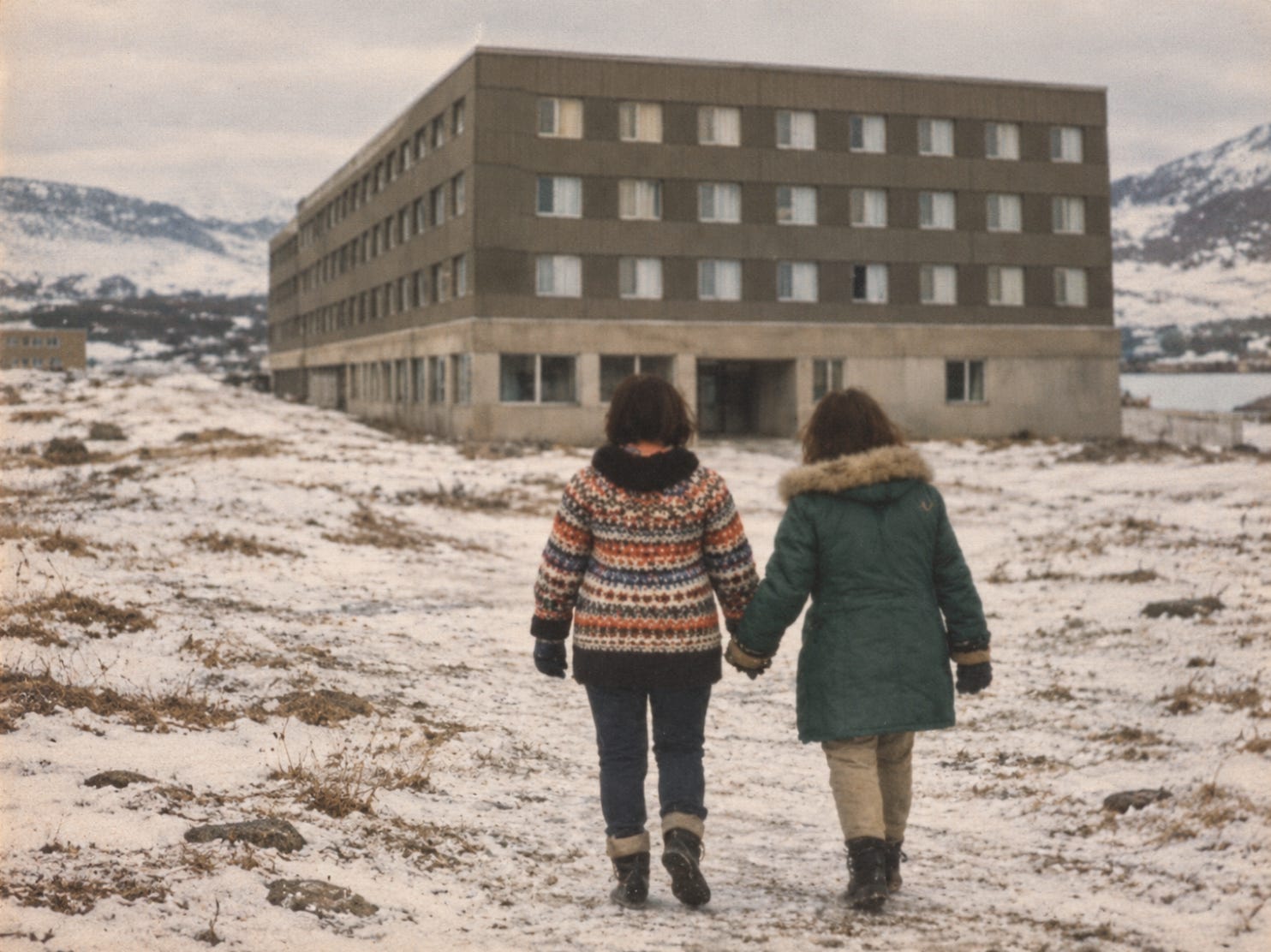
The question remaining under the official report was this: Was Denmark’s 1966 to 1975 “Spiral Campaign,” which inserted IUDs into thousands of Greenlandic women and girls, some only twelve years old and, in many reported cases, without consent or parental knowledge, part of a systemic effort to control the Inuit population? Or was it legitimate family planning intended to extend contraceptive choice? These procedures occurred across Greenland’s remote, frozen communities while Denmark controlled Greenland’s government health system, operated the schools through which the girls were channeled, and employed the doctors who administered them.
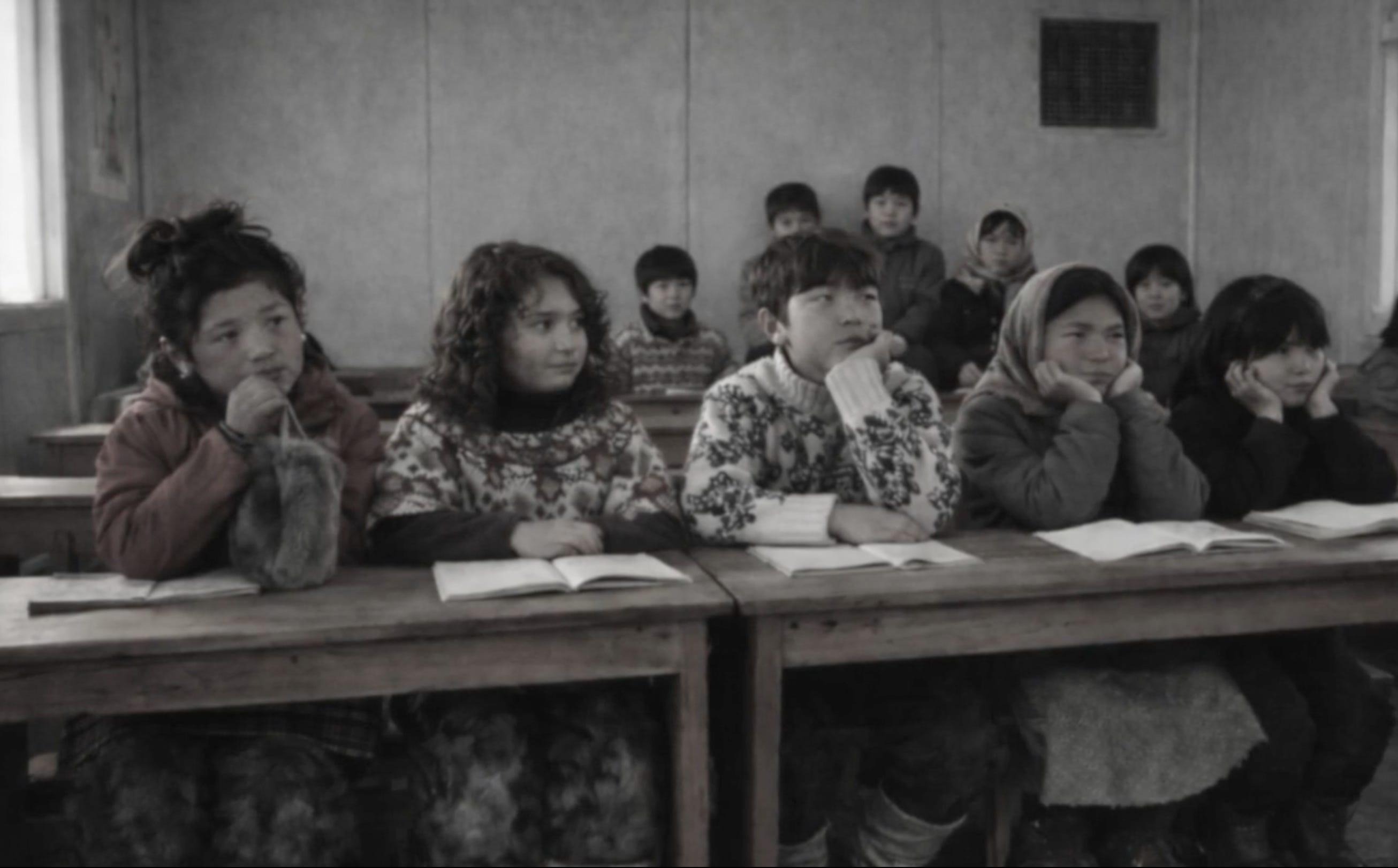
After decades of silence, the story finally broke through in 2022, when a Danish investigative podcast brought the women’s accounts to international attention. Denmark and Greenland commissioned a fact-finding investigation to examine the available evidence and reconstruct what had occurred.
The resulting 348-page Historical Report was released in September 2025. It is comprehensive to the point of exhaustion and devotes extensive attention to how the campaign was conceived, initiated, and put into operation, with page after page tracing the work of NGO’s, committees, commissions, ministries, medical boards, school authorities, and other government bodies woven through Denmark’s broader state system. The report also identifies multiple demographic concerns surrounding Greenland’s rapidly growing population and the economic and social pressures officials believed would follow.
The Historical Report, however, is written in the familiar language of institutional responsibility: the system is everywhere, but no individual decision-maker is made to stand in the foreground, and no responsibility or blame is assigned. And importantly, it does not indicate what laws were broken.
For that, Greenland also appointed four human rights experts in 2024 to determine whether the facts established by the Historical Report violated international human rights law, including the Genocide Convention. After working together for nearly two years, the group fractured and produced the two reports released last week.
While those reports were taking shape, Denmark’s prime minister formally apologized in September 2025 for the “systematic discrimination” and abuse inflicted upon Greenlandic women and girls by the Spiral Campaign. The word “systematic” resonated. Denmark was acknowledging that these injuries were not merely isolated mistakes by a few individual doctors.

Yet the release of two reports, and the unnecessarily complicated presentation of the issue and facts, have compounded the bureaucratic diffusion that has helped conceal the truth for decades. And so, the issue remains unsettled, and the victims remain without a clear path to justice or accountability. This is largely because the official report says the record does not fully establish why Denmark did what it did. This is despite the Historical Report devoting much of its first major section to the demographic concerns, institutional alliances, policy decisions, and medical machinery that produced the Spiral Campaign.
And so, with the genocide question still unresolved, Greenland announced yet another committee, this one a “truth and reconciliation” commission. But Greenland was finally candid about something – a point that has been apparent, though unstated, for some time: the commission is not designed to blame anyone or hold anyone accountable. Prime Minister Jens Frederik Nielsen said its work “should not be about assigning blame, but about uncovering the truth with a view to genuine reconciliation.”
The Official Report and International Law
Upon the recent release of the human rights reports, news organizations and the international law commentariat rushed to publish their analyses. Some announced that there had been no genocide. Others suggested that genocide had effectively been established. Still others carefully explained the competing conclusions and distinct legal questions. The coverage only deepened the confusion.
International law is unusually susceptible to this kind of ambiguity because, unlike domestic law, it often lacks a reliable mechanism for compulsory enforcement; when enforcement does occur, it is frequently shaped as much by diplomacy, state consent, and geopolitical power as by legal doctrine. Indeed, in this case, the geopolitical reality of Donald Trump’s interest in Greenland may be shaping events as much as the law itself. This structural weakness has helped foster an international professional class whose work often centers on theorizing, interpreting, debating, and refining legal principles that can remain largely aspirational across institutions, conferences, journals, and advisory bodies, at some distance from the more traditional work of representing individual clients, proving claims, and securing enforceable remedies. And the confusion often hides the obvious.
Applying the Genocide Convention to the facts established by the Historical Report here should not have been particularly difficult. The Convention’s language is not mysterious. It defines genocide this way:
In the present Convention, genocide means any of the following acts committed with intent to destroy, in whole or in part, a national, ethnical, racial or religious group, as
. . .
(d) Imposing measures intended to prevent births within the group.
The Convention does not require an intent to kill every member of a population or eradicate the entire group. It expressly includes measures intended to prevent births and an intent to destroy the protected group only “in part.” The ultimate question here can therefore be boiled down to this:
Did Denmark use a system of contraception to decrease the population of Inuit Greenlanders?
Relying upon the established Historical Report, the official human rights report found a reasonable basis to believe that measures preventing births had been imposed systematically by employees of the Danish state. The remaining question then was simply: why? If population control was the purpose, then the campaign appears to fit Article II(d), because the intended result was the destruction of part of the protected group. On that point, the report stated:
“It is difficult to imagine circumstances in which an attempt to substantially reduce the population of a single ethnic group could not constitute an intent to destroy, in part, that ethnicity.”
But the official expert panel then declined to make the ultimate determination.
They said that to figure out why Denmark did this, another tribunal should examine the systemic birth control measures alongside Denmark’s other discriminatory practices during the same period, including the removal of Inuit children, forced relocations, employment discrimination, suppression of the Inuit language, unequal wages, and restrictions affecting paternity and inheritance. That broader pattern, they reasoned, could reveal how Denmark viewed the Inuit and help determine why the Spiral Campaign was instituted. But because those other practices had not been examined in sufficient detail in the Historical Report, the experts said they lacked the factual record necessary to decide. So, they punted.
The official human rights report therefore treated Denmark’s purpose as the central unresolved question. Yet, strikingly, the Report did not confront the most significant institutional evidence bearing upon that question: the declared objectives and documented roles of the organizations and individuals who helped formulate the program, trained the doctors, financed the research, supplied the devices, and translated population control policy into medical practice. At the center of that missing story was the International Planned Parenthood Federation.
The Conspicuously Missing Planned Parenthood Story
The Historical Report states very clearly that the International Planned Parenthood Federation (IPPF) and the Population Council “advocated for the necessity of reducing global population growth” and viewed contraception as the principal means of doing so. It then identifies those organizations, together with the Danish Family Planning Association - IPPF’s Danish affiliate - as working with Danish government officials, researchers, and physicians to put those policies into practice. The Historical Report traces in considerable detail how they operated within, alongside, and through Denmark’s governmental and medical institutions to translate their population-control objective into policy and practice.
Yet the official human rights report never mentions IPPF or the Population Council despite the fact that they were supposed to be basing their analysis on the Historical Report. It does reference the Danish Family Planning Association but does so without identifying it as IPPF’s affiliate or examining the significance of that relationship.
Founded in 1952, the International Planned Parenthood Federation created and supported national affiliates that translated population-control policies into medical practice. Its international president during the years preceding and overlapping the Spiral Campaign was Lady Dhanvanthi Rama Rau, who helped establish the Family Planning Association of India and was among IPPF’s founders along with Margaret Sanger.
Any objective assessment of Rau’s life’s work leaves little room for doubt. In the most restrained terms, she was a committed population control advocate. Rau recalled that there was “no question” she should work for family planning “single-mindedly and intensively.” She continued: “The limiting of our population was a fundamental and pivotal necessity if we were to make the gigantic task of social and economic improvement successful.”
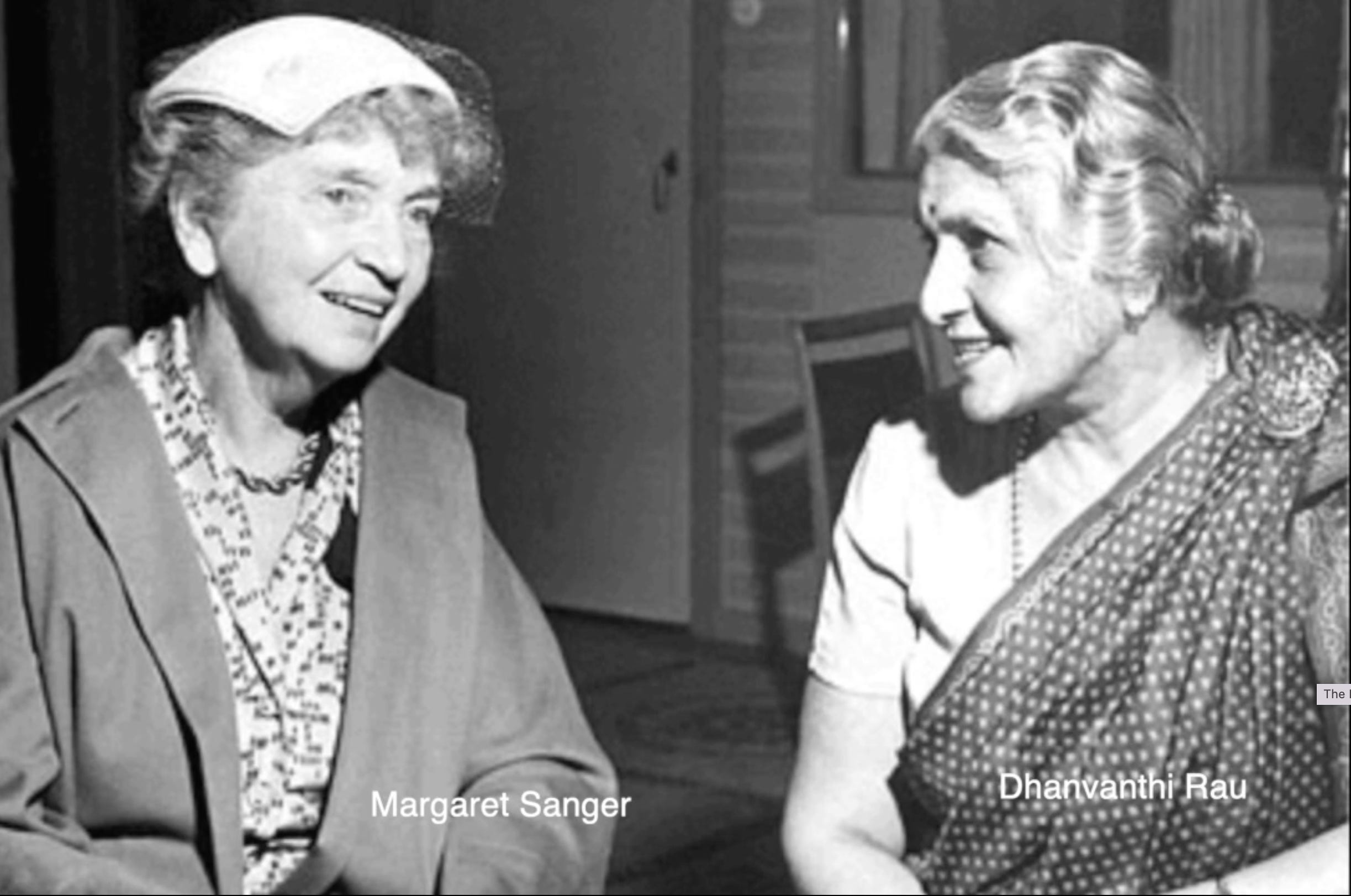
IPPF supplied doctrine, money, training, and contraceptive technology, while its affiliates and cooperating public institutions turned those policies into practice. Population control became an instrument of economic and social planning. The Historical Report details how this model was applied in Denmark and Greenland.
Denmark’s IPPF affiliate was headed by Dr. Agnete Braestrup. Her significance can hardly be overstated, yet her name never appears in the official human rights report. Braestrup founded the Danish Family Planning Association in 1956 and chaired it until 1983. The association began working in Greenland in 1958, cultivated contacts inside the Ministry of Greenland and the medical service, trained doctors bound for Greenland, and conducted contraceptive trials.
In 1963, Braestrup proposed sending a gynecologist to Greenland to begin “family limitation” work centered largely upon the IUD, even though the device had not yet been approved for general use in Denmark. Her association then helped the Greenland Council Secretariat and Ministry of Greenland prepare a 1965 memorandum explaining why family planning was needed and how the state should provide it. The program included school instruction, government-produced materials, medical training, and free or inexpensive contraception. IPPF’s population policy was no longer an international abstraction. Its Danish affiliate had helped place that policy inside Greenland’s government and medical system.
Braestrup did not merely run an obscure national affiliate. She succeeded Rau as president of the worldwide IPPF in 1969 and served through 1971 while continuing to chair the local Danish association. So the person directing IPPF’s Danish operation during the Spiral Campaign was also running the world’s most influential and best-funded population control organizations.
IPPF had a powerful ally in the Population Council. Established in 1952 by John D. Rockefeller III, the Council described the relationship between population and available resources as “one of the most critical and urgent problems” of the time. It connected foundations, governments, physicians, and researchers while channeling private and public money into contraceptive research and distribution aimed at population control.
That work led directly to Greenland. The Population Council supported Danish physician Erik Rosen’s experimental research into the “Lippes Loop.” In 1965, Rosen urged Danish officials to seize what he called the “rather unique opportunity” to study the IUD’s use in a “primitive population.”
The institutional overlap became visible the following summer. In early July 1966, Lady Rau traveled to Copenhagen for IPPF’s regional conference; less than two weeks later, Rosen arrived in Nuuk on July 19 and began the official Greenland IUD trial the following day. The devices he carried were provided free by the Population Council and were known inside Greenland simply as “the Spiral.”
International Planned Parenthood Across the Globe
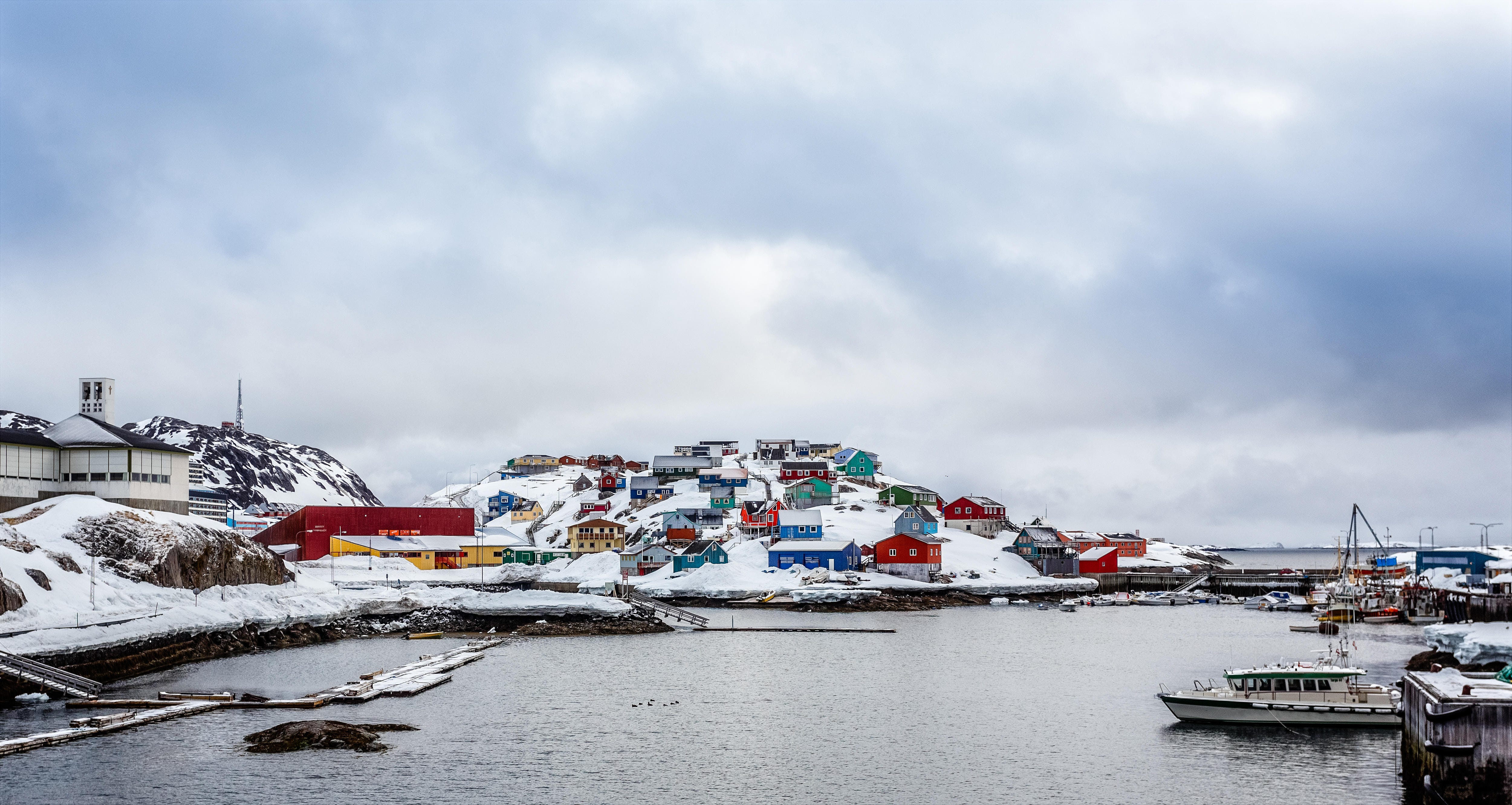
Greenland was not an anomaly. The same institutional model operated across the developing world. The programs were not identical, and the degree of coercion varied. But the common structure was unmistakable: international financing, national Planned Parenthood affiliates, government targets, medical campaigns, and success measured through fewer births.
In a remarkable 1965 interview, Lady Rau spells out in unusually candid terms both the ambition and the operating philosophy of the IPPF. Speaking about India, she describes an almost relentless effort to prevent births, at one point invoking the phrase “through every means available.” The machinery she championed would become enormous: during the mid 1970s, more than 10.7 million Indians were sterilized, including 8.3 million in fiscal year 1976 to 1977 alone, while IPPF’s Indian affiliate itself performed more than 80,000 sterilizations in 1976.
Heard in its most charitable light, the 1965 interview captures the elitism and paternalism that ran through much of the era’s population-control movement: an international organization convinced that it knew what was best for humanity and prepared to help governments reorganize intimate decisions about reproduction accordingly. Heard less charitably, it is something far more unsettling.
Rau’s interview also makes clear that the model was never intended to remain confined to India. IPPF saw its mission as exporting the same machinery abroad - supplying expertise, organization, money, and institutional support to governments and local affiliates willing to adopt it. Lady Rau stated:
The International Planned Parenthood Federation is the only organization that is giving active assistance to those who are aware, wh- whether it be in a Catholic country or whether it be in a non-Catholic country, that this is a potential danger. We are prepared to give advice, we are prepared to give financial aid, we are prepared to organize, help them to organize the work within their own countries, and that is one reason why we already have thirty-eight countries that belong as members to the International.
That was not merely aspirational; variations of the model appeared across the world, including:
- South Korea: IPPF’s Korean affiliate pressed the government to launch a national family-planning program in 1962; by 1970, it recorded 295,100 IUD insertions and 17,321 vasectomies.
- Indonesia: IPPF’s affiliate supported the government’s population-limitation program with training and public education; state targets and village programs produced documented coercive pressureand reached more than 4.7 million women by 1975.
- Colombia: IPPF affiliate PROFAMILIA, founded by Fernando Tamayo to reduce population growth, built 42 clinics and worked through government hospitals and health centers. For his efforts in preventing Colombian babies Tamayo would be promoted to President of the IPPF after Bræstrup.
- Singapore: IPPF’s affiliate helped build the clinical network absorbed into the government program in 1965; the state later enforced its two-child policy through financial and public-housing restrictions.
- Puerto Rico: The Puerto Rican Family Planning Association, an IPPF affiliate, worked alongside government services; by 1965, about one third of ever-married women ages 20–49 had been sterilized, while IPPF later described affiliate and government services as fully integrated.
And of course, Greenland.
In Fatal Misconception: The Struggle to Control World Population, Columbia historian Matthew Connelly provides the definitive history of the movement. What he found was not simply an effort to make contraception available, but what he calls the “most ambitious population control schemes” - programs that “aimed to remake humanity” by deliberately reducing fertility, particularly among poor populations. He traces how the IPPF and others built affiliates, clinics, and government partnerships around the world, and how by the 1960s, these internationalists had become so zealous that some believed that the world’s “survival depended on sterilization camps.”
And then there was a funding model behind this craze. Through the 1960s and 1970s, one institution became the dominant financier of international population-control programs, channeling more than a billion dollars into the effort and into organizations such as IPPF. Its support for IPPF began with a $3.5 million grant in 1968, and its own history later acknowledged that continued American funding became “vital” to the federation’s work. The institution behind that money was the United States Agency for International Development. During the 1970s, the IPPF was the single largest NGO recipient of USAID’s population-control funding.
The Omitted Evidence Applied
Greenland followed the established international model. The IPPF’s Denmark affiliate, led by Dr. Agnete Braestrup, cultivated government relationships, trained personnel, proposed IUD-centered “family limitation,” and helped formulate the policy. The Population Council financed the research and supplied the devices. The Danish welfare state provided the authority, hospitals, physicians, schools, and access to the women and girls.
Nearly all of this institutional history appears in the Historical Report upon which the human rights experts were supposed to rely. Yet the official report simply does not address this as evidence of Denmark’s purpose.
Taken together, the evidence supports a straightforward conclusion: Denmark constructed a system within its state health service intended to reduce births among Inuit Greenlanders. Genocide.
Even if the experts were unwilling to state the obvious conclusion, attempting to determine why Denmark acted without examining the stated purpose of the IPPF, Rau, Braestrup, the IPPF Danish affiliate, and the Population Council is, at best, an extraordinary failure of historical and legal analysis.
These actors did not accidentally converge in Greenland. They operated through a population control system being deployed around the world to limit populations. In Greenland, that system ended at the examination table, where a state physician confronted an Inuit girl.
Why Does a Genocide Determination Matter?
While it certainly provides a symbolic victory, an official determination of genocide here could be considerably more practical because of domestic Danish law. Damages for serious personal injuries are generally far lower in Denmark than in the United States because compensation is tightly structured by Danish law, with statutory formulas governing categories such as pain and suffering, permanent injury, and loss of earning capacity.
Even in an extreme malpractice case where infertility resulted, a total recovery of roughly $60,000 to $75,000 would be considered substantial. In one Danish medical-injury case, for instance, a woman rendered infertile after treatment received compensation for infertility and other permanent injuries under Denmark’s statutory damages system; the court ultimately treated her infertility as part of a 25-percent permanent-injury award worth roughly $25,000 in today’s dollars.
A very recent development changes the picture a bit. On August 27, literally the day before the human-rights reports were released, Denmark approved a compensation scheme paying each qualifying Spiral Campaignvictim roughly $46,000. Coming more than fifty years after the conduct, the timing certainly invites the inference that Denmark hoped the payment would help blunt any later genocide claim by allowing it to argue that they had already “voluntarily” compensated the victims.
The $46,000 payout effectively creates a floor, but not a ceiling. The women can still sue and seek more, but any later award will likely be reduced by the $46,000 already received. And because Danish personal-injury awards are so modest, even a severe infertility case might realistically leave a woman with only $60,000 to $75,000 in total compensation. The practical reality, then, is that many of these women may receive remarkably little compared with the severity of the injuries they allege.
This is where a genocide determination could become practically important. It would not guarantee a large additional award, but previous reproductive-rights cases show that international tribunals can impose separate reparations, including tens of thousands of dollars beyond modest domestic compensation. That is important here because of the way Denmark’s domestic damages scheme protects the health care system against significant awards - even for catastrophic injuries. Against that backdrop, even relatively modest reparations tied to a genocide finding could materially increase what the Inuit women ultimately receive.
But why is this damages-strategy discussion even necessary? Denmark has already acknowledged its systemic abuse of these women, yet their compensation scheme guarantees qualifying victims only about $46,000. A responsible government might simply try to make them whole - to the extent that is possible. What could be more important to Denmark than adequately compensating its individual citizens who were subjected to contraception without their consent and suffered permanent reproductive injuries at the hands of the state? Perhaps Denmark remains more concerned with humanity itself.
Over the next ten years Denmark is on track to distribute at least $5 billion in grant-based international climate change money to NGOs and developing countries, while separately earmarking more than $155 million for projects intended to transition its population to plant-based meat and products. All for the sake of the planet.
The historical echo is difficult to ignore.
When Gloria Steinem, one of Planned Parenthood’s most prominent longtime advocates, died last week, renewed attention was given to her earlier declaration that “overpopulation is still the biggest reason for global warming” and her later description of population as the “fundamental cause of climate change.”
The rhetoric has changed, but the system’s impulse to subordinate individual reproductive lives to a larger social vision has proved remarkably durable.
This report should start to convince Greenlanders that being tied to Denmark is not good for native Greenlanders and, instead, they should seriously consider becoming a US territory. Based on this report, the Greenland natives would benefit tremendously from a transition to a US territory.
That is some excellent reporting and analysis.