

ORIGINAL REPORTS: Snow Babies podcast, and Law Wars analysis
Greenland’s genocide reports are being released on Friday August 28, and Denmark is scrambling to pass legislation on Thursday August 27, in what appears to be an effort to limit the fallout from the reports. It is doing so despite the loud objection of one of the human-rights experts who helped draft the coming reports, and who has now come forward to warn publicly about what Denmark is doing.
Readers of the OpsDesk know the underlying story from our Snow Babies project and subsequent updates. Beginning in the 1960s, thousands of Greenlandic women and girls received IUDs during the period Denmark controlled Greenland’s health system, many without meaningful informed consent; by 1972, records showed that roughly half of Greenland’s women of childbearing age had been implanted with the devices. The campaign was intended to reduce Greenland’s birth rate, which subsequently collapsed.
The historical investigation largely established those facts. Greenland then commissioned a separate four-member expert group to determine what those facts meant under human-rights law, including what violations occurred and whether the conduct met the legal definition of genocide. The experts were not a court, and their conclusions will not themselves constitute a genocide judgment, but the potential ramifications for Denmark’s legal exposure and the geopolitical struggle over Greenland are enormous. That report was supposed to be completed by January 31, 2026 and released soon thereafter. It wasn’t. Instead, it was stalled.
Then came the announcement that the committee itself had split. Rather than produce one assessment, the four experts divided into two groups and prepared two competing reports, with members of the fractured process citing both “methodological disputes” and the “geopolitical situation.”
The obvious backdrop was Donald Trump’s campaign to pull Greenland away from Denmark, which was unfolding at the same time the experts were deciding how to characterize Denmark’s treatment of Greenlandic women. The reports then remained unpublished for months, with Greenland attributing the delays to procedural matters such as “peer review” and “translation,” while critics raised a more troubling possibility: that Greenland and Denmark were effectively colluding to keep potentially explosive findings out of public view and deny Trump a basis for arguing that Denmark had forfeited its moral authority to oversee Greenland.
These concerns over collusion appear now to have been justified.
A Committee Member Breaks the Silence
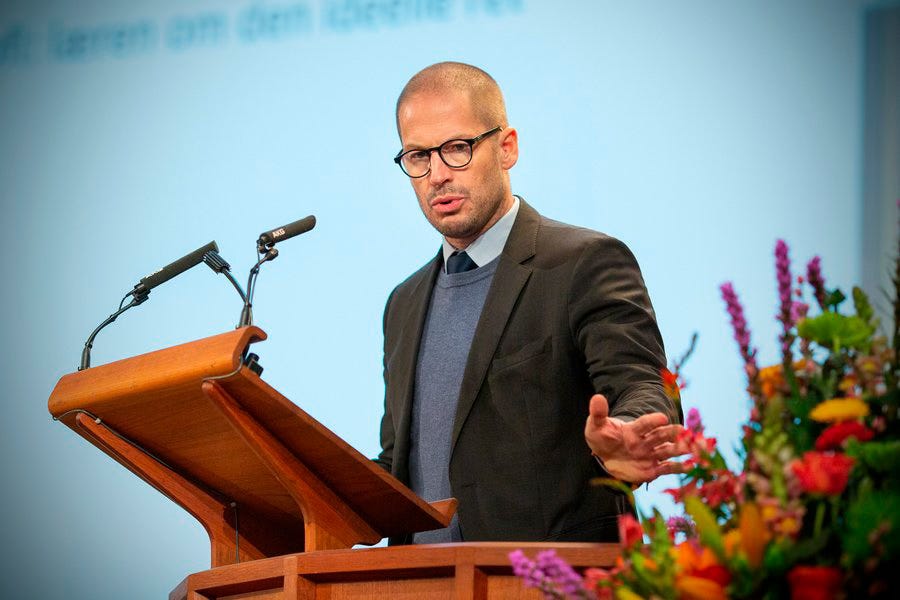
After months of silence and delay, one of the few people who actually knew what was in the reports finally spoke out. On August 12, Jonas Christoffersen, one of the four human-rights experts and an author of one of the two reports, publicly demanded their immediately release.
His concern was no longer simply the delay, but what Denmark was preparing to do before the reports became public. With the findings still secret, Copenhagen was moving ahead with legislation establishing compensation for the victims. Christoffersen urged Greenland to release the reports first and called on Danish lawmakers not to complete the legislation until they had seen the findings. His position was straightforward: lawmakers should know what the human-rights experts concluded before deciding how Denmark compensates the victims. Christoffersen has stated:
I believe it is fundamentally troubling in a democracy that (Denmark’s) Parliament intends to pass a law without knowing the contents of reports written by independent experts. Naalakkersuisut (Greenland) should therefore immediately publish the reports, and Parliament should also be given access to them so that the entire matter can be debated on a fully informed basis. The public in both Denmark and Greenland should know what actually happened and what the basis really is for paying substantial compensation to everyone who believes they were treated improperly. The case has damaged relations between Denmark and Greenland, and in my view it is best for everyone if there is full transparency about the matter.
The compensation legislation is scheduled for final passage tomorrow, August 27, without lawmakers first knowing what the human-rights reports concluded. After Christoffersen publicly urged that the reports be released before Parliament acted, Greenland quickly announced that the reports would be published on Friday, August 28, the day after the compensation legislation is set for its final vote.
The result is a remarkable sequence: Denmark is poised to establish compensation for the victims one day before lawmakers, or the rest of the world, learn what Greenland’s own human-rights experts concluded. The timing inevitably raises clear questions about whether Denmark and Greenland are coordinating to mitigate the impact of the coming reports. At the very least, by ignoring Christoffersen’s eminently reasonable demand that the findings come first and then the remedy, Denmark and Greenland have now created the very troubling appearance of impropriety around the entire process.
In what some might consider an embarrassingly disingenuous statement today, Denmark’s Prime Minister, Mette Frederikse, called it a “total coincidence” that the reports will finally be released one day after Denmark protects itself by passing the compensation legislation.
So why would Greenland and Denmark coordinate to do this? That answer will become clearer once the final legislation and the human-rights reports are released over the next 48 hours. The United States has significant interests in what is happening in the Arctic right now (see Paul Mauro’s report here), and Donald Trump made clear at last month’s NATO summit that the Greenland issue is far from over. Trump told European leaders that Greenland “should be controlled by the United States, not by Denmark,” criticized Copenhagen for failing to adequately invest in the island, and even linked the dispute to America’s broader military commitment to Europe.
A determination that Denmark committed genocide against Greenlanders would hand President Trump an extraordinary new argument for challenging Copenhagen’s moral authority to govern the island. That concern is now being stated openly. Rasmus Sinding Søndergaard, a senior researcher in American foreign policy at the Danish Institute for International Studies, said this week that if the reports conclude Denmark committed genocide, it would be “water on the mill for Trump’s argument.” Denmark also faces potentially significant legal consequences depending on what the reports conclude (see OpsDesk, Law Wars analysis here). Geopolitical damage, legal liability, or some combination of the two may therefore be driving the maneuvering. What is clear is that we are about to learn considerably more.
Greenland had dilapidated airports. Greenland asked Denmark to modernize them. Denmark said they did not have the money. Red China offered to fix the airports. Denmark found the money. Trump said he would buy Greenland from Denmark ( distressed property.) Trump did not want Chinese bases in Greenland.
The spin was that Trump was a nutcase.
Another example of why the media is not honest.
Denmark has lost moral values and authority over the International Criminal Court. I would expect this sort of behavior and population controls from WW2 Germany, Stalin's Russia, Mao's China, ect...... The EU should stop any Denmark Legislation and open an investigation into these events and bias. This is no longer an internal issue