

Greenland’s committee weighing whether Denmark committed genocide has reportedly fractured - and the delay is now raising an unexpected question: What does Donald Trump have to do with it?
Quite a bit, according to some in Greenland.
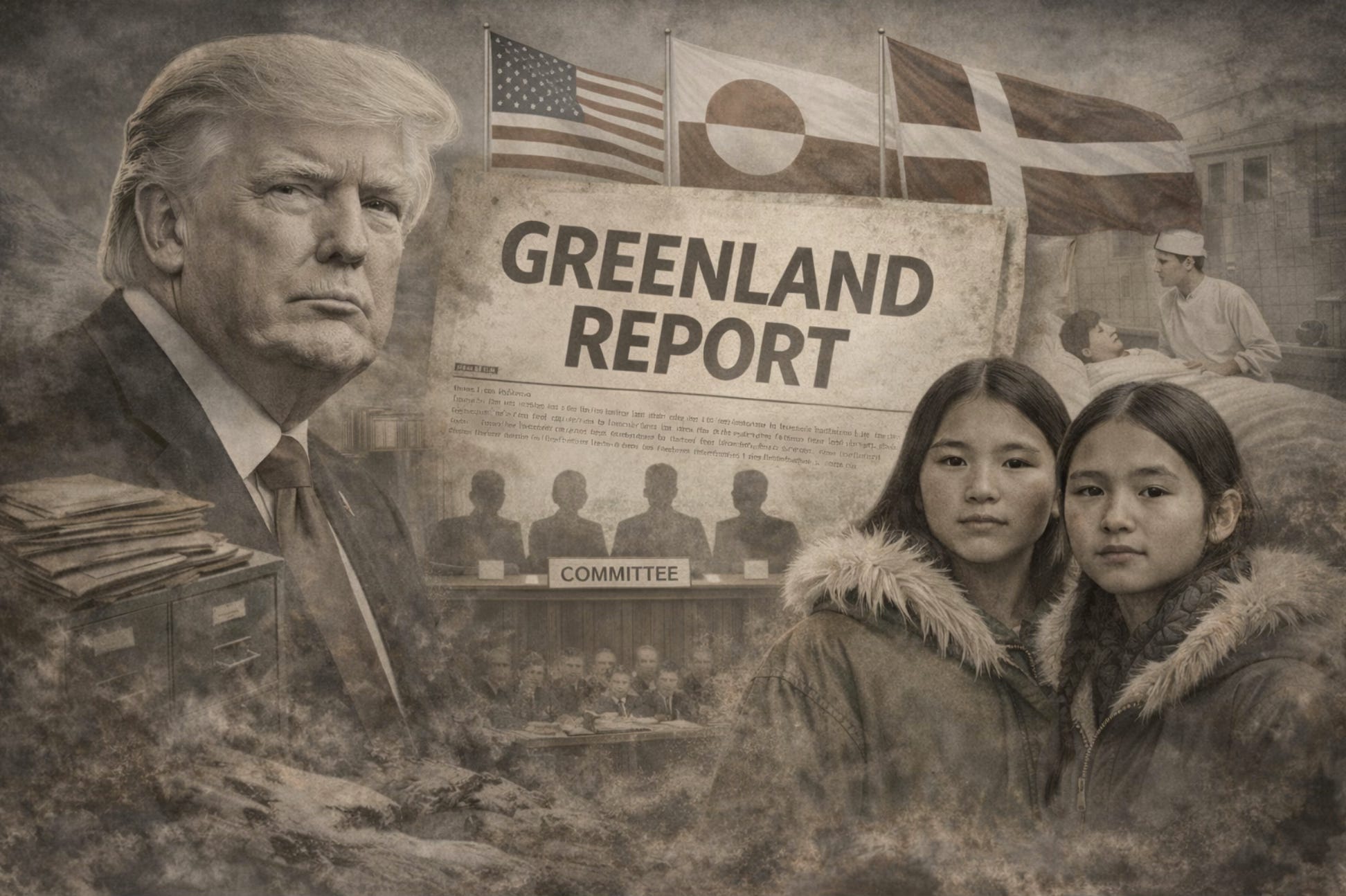
As the committee stalls on a formal judgment over Denmark’s treatment of thousands of Greenlandic women, President Trump has renewed his push to acquire Greenland and sharply criticized Denmark for resisting. That geopolitical fight is now colliding with Greenland’s human-rights reckoning, injecting fresh political pressure into an already explosive legal process.
Background
Denmark’s conduct is no longer seriously disputed. In fall 2025, a factual report detailed how Danish authorities carried out the so-called “Spiral Campaign” from the mid-1960s through the early-1990s, coercively inserting IUDs into thousands of Greenlandic girls and women - effectively suppressing the fertility of half of Greenland’s childbearing population in an effort to reduce Greenlandic births. The campaign was implemented through a morass of government agencies with support from international population-control zealots. (See full OpsDesk video here.)
Denmark itself largely accepted those facts in the report. The remaining questions are legal: What laws were violated? Was it genocide? What remedies are appropriate? And, where should any claims be pursued?
To answer those questions, Greenland convened an expert human-rights committee. That committee reportedly completed its work by January 31, 2026, and its report was expected shortly thereafter. But it still has not been released. And there are a couple of possible reasons for the delay.
Current Discord
The human rights committee has now fractured. Two members of the four-person panel have withdrawn and submitted a separate report, leaving the Greenland government with competing conclusions on the same record.
Rather than release either report, officials have pushed both into yet another cycle of peer review, translation, and internal evaluation, delaying publication again, with release now projected for late May. What was supposed to be a single definitive legal assessment has devolved into a dual-track bureaucratic maze with no clear endpoint: reports to peers, peers to translators, translators to committees, and committees to who knows where. The explanation is procedural; the reality is familiar. The same diffuse, committee-driven bureaucracy that enabled the Spiral Campaign is now delaying judgment on it.
The explanation offered publicly is “professional disagreement” - centering, at least in part, on whether the Spiral Campaign meets the legal definition of genocide. But the two departing members of the committee suggest there is something else involved.
The Legal Issues
The long-awaited report(s) will not be binding legal decisions. They are simply Greenland’s assessment of which human rights laws were violated - including whether the conduct qualifies as genocide. The committee’s task was straightforward: apply human rights law to the factual findings issued last fall and determine what violations occurred. The report will likely also recommend whether, where, and how any legal action should proceed, civilly or criminally.
Criminal prosecution seems highly unlikely. The only standing international tribunal for prosecuting individuals for crimes such as genocide is the International Criminal Court, but its jurisdiction extends only to conduct occurring after July 1, 2002. Moreover, the factual report issued last fall did not assign responsibility to specific individuals, and criminal law prosecutes people, not governments. Even if it had identified responsible actors, most would likely now be deceased or elderly.
Civil litigation is the more plausible path: a formal declaration placing Denmark alongside perpetrators of atrocities such as those seen in Darfur, Rwanda, Bosnia, and elsewhere -potentially coupled with substantial financial compensation. The likely forum would be the European Court of Human Rights (ECHR), as Denmark is subject to the Court’s jurisdiction through its ratification of the European Convention on Human Rights, though any such case would still face some procedural hurdles. For example, applicants would likely need to seek relief in Danish domestic courts before petitioning the ECHR.
But the legal basis for such claims would not be speculative. The facts outlined in October’s report likely support serious human-rights claims. The ECHR has repeatedly held - particularly in cases involving Eastern European governments - that non-consensual reproductive procedures violate core Convention protections.
Denmark’s actions clearly implicate Article 3’s prohibition on “inhuman and degrading treatment” (see G.M. v. Moldova, 2022 - forced contraception and rape of institutionalized women), as well as Article 8’s protection of bodily autonomy and family life (see V.C. v. Slovakia, 2011 - coerced sterilization of Roma women during childbirth).
But establishing these violations would not end the matter. Denmark may be able to avoid liability by arguing they have already provided redress - having apologized and offered each identified victim approximately $45,000 in compensation.
Whether that is sufficient may be one of the issues dividing the four committee members. Complicating matters further, the victims have not yet been paid, and there is growing concern in Greenland they may never be. Some fear the outcome of Denmark’s 2026 snap election could jeopardize that compensation plan. That election - called by the sitting Prime Minister in an effort to capitalize on her popularity after “standing up” to Donald Trump - has injected fresh political uncertainty into the process.
But the more interesting - and nuanced - legal divide between the committee members may concern discrimination. Denmark’s conduct also implicates Article 14’s prohibition on discrimination, because the policy targeted Greenlandic women, but not Danish women. That discriminatory element may prove important here.
The European Court of Human Rights has readily found Article 14 violations when warranted - whether in D.H. v. Czech Republic, involving systemic segregation of Roma children, or Konstantin Markin v. Russia, striking down gender-based parental leave distinctions. The doctrine is clear: when a state disproportionately burdens a protected group in exercising a Convention right, Article 14 applies.
Yet in the forced sterilization and contraception cases discussed above - despite targeting minority groups - the Court resolved the claims under Articles 3 and 8 without reaching Article 14. Why?
One possible explanation is that reproductive coercion aimed at a minority group moves the conduct uncomfortably close to genocide by suggesting an intent to diminish or destroy a distinct population. Courts are often cautious about stepping into that terrain unless necessary.
Further, the European Court of Human Rights cannot formally adjudicate genocide. Even if it found Denmark violated Article 14 by targeting Greenlandic women, that would not itself be a genocide ruling - only evidence potentially supporting a later genocide case under the Genocide Convention, likely before the International Court of Justice (ICJ). So, was it genocide?
The relevant portion of the Convention defines genocide as:
... any of the following acts committed with intent to destroy, in whole or in part, a national, ethnical, racial or religious group, as such: ...
(d) Imposing measures intended to prevent births within the group.”
(emphasis added).
At minimum, coerced birth control imposed on teenage Inuit girls would appear to support a substantial claim under that provision. See Prosecutor v. Akayesu, 1998 (recognizing that forced birth control can constitute genocide under the Genocide Convention’s “prevent births” clause).
While the legal process is complex, the core facts appear straightforward and largely uncontested: Denmark coercively implanted contraceptive devices in Greenlandic girls - but not Danish girls - in an effort to reduce the Greenlandic population. On those facts, the conduct appears to strongly implicate Articles 3, 8, and 14 of the European Convention on Human Rights and may also implicate the Genocide Convention.
In sum, the most significant legal hurdles appear to be twofold: First, whether Denmark’s apology and $45,000 payment are sufficient to satisfy its obligations under the European Convention on Human Rights. Second, whether Denmark acted with intent to destroy the Greenlandic people in whole or in part within the meaning of the Genocide Convention.
To be sure, genocide determinations are among the gravest judgments in international law and warrant careful deliberation. But the committee’s prolonged delay suggests something beyond ordinary legal caution may be at work. The facts were established last October, and the committee has been studying the situation for two years. It should not take this long to apply law to settled facts, which raises the real question: is legal complexity truly causing the delay, or is something else dividing the committee?
What May Really Be Causing the Delay
The rift may not be about the law at all. It may be about whether to pursue the case further. The committee’s report(s) are merely advisory pronouncements on whether human-rights laws were violated; they would likely serve only as the first step toward any formal adjudication of liability and remedies.
Enter Donald Trump.
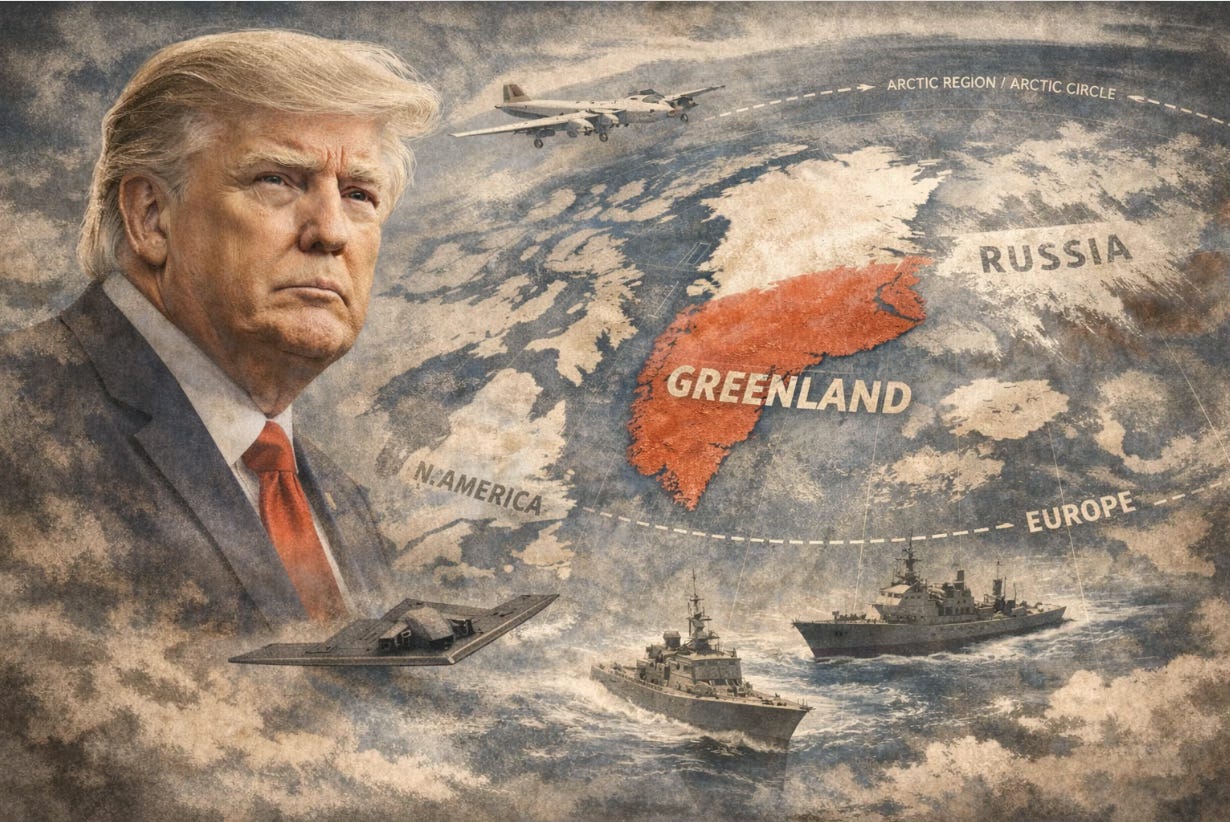
The two dissenting members of Greenland’s human rights committee did not simply disagree and move on. They issued a separate report and stated publicly that their split with the majority involved “methodological disputes” and the “geopolitical situation.”
There is only one obvious geopolitical issue they could be referencing: Donald Trump and Greenland.
After a lull, President Trump has once again begun publicly discussing Greenland as a strategic asset and renewing his push for U.S. control of the island. That places Denmark in a sensitive position within the Western alliance and Greenland’s leadership in an even more delicate one. The last thing Copenhagen or Nuuk may want right now is an official human-rights report branding Denmark’s historical conduct in Greenland in the harshest possible legal terms.
If the committee were to conclude that Denmark’s actions support a claim of genocide, that finding could provide a basis for any state party to the Genocide Convention (including the U.S.) to initiate proceedings against Denmark in the International Court of Justice. The ICJ could then formally adjudicate the claim, determine whether Denmark violated the Convention, and order reparations.
And even short of a genocide case, a damaging human rights report against Denmark - suggesting violations of the the Genocide Convention or the European Convention on Human Rights - would hand President Trump a potent rhetorical weapon: the argument that Denmark has forfeited the moral authority to govern Greenland, and that the United States should replace Denmark as Greenland’s protector or overseer.
Perhaps the delay is legal caution. Perhaps it is ordinary bureaucratic dysfunction. But when committee members themselves cite the “geopolitical situation,” and that situation happens to involve Donald Trump openly eyeing Greenland, skepticism is warranted. The law may be complicated. The politics are not. Everyone involved understands what a genocide finding against Denmark would mean in the middle of Trump’s Greenland campaign. And so the report sits.