


The Ops Drop is a bit late this week, gang — apologies! This writer has just returned from some overseas travel. But clearly, the Iran situation remains unresolved — and if anything, more complicated.
As such: even as Zohran’s New York starts to take (bad) shape (more on that soon), next steps in Iran and the Strait take precedent this week.
Compelling us to ask: If Iran’s navy and military is so completely decimated… how exactly are they “closing” the Strait of Hormuz?
And does it even matter?

Let’s start with this: when you hear that Iran is “closing” the Strait of Hormuz, don’t picture a line of warships chained across the water.
What Iran is doing is actually far more effective—and cheaper. They’re not sealing the Strait. They’re poisoning it.
The Strait of Hormuz is one of the world’s most critical choke points—roughly 20% of global oil flows through it. But it’s also narrow, predictable, and geographically stacked in Iran’s favor. Ships are funneled into tight lanes, like slow-moving sitting ducks.
Iran’s playbook is classic asymmetric warfare: mines, missiles, small boats, and just enough chaos to spike risk. And that’s what their weapon-of-last-resort is here: risk.
The Iranians have laid sea mines, attacked or threatened vessels, and warned ships not to transit. Free-floating mines and mines tethered to the seabed create enough fear in ships carrying millions of gallons of oil to make navigating the Strait a terrifying prospect.
The result? Traffic doesn’t just slow—it collapses. At one point, transits dropped from over 130 ships a day to nearly zero as insurers balked and captains refused to roll the dice.
It works because clearing it is a nightmare. Mines are slow to detect and slower to remove. The U.S. Navy is already deploying drones, sonar systems, and specialized mine-clearing assets just to carve out a single safe lane. But that doesn’t happen overnight, and it’s no guarantee of safety.
Add to that the threat of onshore missiles and small Iranian “swift boats” that can hit-and-run in the dead of night, and you have a psychological barrier more effective than a physical one.
So what can the U.S. do?
Three things, broadly:
First, mine countermeasures—slow, methodical, and necessary. That’s the grind we’re seeing now.
Second, naval escort operations—putting U.S. warships alongside commercial tankers, daring Iran to escalate.
Third, kinetic options—striking launch sites, boats, and coastal batteries. That escalates quickly, but it’s always on the table.
The bottom line: the U.S. can reopen the Strait. But it can’t do it instantly, cheaply, or without risk.
Which brings us to the real question.
As the U.S. does not get much oil from that region: do we care? And are there workarounds (such as the Saudi pipeline to the Persian Gulf) that can seriously mitigate this?
Why The U.S. Still Cares
Even though the U.S. imports relatively little Gulf oil today, oil is a global commodity, priced globally. If roughly 20% of the world’s supply is suddenly at risk, prices spike everywhere—including at American pumps.
And oil is such a fundamental engine of the global economy, this spike ripples straight into U.S. gasoline, diesel, aviation fuel, and ultimately inflation. It also risks global financial instability.
And while workarounds like alternate pipelines can somewhat pick up the slack (adding back in maybe 5% capacity), there is this larger issue: the geopolitics. The U.S. has long acted as the guarantor of freedom of navigation. If Iran can effectively shut a strategic chokepoint without consequence, that’s a signal—to Russia, China, and anyone else watching—that maritime coercion works.
For the U.S, this last point may be the most significant. China, especially, is watching all this closely. As Chris notes below, history shows that the resolve of a nation — its national grit — is on full display in wartime.
With the mullahs apparently vanquished, a bellicose IRGC in control, and the Strait (at this writing) reportedly closed — will America have the grit to stay the course and fully secure its objectives?
We are at that historic decision point — now, and in the coming weeks.
The Lessons of History

It was 161 years ago this week that our nation lost one of its greatest leaders. On April 14th, 1865, John Wilkes Booth shot President Abraham Lincoln. Lincoln, arguably our nation’s greatest president, died the next day from the grievous wound. What many do not know is that Booth did not act alone. Other conspirators were assigned to kill members of Lincoln’s cabinet and very nearly killed Secretary of State William Seward, who was stabbed multiple times by Lewis Powell.
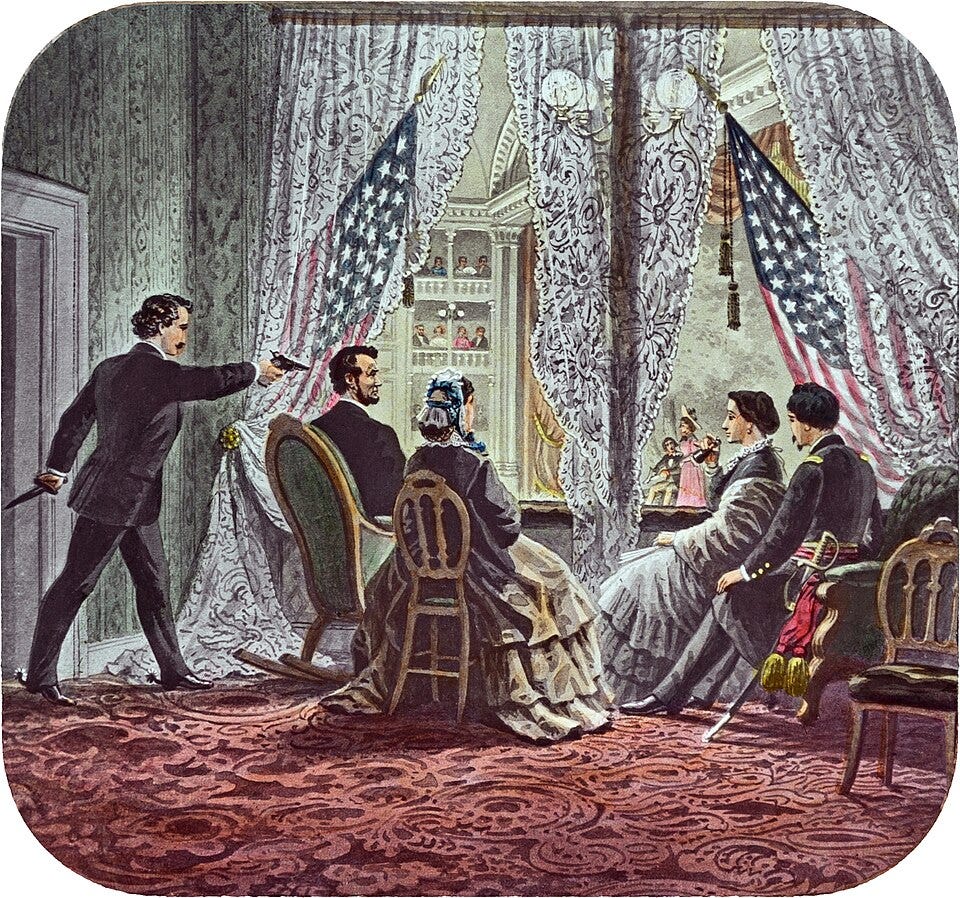
What followed the assassination plot was one of the greatest manhunts in American history. The military, the newly formed Secret Service, The DC Metropolitan Police, and other law enforcement agencies immediately began the work of bringing the conspirators to justice. Secretary of War Edwin Stanton even sent a 1 a.m. telegram to NYPD Commissioners, requesting “three or four of his best detectives” to respond to Washington immediately to assist in the investigation.
Ten people were identified in the conspiracy. Booth was shot and killed during a standoff. Four others were hung in July 1865, including Seward’s attacker. Five others were sentenced to prison terms.
It was a terrible day for the country. Ironically, the former confederate states were likely the most harmed by Lincoln’s murder. Lincoln had told his most trusted advisors that he wanted to return the country to its former status and forgive the southern rebels. His attitude was on display in his second brief inaugural address, just weeks before his murder, where he closed with the famous lines,
With malice toward none; with charity for all; with firmness in the right, as God gives us to see the right, let us strive on to finish the work we are in; to bind up the nation’s wounds; to care for him who shall have borne the battle, and for his widow, and his orphan—to do all which may achieve and cherish a just and lasting peace, among ourselves, and with all nations.
A clear indication that he wanted to heal, not punish the soon-to-be-defeated southern states.
General William Tecumsah Sherman, was criticized for offering very lenient terms when accepting the surrender of Confederate General Joseph Johnston’s army weeks after Lincoln’s assassination. Sherman, who was brutal during the war, based his surrender terms on what he believed Lincoln would have wanted. He later wrote of Lincoln, “Of all the men I ever met, he seemed to possess more of the elements of greatness combined with goodness than any other.”
Alas, instead of Lincoln’s magnanimity, the country was subjected to four years of President Andrew Johnson, a small and spiteful man. Johnson wanted a quick return to normalcy, but his views were mired in racism and opposition to the 14th Amendment (which made former slaves citizens). His views and actions allowed for the division between north and south to continue to fester and was eventually impeached by Congress.
Despite the best efforts of the media and partisan politicians, the United States is not in a state of civil war today. But the attitude of Lincoln towards the south can impart lessons on out current state of tension. What this country needs now is forgiveness and compromise — a “lincoln-esque” approach. Unfortunately, our current leaders show no indication that they are as capable and conscientious as Lincoln. The angriest and most strident voices in our society today are amplified by social media and news outlets. Politicians in Congress snipe while accomplishing next to nothing. Most of all, there is rarely a thought of working together to find some semblance of common ground.
Lincoln received threats and insults from many southerners and criticism from many northern politicians. Reading the divisive nature state of the country, he famously created his “team of rivals” cabinet, selecting contrasting voices from all sections of the country, including some of those he had just bested in the 1860 election. Lincoln was a compromiser and a consensus builder. We don’t see anything resembling that today, and are worse for it.
Lincoln’s Lessons Re: Iran
Lincoln famously used folksy, humorous anecdotes to make a point. Few survive verbatim, but here is one that our current president should consider regarding our current conflict with Iran.
There was a man traveling with a team and wagon who came to a stream that he had to cross. It wasn’t much to look at from the bank, but once you got in, the current ran a little stronger than it seemed, and the footing was not as steady as a man might wish.
Well, he started across with the horses he had—nothing extraordinary, but they were the team that had brought him that far, and they knew the harness and the work.
He got partway in, and by that time the water had risen up about the wheels, and the current was pressing against the wagon so that it required a good deal of care to keep things straight. His team was struggling, the water was rising, and things were looking bleak.
About then, a man standing on the bank called out to him. He said that those were poor horses, and that he ought to have better ones—stronger ones—and that he would do well to stop where he was and get a different team before going any farther.
The fellow in the stream listened to him a moment, and then he called back that he had no doubt there were better horses somewhere—but that he was already in the stream with these, and they were doing the best they could.
He said that if he were to stop then and undertake to change teams, he would be likely to lose what he had already, and perhaps the wagon besides.
And so he told the man on the bank that he thought he would stick with the horses he had until he got across.
Now, I reckon that was about the sense of it— that when a man is in the middle of crossing a stream, it is not the best time to be swapping horses.
Iran is not the easy foe that Trump initially perceived, but now that we are in the conflict, we must stay the course.
Rome’s Venture into Iran
Iran and its preceding iterations have been around for a long time. They are survivors. In late Republic Rome, the Parthian Empire was the ancestor state of modern Iran. Rome was a mighty force in 55 BC when they turned their attention to the westwardly expanding Parthians.
General Marcus Licinius Crassus took seven legions into what is now eastern Turkey to show the Parthians the might of Rome and stop Parthian expansion. Crassus met the Parthians in the desert near modern-day Harran, Turkey in 53 BC at the Battle of Carrhae. It was there that Crassus met his death and his legions were annihilated.
Rome was not prepared for the fight that the Parthians brought them. Crassus failed to maintain proper lines of supplies. Water, food, and weapons ran low. The Parthians had large formations of calvary that wore down the Roman foot soldiers. They separated legions with feigned retreats and counterattacks. Used their speed, mobility, and geography against the Romans. Armies of archers decimated the legions. It was one of the worst defeats in Roman history.
What made Rome great was that they never surrendered. They did not capitulate, did not give up, did not sue for peace. When faced with defeat, they adapted.
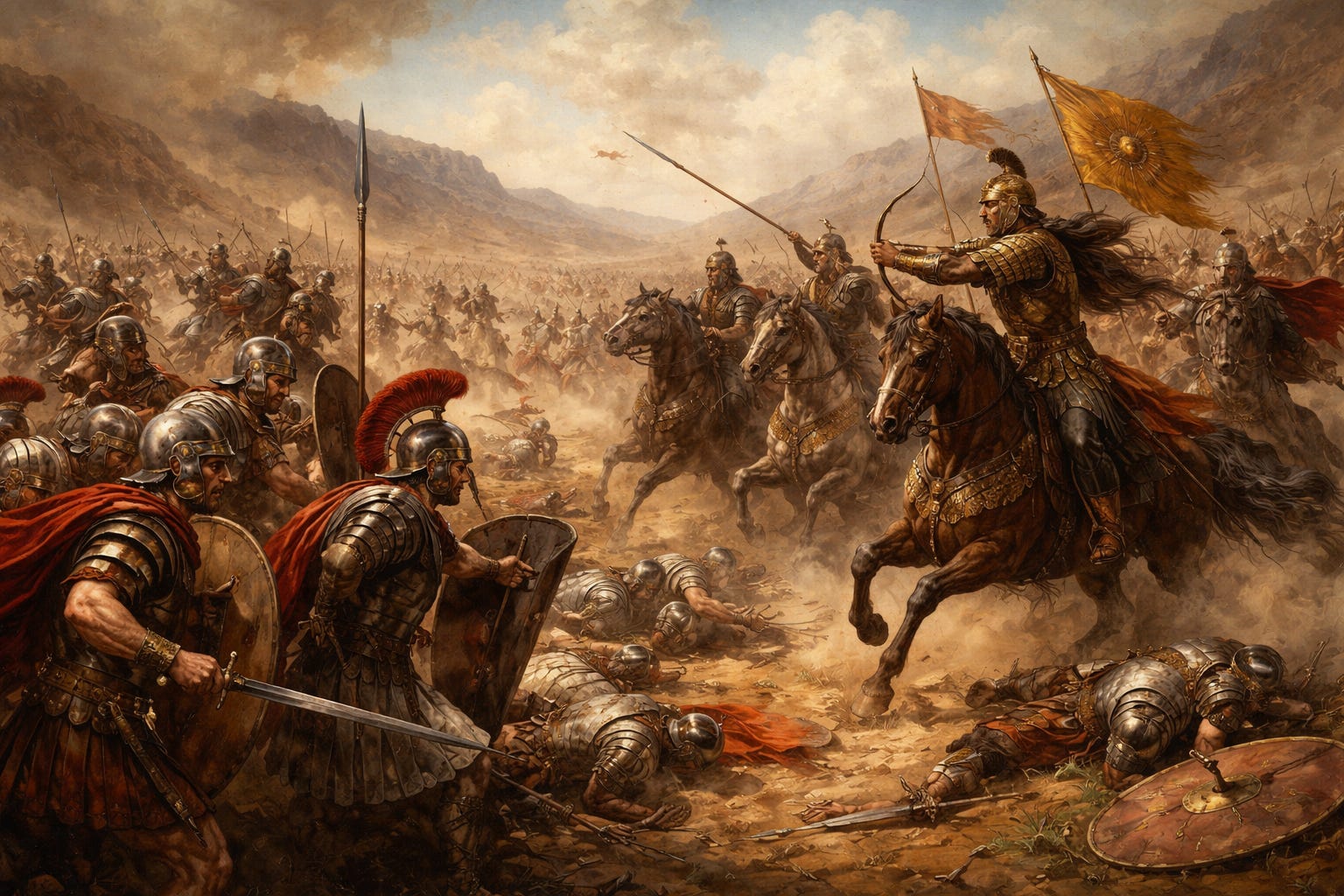
And so they did against the Parthians. Later Roman armies knew to create strong supply lines prior to invading Parthian territory. They added more cavalry to their forces, increased defenses against archers, and added archers of their own to cut down horse troops. They changed tactics, creating box formations to help prevent flanking attacks.
Rome did not try to fight pitched battles in the desert, they used geography to their advantage, using rivers and mountains to stop end runs around their armies. They carried their siege weapons across great expanses to ensure they could capture fortified cities.
They also used the constant internal strife in the Parthian Empire to weaken their enemy. The throne of the Parthians was always under threat from internal conspiracies and succession crises. Rome exploited this weakness to further reduce the Parthians, offering support and money to rival claimants to their empire. Rome prevented a strong Parthian monarchy from taking shape.
In short, they adapted, divided, and conquered.
In our modern war with the Iranian descendants of Parthia, the United States must take a lesson from Rome.
Iran has been preparing to fight the United States since 1979. While we have focused on other countries such as Afghanistan and Iraq, the Iranians have kept their focus on the United States, knowing that a conflict would come someday.
Trump is a smart man despite what his detractors claim. He likely made an unforced error in his initial belief that Iran would be an easy victory. The people running that country are not just dedicated, they are fanatical. Fanatics are never an easy foe.
The United States must now change its own tactics. The art of the deal doesn’t seem to be effective against these radicals. Negotiation is a stall tactic for them. Death and destruction of the Iranian people do not seem to concern them. A change in their supreme leader is not regime change. They have been enduring American sanctions since 1979.
Trump is a guy who sees the angles. He is resourceful. Perhaps this military foray into Iran was ill-timed or ill-advised. That no longer matters. We are in it and must stay the course.
What we need now is a path to victory. Trump’s recent messaging implies that he is willing to make a bad deal. That is uncharacteristic of Trump, and a terrible idea.
As noted above, if Trump is to compromise anywhere, it should be on the homefront. Perhaps endeavor to bring some Democrats into the decision loop for funding and future strategies.
Either way, as Colin Powell famously warned George W. Bush: “If you break it, you bought it.” Trump must fully own this conflict and use his ingenuity and American strength to end the nuclear threat from Iran and achieve genuine regime change so that Iran is no longer a continuing threat to the world — and so the Iranian people can live free lives.
All Americans — indeed, the world — should be rooting for him to find a way.
The Referral That Reopens Impeachment: Inside the Case Against the Whistleblower and the Watchdog

Donald Trump has famously been impeached twice — an historic first for a U.S. President. But was the process legitimate?
Seven years later, the first impeachment of Donald Trump is back under the microscope—and not because of new politics, but because of new scrutiny on how it all started.
What kicked this whole thing off matters—because if the foundation is shaky, everything built on top of it deserves a second look.
The whistleblower complaint at the center of the impeachment alleged that President Donald Trump used a July 25, 2019 phone call with Ukrainian President Volodymyr Zelensky to pressure Ukraine into investigating political rival Joe Biden and his son. The core accusation: a quid pro quo—military aid in exchange for dirt on the Bidens.

Here’s the critical piece: the whistleblower, widely reported to be Eric Ciaramella, did not have firsthand knowledge of the call. The complaint itself acknowledged it was based largely on information relayed by other officials—what in any investigation would be considered hearsay layered on hearsay.
That didn’t automatically make it false—but it did raise the bar for verification. Instead, it accelerated the timeline.
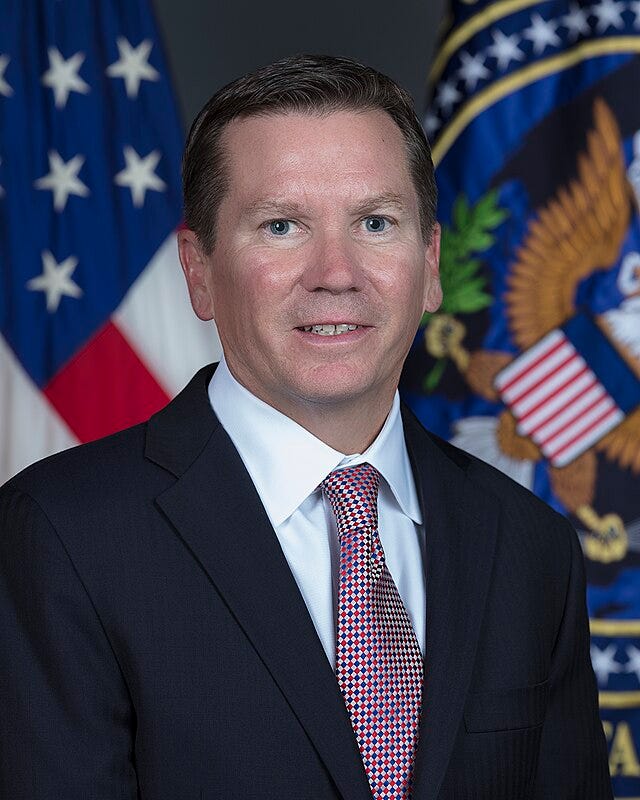
Enter Michael Atkinson, the Intelligence Community Inspector General at the time. Atkinson deemed the complaint credible and urgent, even as the Department of Justice had signaled it did not meet the statutory threshold for an “urgent concern.” That decision moved the complaint into Congress—and from there, the political machinery took over.
Now fast forward.

Director of National Intelligence Tulsi Gabbard has referred both Atkinson and Ciaramella to the Department of Justice for potential criminal investigation. The allegation isn’t a minor procedural error—it’s whether the system was manipulated to push forward a complaint that didn’t meet the standard, and whether key safeguards were bypassed in the process.
From a cop’s standpoint, this is where you start asking hard questions.
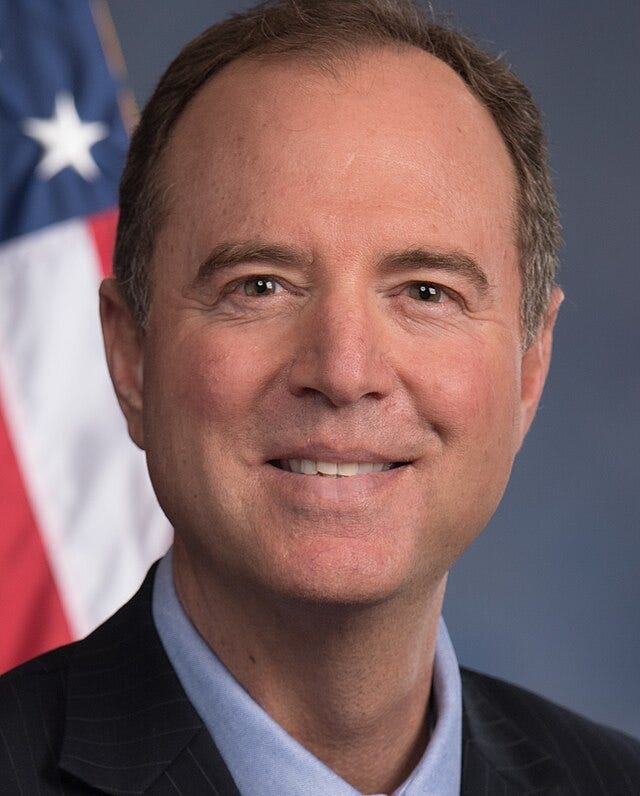
So: who did the complainant talk to before filing? Why were congressional staff—particularly those tied to Adam Schiff—in contact before the formal submission? What role did internal networks play, including figures connected to the National Security Council like Alexander and Eugene Vindman?
None of that proves a conspiracy—but in any serious investigation, pre-complaint coordination is a flashing red light.
And then there’s procedure. The intelligence community’s whistleblower form was revised around that time to allow complaints based on secondhand information. Maybe that’s modernization. Maybe it’s coincidence. Or maybe it’s a door that should never have been opened without stricter guardrails.
None other than legal heavy hitter Alan Dershowitz — a Democrat — argued during impeachment that even if the allegations were true, they didn’t meet the constitutional standard for removal absent a clearly defined crime. At the time, that argument was dismissed by critics as partisan. But if the underlying complaint is now being scrutinized for how it was built—and whether it should have advanced at all—that argument doesn’t disappear. It gets louder.
Let’s be clear: a criminal referral is not a conviction. DOJ will decide whether there’s enough to move forward. But this isn’t just about two officials. It’s about whether intelligence channels—designed to protect the country—were used, collusively, to trigger one of the most serious constitutional actions available: the impeachment of a sitting president.
If that process was compromised, even at the margins, it’s not just a political story.
It’s a systemic one. And in that world, accountability isn’t optional—because without it, nothing stops the next abuse of our system of government.
And finally….
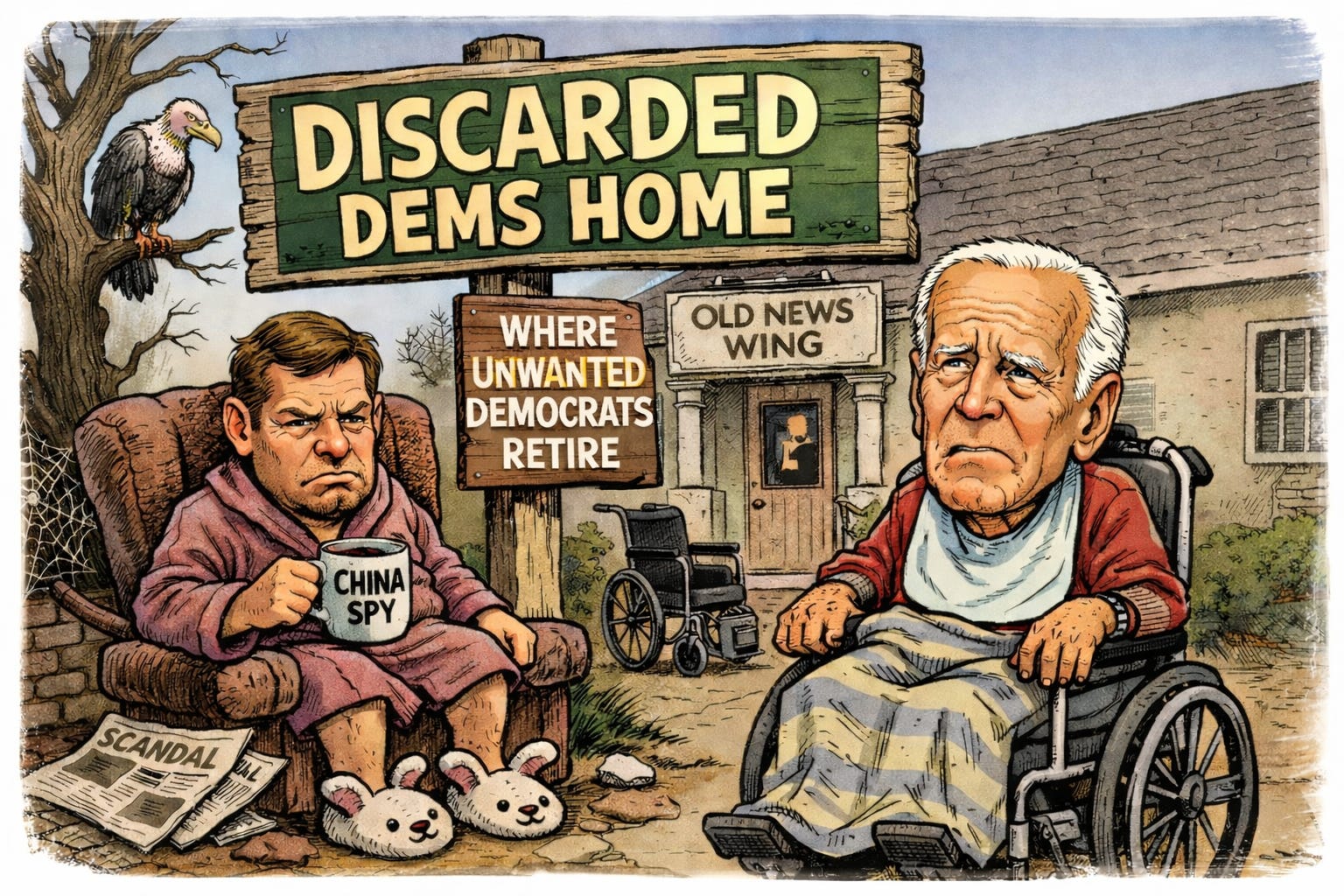
Funny — but really, not so much.
Our sources tell us there are more coming. And not just on the Democrat side.

The war against Iran has gone almost exactly to script.
The Americans/Israelis have decapitated the extremist/fanatic religious ghouls and now the equally extremist IRGC has taken control. We are dealing with a military junta that understands military means. That's actually good.
Underlying this transformation is a simple economic fact -- war is expensive and the IRGC collectively and individually cannot do without a paycheck.
The Americans/Israelis have adapted to that reality by a handful of specific actions:
1. cutting the rail link to China; and,
2. blockading the waterways leading from Kharg Island, the terminus of oil shipments from Iran.
Taken together they accomplish two important objectives:
1. cutting off all revenue going to the IRGC; and,
2. denying any imports to Iran.
Just as you personally need air and water to function, the IRGC needs money to pay itself, to afford re-supply, and to pay its thuggery.
Stay the course.
The Iranians were near producing a nuclear weapon. They already had Intermediate Range Ballistic Missiles (IRBMs), and the technology to make Intercontinental Ballistic Missiles (ICBMs). The Mullah's in charge are/were dedicated to imposing Islam and Sharia Law on the world. Those are facts that the Democrats and too many Americans ignore/totally discount when assessing this war and international situation. These are uncomfortable issues to cover and accept, but the Iranians with a nuclear weapon was a danger not only to the Middle East, Europe, but the entire world. Far too many have not studied or have knowledge of History. To ignore history is to invite disaster and destruction to the Western World.