

Nvidia CEO Jensen Huang’s November 12 resignation, following revelations of an affair with a woman suspected of spying for China, exposed a national security vulnerability far beyond one executive’s misconduct.
Alice Huang was associated with Megaspeed, a Singapore company under investigation for allegedly helping China obtain restricted American chips. She has also reportedly associated with Nvidia’s Chinese rival chipmaker Huawei.
It appears that Alice Huang’s network of companies helped facilitate at least $7.5 billion worth of Nvidia chip shipments to Chinese businesses, in violation of U.S. law. If accurate, the allegations represent a very serious compromise of America’s national security, giving China access to advanced computing technology that American export controls were specifically designed to keep out of Beijing’s hands.
Who violated American law remains under investigation. But the network of Singaporean, Malaysian and Chinese companies, linked through offshore ownership, not only illustrates how difficult it is to protect American technology once it enters global supply chains. It also highlights a larger national security vulnerability: America’s continuing dependence on Taiwan for the manufacture of Nvidia’s most advanced chips.
The solution would seem obvious: bring as much of that manufacturing back to America as possible. But there’s a problem. Ready for this?
We don’t know how.
The world’s most technologically advanced nation—America—no longer has enough people who simply know how to build things.
The Taiwan Problem
Consider who actually manufactures Nvidia’s chips. It’s not Nvidia.
Nvidia designs its advanced AI processors, but virtually all of them are manufactured by Taiwan Semiconductor Manufacturing Company (TSMC), according to industry estimates.
TSMC operates primarily in Taiwan, which Beijing claims and has repeatedly threatened to take by force. An invasion or blockade could cripple chip production essential to American AI, communications and military technology.
And it gets more complicated. TSMC itself owns two semiconductor factories in mainland China, one in Shanghai and another in Nanjing. Both are wholly owned subsidiaries, although they manufacture older technology rather than Nvidia’s leading AI processors.
The threat of China capturing Taiwan’s advanced facilities is sufficiently serious that TSMC’s former chairman, Mark Liu, warned in 2022 that an invasion would render the factories inoperable. Subsequent reporting revealed that TSMC and its Dutch equipment supplier ASML possess technology capable of remotely disabling critical manufacturing equipment.
Think about that. The world’s most important semiconductor manufacturer must contemplate making its own factories unusable to prevent China from taking them over. And a European nation has the kill switch.
With America, essentially, sitting on the sidelines.
Bringing the Factories Home
COVID demonstrated the dangers of depending on foreign manufacturing for essential supplies. America found itself scrambling for medical equipment, pharmaceuticals and semiconductor chips. Congress responded in 2022 with the CHIPS and Science Act, providing billions in incentives to restore domestic semiconductor manufacturing.
As a result, TSMC received up to $6.6 billion in federal funding to build an advanced chip fabrication plant—a “fab”— in Arizona. Trump made manufacturing revival a priority, using tariffs and investment negotiations to promote domestic production. In July 2026, TSMC raised its planned U.S. investment to $265 billion.
But announcing factories and building them are different propositions.
Arizona just proved it.
The Tiny Taipei Experiment
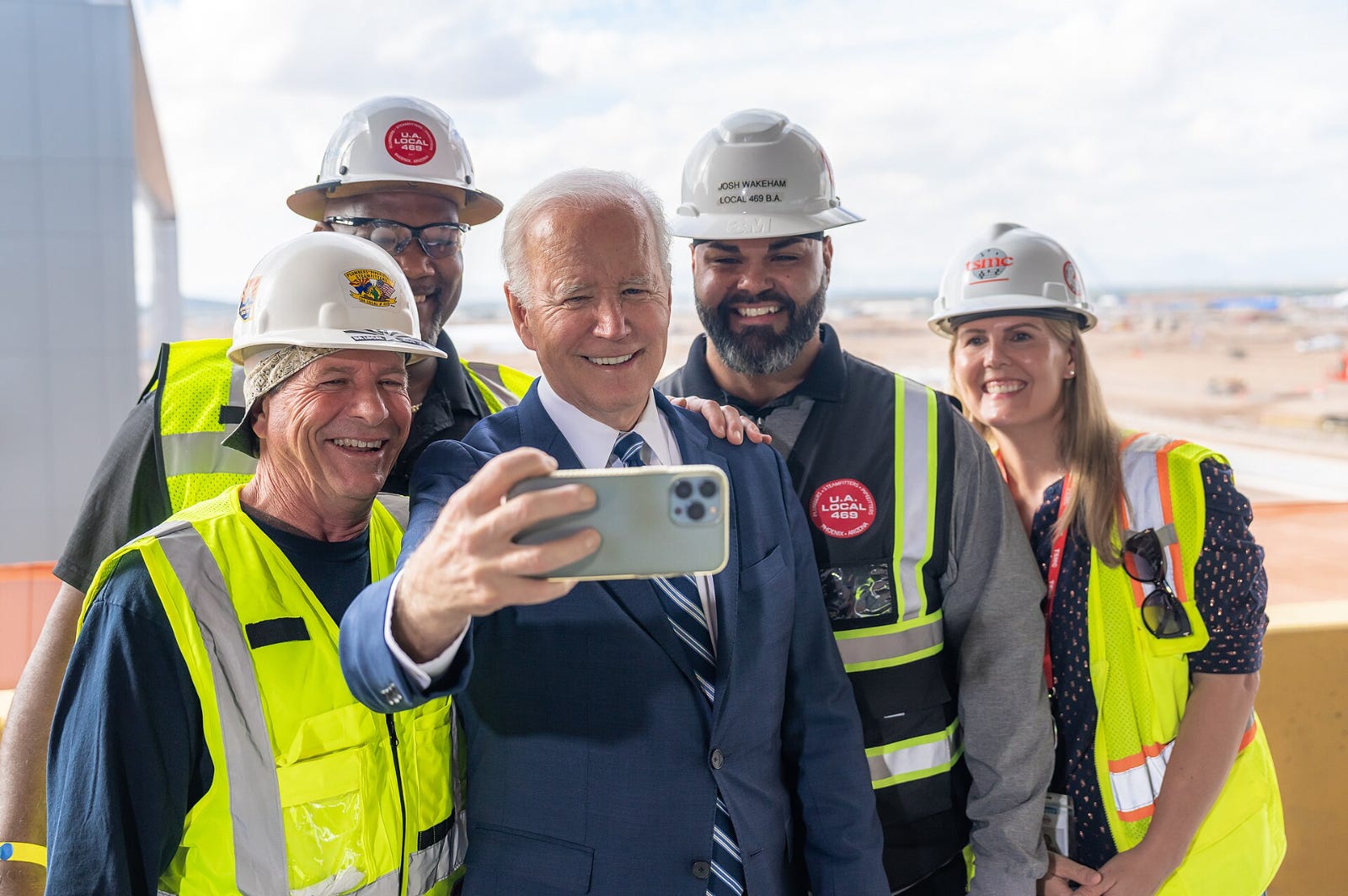
Attempting to build its first advanced fab outside Phoenix, TSMC struggled to find workers experienced in specialized construction and equipment installation. So much so, in fact, that in 2023 TSMC announced plans to bring approximately 500 specialized workers from Taiwan. The construction difficulties contributed to delays in the original production schedule.
American construction unions objected, insisting qualified domestic workers were available and that TSMC was not adequately using them. The dispute eventually produced an agreement addressing local hiring and training.
Nevertheless, thousands of Taiwanese employees and their families relocated to Arizona, creating an expatriate community now known as Tiny Taipei. Taiwanese restaurants, specialty businesses, and residential communities emerged around the project. One apartment complex became known as TSMC Village.
Now, there is nothing inherently wrong with Taiwanese workers helping build American industry. But why did we need to import so much specialized expertise, rather than already having enough Americans trained to do this work?
And finding the labor was not the only problem. The CEO of TSMC, a man named C.C. Wei, described extraordinary regulatory difficulties, explaining that the company spent $35 million working with local authorities to develop approximately 18,000 rules needed to address the project’s regulatory requirements.

The Problem Continues
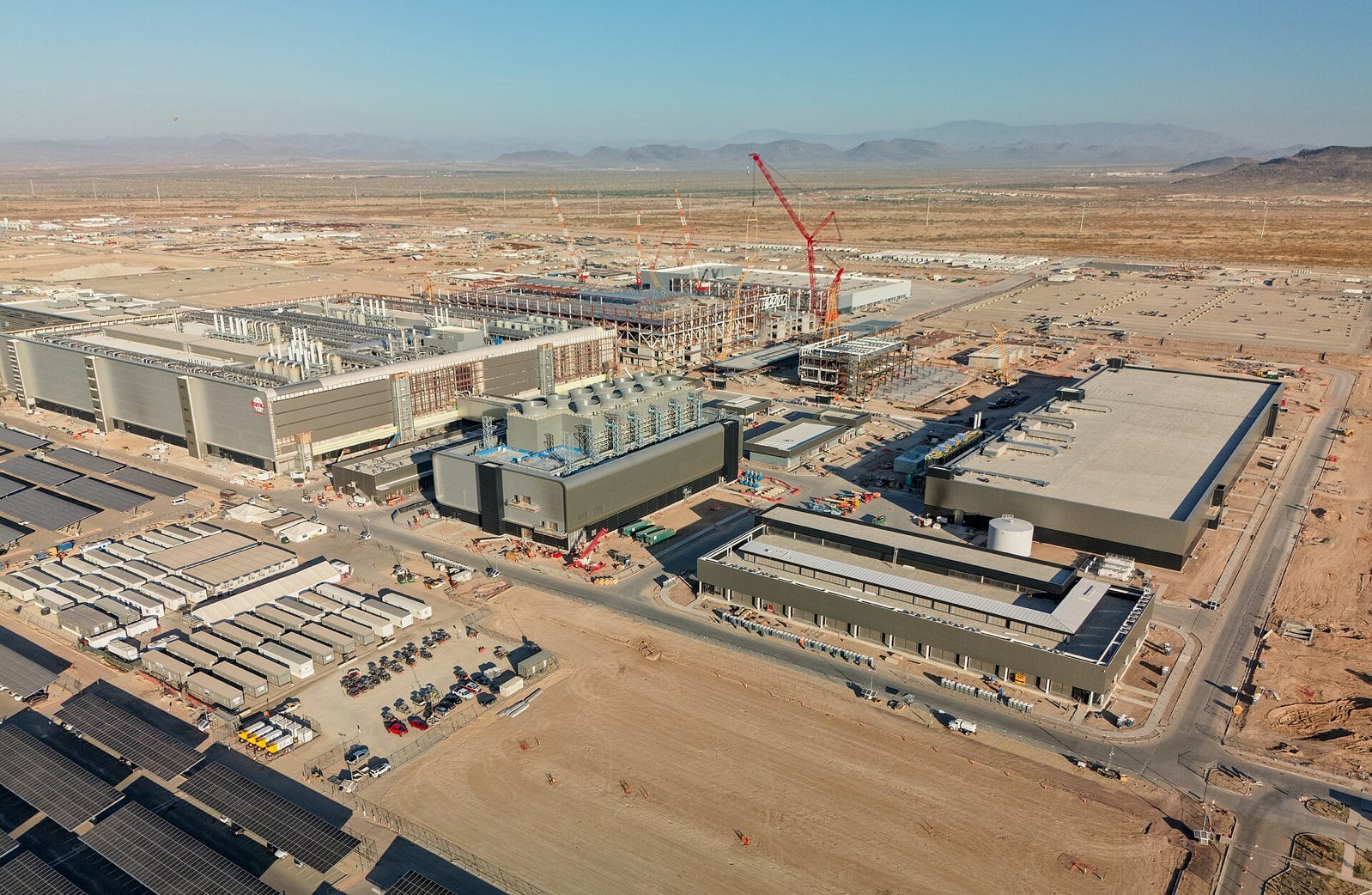
TSMC’s first Arizona fab began producing chips in late 2024. A second is preparing for production and a third is under construction. Yet the worker shortage persists. In a July 2026 interview, TSMC Chief Financial Officer Wendell Huang (is everybody in tech named Huang?) acknowledged continuing shortages of construction workers and infrastructure limitations.
These delays threaten more than the economy. Each year America depends on overseas production of advanced chips extends its national security exposure, especially given China’s ambitions toward Taiwan.
That exposes a weakness in America’s industrial revival: we need electricians, pipefitters, welders, precision technicians and engineers to build and run these sophisticated factories.
We need people who know how to swing a damn hammer. Accurately.
Yet for decades, our educational establishment has emphasized four-year college degrees while treating vocational education and skilled trades as lesser alternatives. A U.S. semiconductor workforce study commissioned by the Semiconductor Industry Association projects that the industry will face tens of thousands of unfilled technical positions by 2030.
We encouraged young Americans toward desk jobs while the expertise to manufacture their technology migrated overseas.
America needs to reconsider what it is teaching its children.
That requires technical high schools, apprenticeships, community colleges and industrial training. This is no longer just an economic competitiveness issue. It’s a matter of national security. Trump is right to demand American manufacturing. The CHIPS Act also recognized that need. But tariffs, subsidies, and speeches cannot produce skilled manufacturing workers overnight.
Enough with $100,000 in student loans to get useless degrees in Hate America 101. If America wants its manufacturing independence back, it first has to rebuild the workforce capable of achieving it.
Otherwise, we will find ourselves dependent upon foreign labor to build the very factories intended to protect us from foreign dependence, while leaving America’s most critical technologies exposed to the very foreign threats we are trying to escape.
Great post. Well worth the read.