


Something strange is happening at ActBlue.
Three separate House committees—Oversight, Judiciary, and House Administration—have spent more than a year investigating the Democratic Party’s primary online fundraising platform over allegations that its fraud controls may have permitted illegal donations, including contributions originating overseas.
Congress wanted answers from the people who actually worked there.
Instead, it got the Fifth Amendment. Collectively, over 150 times.
According to the committees’ April report, all five current or former ActBlue employees who sat for depositions invoked their Fifth Amendment right against self-incrimination on substantive questions—a total of 146 times.
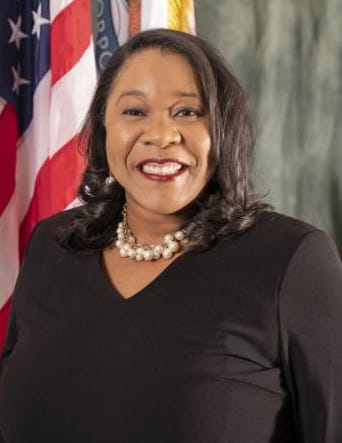
Then came ActBlue CEO Regina Wallace-Jones.
Subpoenaed to testify publicly in June, Wallace-Jones invoked the Fifth 21 times, declining to answer the committee’s questions.
To be clear, invoking the Fifth is not evidence of guilt. Wallace-Jones says the investigation is politically motivated and that exercising her constitutional rights was the appropriate response. ActBlue denies wrongdoing.
But Congress is investigating some serious questions.
The committees want to determine whether foreign nationals or other prohibited donors exploited ActBlue to funnel money into American elections, whether donations were made in other people’s names, and whether ActBlue’s internal fraud-prevention procedures were sufficient to detect them. Investigators say internal documents show ActBlue weakened some fraud controls in 2024 despite evidence of attempted fraud, including activity connected to foreign actors.
The investigation has now gone further. A third congressional report, released September 16, focuses specifically on ActBlue’s handling of donations associated with foreign addresses and alleges serious deficiencies in procedures for verifying that those donors were actually American citizens.
Now, lest we consign this to a “fishing expedition,” let’s just recall a recent simple cause-and-effect: upon taking office, Donald Trump shut down USAID. Since then, the shift in electoral politics in Latin America has been demonstrably to the right.
Talking heads will tell you these two events are unrelated. I’m not buying that.
Full disclosure: this writer recently had the opportunity to interview the Chairman of House Oversight, James Comer (R-KY). The Chairman’s frustration with the lack of candor from the hearing interviewees was palpable. As was his frustration with how little the media seems interested.
Now of course, ActBlue disputes the current findings of the House committees. An outside review commissioned by ActBlue concluded that foreign-address donations represented only a tiny portion of its business and argued that ActBlue properly verified donors in nearly all relevant cases.

So what happens next?
Congress can keep following the documents. The committees have subpoena power and are seeking internal communications and other records. They have already threatened ActBlue with contempt of Congress over documents ActBlue claims are protected by attorney-client privilege.
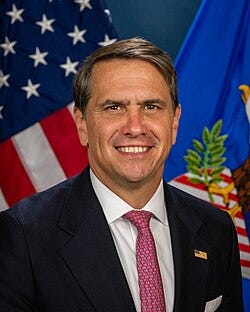
But here’s the real teeth: DOJ. President Trump has directed the Attorney General to investigate alleged straw-donor and foreign-contribution schemes involving online fundraising platforms. Federal law prohibits both foreign-national contributions and contributions made in another person’s name.
Trump made that referral under Pam Bondi. We’ve heard nothing about it since. Will Todd Blanche pursue it?
If so, that is where this could all become considerably more serious.
Congress can uncover facts and recommend legislation, but it’s DOJ that prosecutes. In light of the recalcitrance of ActBlue officials, it may be time to subpoena these officials into a federal grand jury and put them under oath. Lower-level administrators can be given immunity, thereby removing the “take the Fifth” option.
After all the “Russia Russia Russia!” hysteria launched by the left and the media at the Trump administration, it’s starting to look like a “people in glass houses…” scenario.
And Speaking Of Russia….
There are some things that shouldn’t require a lawyer, an ethics expert, or an intelligence briefing to tell you they’re a bad idea.
Allowing a well-connected Russian oligarch to spend hundreds of thousands of dollars on your wedding festivities when your father is President of the United States—and has had to fight off charges of “Russian collusion”—qualifies.
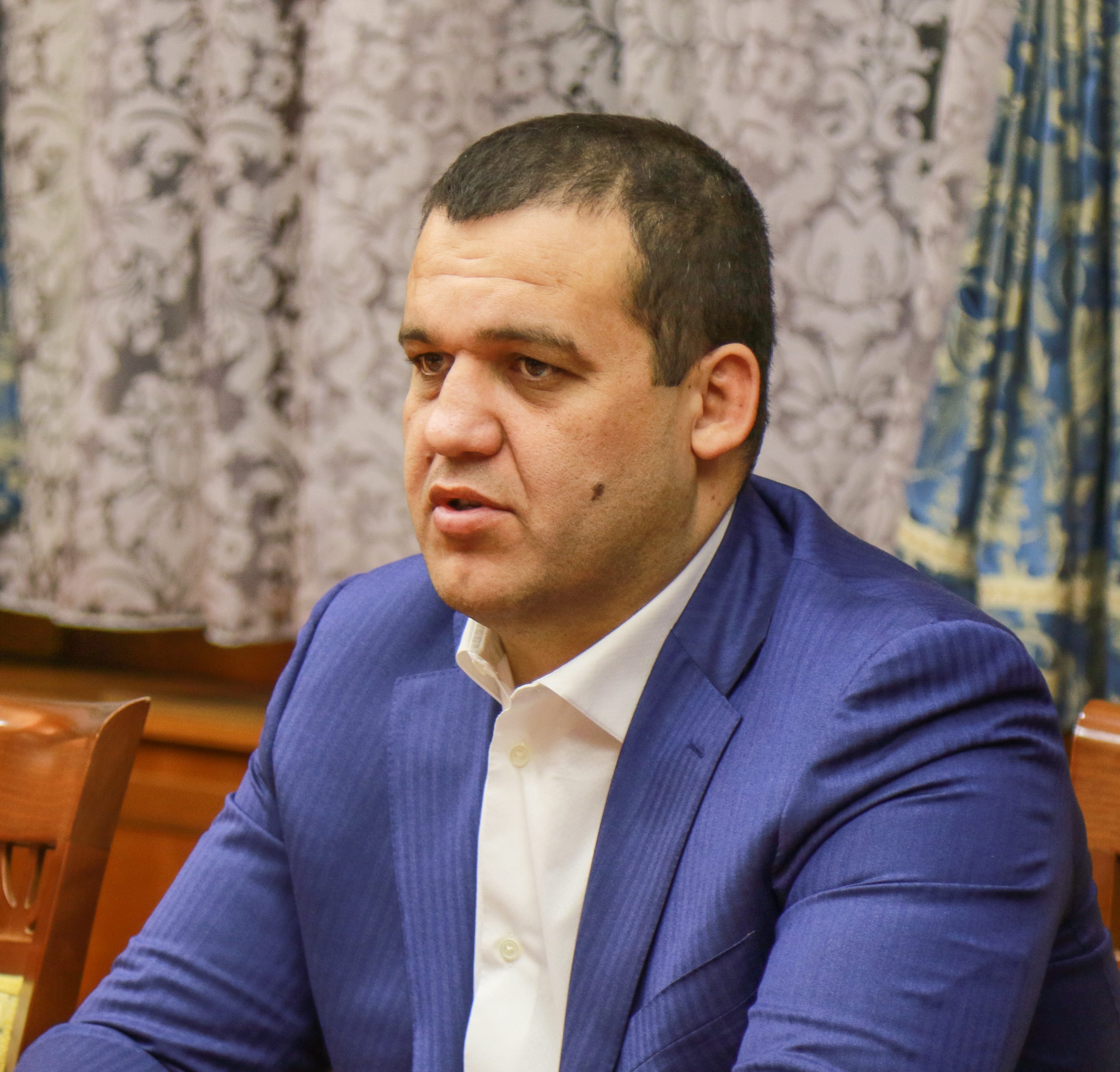
Donald Trump Jr. and his wife, Bettina, have acknowledged that Russian businessman Umar Kremlev hosted two nights of their wedding celebrations in the Bahamas. Kremlev heads the International Boxing Association, has done business with the Russian state, and has received honors from Vladimir Putin. ProPublica reported that his contribution to the wedding ran into the hundreds of thousands of dollars. Donald Jr. does not dispute this.
Now, there is no public evidence that Trump Jr. promised Kremlev anything in return. But that isn’t really the point.
The problem is the lack of judgment.
Donald Trump Jr. isn’t some anonymous businessman. He is the President’s son, a prominent political figure in his own right, and a member of the most powerful family in America. Accepting an enormous gift from Kremlev, whose connections to Putin run so deep that he recently traveled with Putin to China, creates precisely the appearance of influence that the administration’s adversaries—here and abroad—would love to exploit.
And considering the President is slated to meet with President Xi this week in Washington… not a great optic there.
Trump Jr. apparently figured that out eventually. His dad said Friday that Junior—who is reportedly worth $350 million—had repaid Kremlev, and a person close to Trump Jr. confirmed the repayment.
Good.
But the better move would have been to not let this character hand you any freebies—thereby handing the left an easy talking point.
From The Opswire Editor: There’s A Lot Of Green In Greenland
For most of the past year, the argument over Greenland has focused on whether Donald Trump could actually acquire the island. That may have been the wrong question. The agreement announced Friday suggests that the United States did not need to own Greenland to obtain much of what Washington actually wanted from it.
President Trump announced Friday that the United States, Denmark, and Greenland have reached an agreement giving America what he calls “permanent control over security” in Greenland. Denmark and Greenland describe it more narrowly, emphasizing that sovereignty and Greenlandic self-determination remain intact. But the strategic result is difficult to miss: America gets a substantially expanded and permanent security position on the island while Denmark keeps the flag. While not inked as of yet, the agreement appears to provide permanent American access, basing, and overflight rights and bars adversaries from establishing military bases or making “sensitive investments” (mineral rights? Oil? Data centers?) without U.S. approval.
Make no mistake: this is a substantial strategic gain.
Greenland sits between North America, Europe and the Arctic, directly astride increasingly important missile, air, space and maritime routes. And the Arctic competition Trump has been talking about is no longer hypothetical. Its geography could also make Greenland important to Trump’s developing Golden Dome missile-defense system. President Trump suggests that the the Greenland deal itself will cost America nothing, though that presumably does not include the expense of expanding the U.S. military presence there.
Russia spent decades building the world’s dominant icebreaker fleet and the ports and infrastructure necessary to operate across the Arctic. America fell badly behind. The Trump administration has been trying to reverse that, including through its arrangement with Finland to build a new generation of Arctic Security Cutters while bringing Finnish icebreaker technology and shipbuilding expertise into American yards.
China, meanwhile, has begun exploiting Russia’s head start. A Chinese-controlled shipping company this year began what is intended to become the first regularly scheduled container service between China and Europe across Russia’s Northern Sea Route. Russian oil is already moving through those waters toward China and other Asian markets.
As Paul described recently in The Ice Is Moving in Greenland, Moscow built the infrastructure and Beijing has begun using it. The United States is now trying to catch up.
Greenland gives Washington an extraordinary geographic platform from which to do it.
And America gets that position without becoming Greenland’s government.

Greenland remains part of the Kingdom of Denmark. Washington does not inherit responsibility for administering the island, paying for its social programs or assuming the broader financial obligations that would come with sovereignty. America gets the strategic benefits without becoming financially responsible for Greenland itself.
Then there are the resources.
Natural-resource cooperation was specifically discussed during the negotiations. American commercial interests are already moving in that direction. As detailed in our previous Greenland report, American-backed Greenland Energy is pursuing oil exploration in eastern Greenland, with Halliburton identified as an execution partner. The agreement does not publicly award that project any special rights, but the combination of resource cooperation, American investment and Washington’s new ability to block hostile strategic investment certainly makes ventures like it worth watching.
Perhaps just as interesting is Greenland’s reaction.
Foreign Minister Múte B. Egede called the agreement “a solution that is good for all parties,” while emphasizing that Greenland’s right to self-determination remains intact. Greenland’s own public broadcaster, KNR, reported his response, including his statement that Greenland’s “red lines” had not been crossed. In other words, Nuuk is not publicly treating this as an American takeover. It is presenting it as a greatly expanded security relationship on terms Greenland can accept.
Trump may also have been negotiating at a moment when Europe’s leverage was less formidable than it once appeared. The European Union remains a major economic and political bloc, but there are signs that the appeal of concentrating ever more authority in Brussels has lost some of its luster.
Perhaps the most notable recent example comes from neighboring Iceland. In August, Icelanders rejected reopening negotiations to join the European Union, 52.8 percent to 47.2 percent. Concerns over sovereignty and national control of the country’s enormously important fishing waters figured prominently. Rural areas in particular rejected membership, while the intellectual class in Reykjavik was more favorable.
The significance is not that Iceland speaks for Europe. It is that even a wealthy Nordic country closely integrated with Europe was unwilling to surrender additional control over resources and institutions closely bound up with its own culture. Recent attention to Denmark’s colonial record in Greenland has not helped Copenhagen’s position either. Forced relocations, the removal of Greenlandic children, and the recent genocide report, together with Europe’s continuing open-border madness, have added to the erosion of the Continent’s appeal.
At the same time, European security still depends heavily on American military capability. Trump’s pressure has pushed NATO governments toward higher defense spending while simultaneously producing strains inside the alliance. Denmark itself had already begun moving in Washington’s direction, increasing its military activity in Greenland and doing more of what the United States had been demanding: securing the island.
So Denmark keeps sovereignty. Greenland keeps its government. And America appears to get much of what it was actually seeking: a permanent strategic position, expanded military authority, the ability to keep Russia and China out, a stronger foothold in Greenland’s resource economy and a much stronger position in the emerging contest for the Arctic.
America did not get Greenland.
It may have gotten much of what it wanted from Greenland anyway… without the potential downsides.
Nightwatch On: IRAN
Friends, this space has been consistent on the Iran issue: if we go in, we need a clear definition of victory.
Do we have that?
And if so… can we say we’ve achieved it? With diesel currently averaging roughly $6.50 a gallon, and the Republicans polling behind in the midterms?
Join Paul for a conversation with former White House advisor under both Trump administrations, Captain Morgan Murphy of the U.S. Navy. He’s a graduate of the Naval War College, worked at the Pentagon, and has spent long deployments in-theater in the Middle East area.
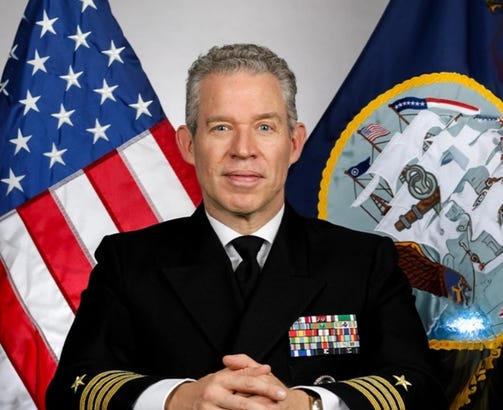
The good Captain’s a guy who has forgotten more about these issues than most talking heads will ever know—and Paul presses him on it. Does he have a different take?
And, um, what’s with the banana pudding?
Join us to see!
The Law And Larry Krasner
We couldn’t let this week’s Ops Drop pass without noting that Philadelphia District Attorney Larry Krasner may finally have a problem he cannot dismiss with another lecture about criminal-justice reform—or by his usual m.o, which is to call anyone who disagrees with him a “Nazi.”

This past week federal U.S. District Judge Paul Diamond as referred Krasner and Matthew Stiegler, chief of his Conviction Integrity Unit, to the U.S. Attorney’s Office for investigation and possible prosecution. Diamond also disqualified both men from participating in the underlying federal case.
And the allegations are extraordinary.
The controversy arose from Krasner’s office’s handling of an effort to overturn the 2009 murder conviction of Dennis Johnson. According to Diamond, evidence developed during hearings suggested Krasner and Stiegler may have pressured prosecutors to advance a false narrative in court while attempting to “protect the office.” Diamond said the evidence could implicate federal laws involving false statements, perjury, obstruction of justice and conspiracy.
When prosecutors inside Krasner’s own office urged him to refer the conflicted matter to Pennsylvania Attorney General Dave Sunday’s office, witnesses testified that Krasner called the AG’s lawyers—you guessed it—“Nazis.” They also testified that Krasner warned there would be “consequences” if employees alerted the court to the conflict. Krasner disputes Diamond’s findings and says he intends to appeal.
This is hardly Krasner’s first collision with allegations of misconduct inside his office. Just three months ago, the Pennsylvania Supreme Court concluded that his office had misled courts, violated its duty of candor and submitted false statements while seeking to overturn another murder conviction.
And recall, Krasner has already had jurisdiction over Philadelphia’s transit system—SEPTA, removed from him.
Now the accusations have moved beyond policy disputes and into the realm of federal prosecution.
The Justice Department should determine whether the evidence supports charges—and do it without fear or favor.
If it rises to the level: prosecute Krasner and his deputy—and disbar them.
Lives will be saved as a result.

True Crime Girl: Fiction or Confession? The Mystery Inside 417 W. Chew Avenue
Seven missing women, five feared dead, and more than a million digital files recovered from a Philadelphia home
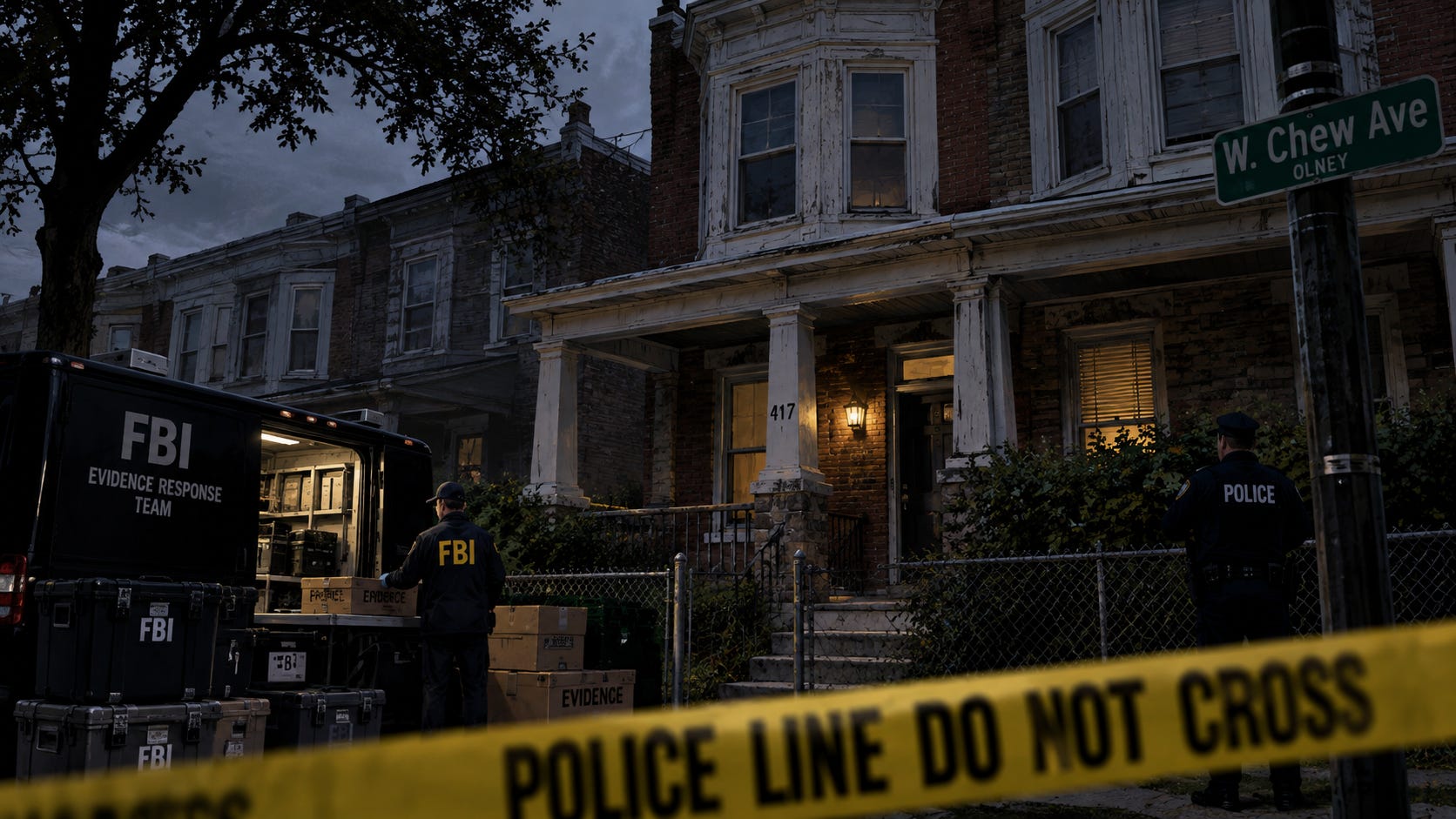
I recently wrote about the June arrest of 44-year-old Eugene Horsch in Philadelphia and the ensuing investigation that led to a house of horrors at 417 W. Chew Avenue in Olney, Pa. At that time, four missing women had been associated with the house. The case has expanded dramatically since then: investigators now say seven missing women are connected to the investigation, including five women whom authorities fear may be dead. Among them is 27-year-old Nicole Fusaro, who disappeared in 2018 and has now been linked to the house.
During a briefing Wednesday, Philadelphia Police and the FBI gave an update on what they found at the Olney house that Eugene shared with his late father, Raymond “R.C.” Horsch. Investigators have recovered more than one million digital items, including writings, videos and photographs. The FBI says investigators have completed only about 30% of their review of this material.


Investigators have so far identified 58 people depicted in the digital material, overwhelmingly women. Although no bodies have been recovered, authorities fear that five women depicted in the material may be dead. They have also identified two other missing women with connections to the house.
When Eugene was arrested, he was with a woman who presented an identification card bearing her own photograph but the name of missing woman Blair Tonzelli. The woman allegedly told investigators that Eugene had given her the ID, making the circumstances even more disturbing. Missing women Gabrielle Amarando and Maribel Fresses also appear in the recovered material. Investigators say images show women who appear unconscious, injured, or lifeless. R.C. Horsch’s ex-wife, Amy McHale, disappeared in 2016 and was reportedly last seen at the Chew Avenue property.
Some of the most troubling digital evidence uncovered so far appears to involve Eugene’s father, R.C. Horsch. That makes the investigation even more complicated because R.C. produced violent, fictional erotic material for a living. Had his “art” morphed into real life? Investigators are now faced with the difficult task of distinguishing which images and videos were staged and which may depict actual violence.
In one particularly disturbing video, R.C. appears to place a zip tie around the neck of Nicole Fusaro, who then becomes unconscious and appears lifeless. Investigators are trying to establish independent evidence showing whether the acts depicted in the video actually resulted in her death.
R.C. also wrote a self-published work titled Empathy: An Overview of 2014, in which he wrote in the first person about being an “empathetic serial killer.” He describes strangling a woman and disintegrating her body with chemicals in a basement bathtub. Could some of what he wrote have been autobiographical, or was it simply the product of a disturbing fictional character he created? Investigators will have to determine whether his career producing violent erotic material may have concealed something far more sinister.
Investigators are still examining chemicals and a 55-gallon drum connected to plumbing and water lines that were discovered during searches of the house. Firearms, ammunition, urns and narcotics were also recovered.
If these violent images were fictional, where are all of these missing women? It seems unfathomable that all of this could simply be coincidence.
In the meantime, Eugene Horsch remains in federal custody, and his attorney, Jerry Brown, has indicated that he intends to plead not guilty to the charges against him.
Importantly, Eugene has not been charged with killing any of the women or causing their disappearances. While far from being a choir boy himself (he has a number of priors), investigators will now have to piece together what he knew, what he witnessed, and whether he was involved in any criminality connected to the women.
Let’s hope law enforcement can finally provide some answers—and some closure—to the people who have spent years wondering what happened to these missing women.
Watch this space for further updates on this story…. We are monitoring.
And finally…

Friends, it’s the digital version of the COVID scare. Don’t fall for it.

How come all these Democrat Party stooges look like clones of Fani Willis or Tampon Tim? I feel like I'm watching Battlestar Galactica. When one goes down, they hit the button and make a new one without missing a beat.