

Friends, if you want to understand something of what is happening today in France, in Europe, and what could happen if America doesn’t wake up… there is one film you have to see.
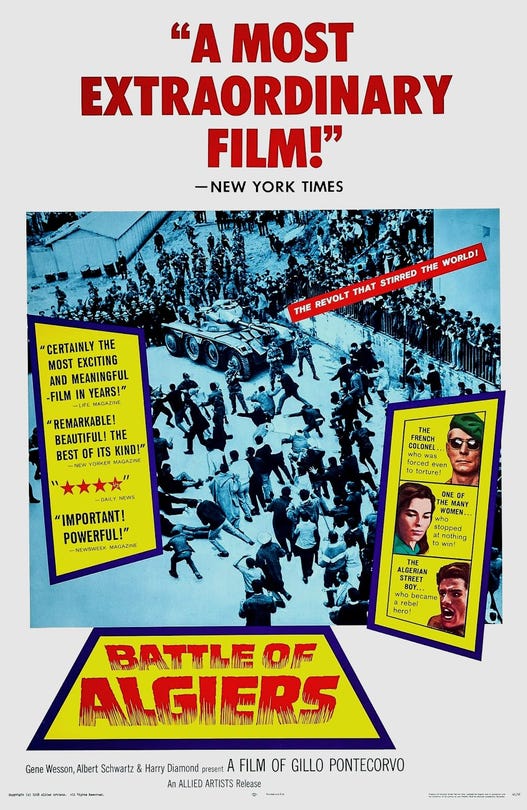
There is something particularly unsettling about watching The Battle of Algiers in 2026, as French cities (once again) burn.
Released in 1966, just four years after Algeria won its independence from France, this black-and-white masterpiece reconstructs the urban insurgency that helped bring an end to more than a century of French colonial rule in Algeria.
It is a war movie without conventional battles, a political thriller without a conventional hero, and probably the most convincing depiction of urban terrorism ever committed to film.
And nearly 60 years later, it remains so compelling, you can’t take your eyes off it.
Set primarily between 1954 and 1957, the movie follows the Algerian National Liberation Front (FLN) as it wages an increasingly violent campaign against French rule in Algeria.
The central character, Ali La Pointe, is a street criminal turned revolutionary. His transformation into a committed FLN operative provides the film with its main narrative, but the real subject is the escalating confrontation between an underground insurgency and a modern European state determined to control and destroy it.
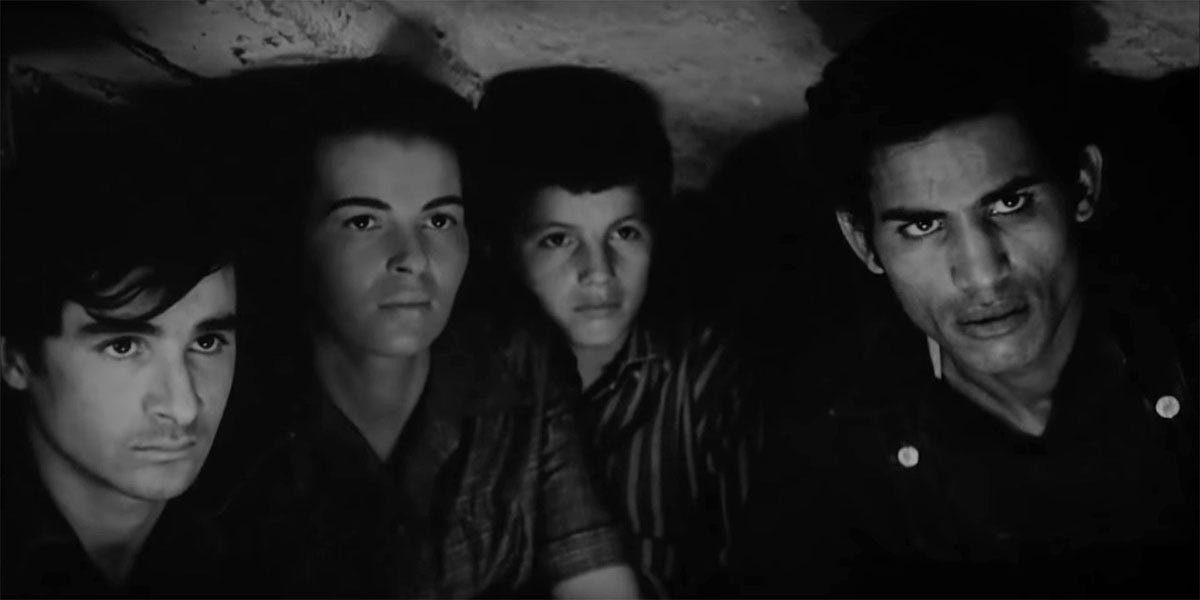
The film’s genius lies in it’s ability to demonstrate the revolutionaries’ motives while refusing to romanticize the violence. This is terrorism unfiltered through the prism of western apologists. The movie feels so real, it’s like a time machine. We watch FLN operatives assassinate French police officers. We see women commit acts of pure terrorism, where the victims are not soldiers but everyday people. We feel the claustrophobic streets and alleys of Algiers as the insurgents are hunted.
And then comes the French response.
Colonel Mathieu, the fictional commander of the French paratroopers, is among the most fascinating military characters in cinema. Played with icy authority by an actor named Jean Martin (I actually thought he must be a real soldier and not an actor), Mathieu is intelligent, disciplined, methodical—and utterly brutal.
What Mathieu understands is that the FLN operates through clandestine cells. But unlike America counterterrorism officials who seek to make criminal cases on the home front, to dismantle the organization Mathieu and his men identify FLN members, penetrate its networks, and work their way up the command structure… and then start torturing.
And, tactically speaking, they succeed.
The insurgent organization in Algiers is effectively dismantled. Its leadership is captured or killed. Mathieu has won his battle.
But in the end, France loses the war. Algerian resistance eventually returns on a much larger scale, and independence follows in 1962. And that distinction between tactical success and strategic failure is the movie’s central lesson. And, perhaps, the one for us.
The movie was shot the film on location in Algiers, using predominantly nonprofessional actors, including actual participants in the conflict (yup—the insurgents themselves). Its grainy cinematography resembles contemporary newsreel footage so closely that audiences reportedly mistook some of the carefully staged sequences for a documentary.
And the counter-insurgency methods the French use are so realistic that the film has been studied by military professionals and insurgent organizations alike. The Pentagon famously screened it in 2003 during the Iraq War (there’s a lesson there).
The film is not entirely impartial. Pontecorvo’s sympathies clearly lie with Algerian independence. But now consider it in the context of today’s France.
On October 6th alone, more than 250,000 French demonstrated nationwide. Authorities reported hundreds of arrests, police employed tear gas and other riot-control measures. Demonstrators have burned schools, erected barricades, vandalized property, and attacked police and teachers.
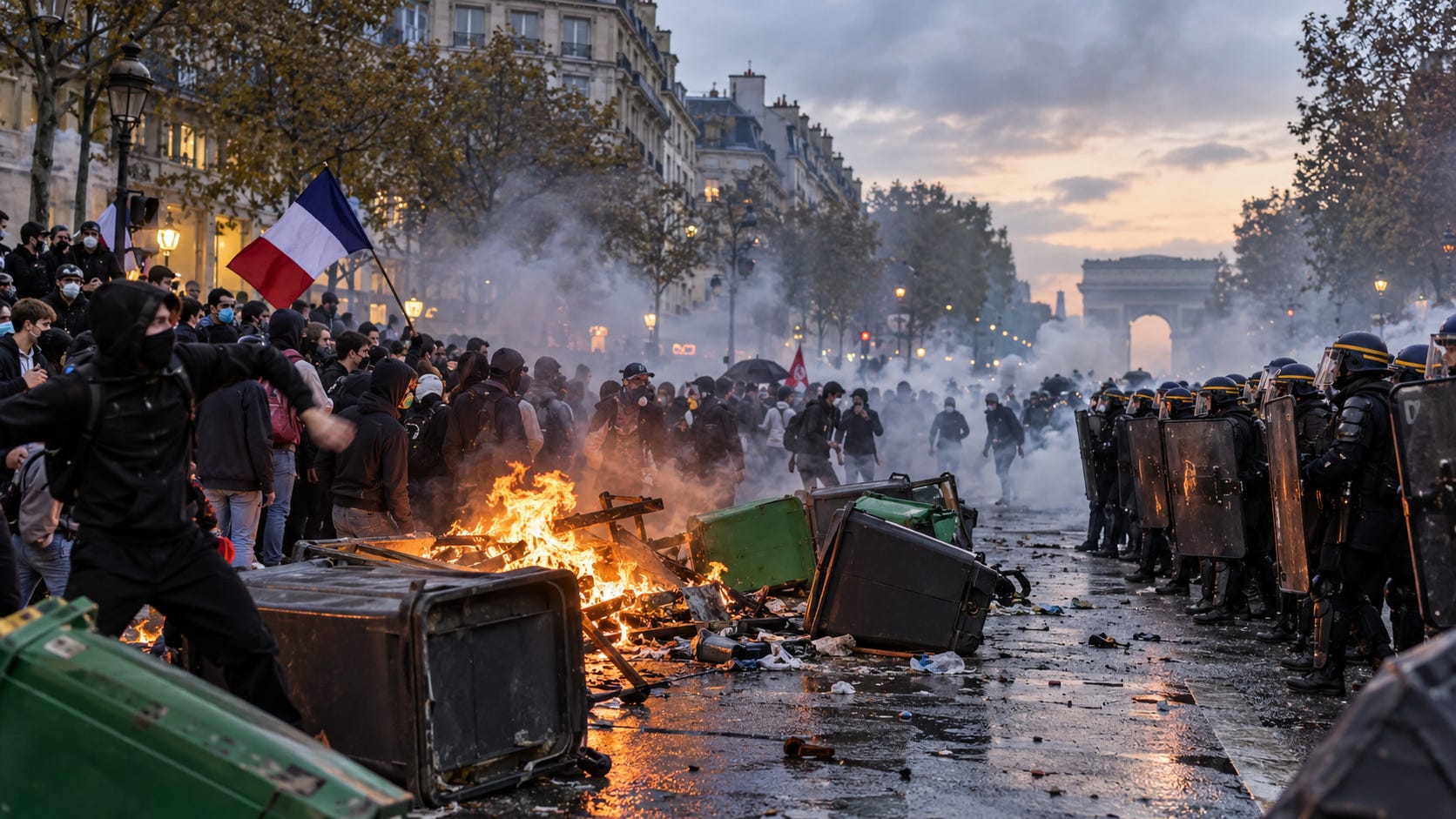
And who, exactly, are these protestors? Many are undoubtedly the descendants of the very people depicted in The Battle of Algiers. That is, North Africans imported into France after WWII for the purposes of cheap labor. Who were supposed to return home—and never did.
Sound familiar?
With Europe’s current open-borders policies, the enduring question posed by The Battle of Algiers is not whether a government has the power to defeat those who challenge its authority. They can. It is whether doing so will actually end the conflict.
In Algeria, the French couldn’t manage it. And with the union of far-left protestors and tens of thousands of migrants and their descendants on the French home front, that nation is now confronting the same issue. And failing.
Just as the UK, Spain, Italy, and other European nations committed to the canard of socialist multiculturism risk failing.
Because if The Battle of Algiers stands for anything, it stands for the idea that the West, and its values, are far from inevitable.
The Battle of Algiers, whatever your view of the politics, is also just riveting cinema. Rent it on Amazon, HBO Max, Kanopy, and (I believe) free on Tubi.
I’m not steering you wrong here, gang. Check this one out.
Then we’ll talk.

A brutal, cautionary, and often explicit film. Sadly, it is as timely today as it was when it was made.