

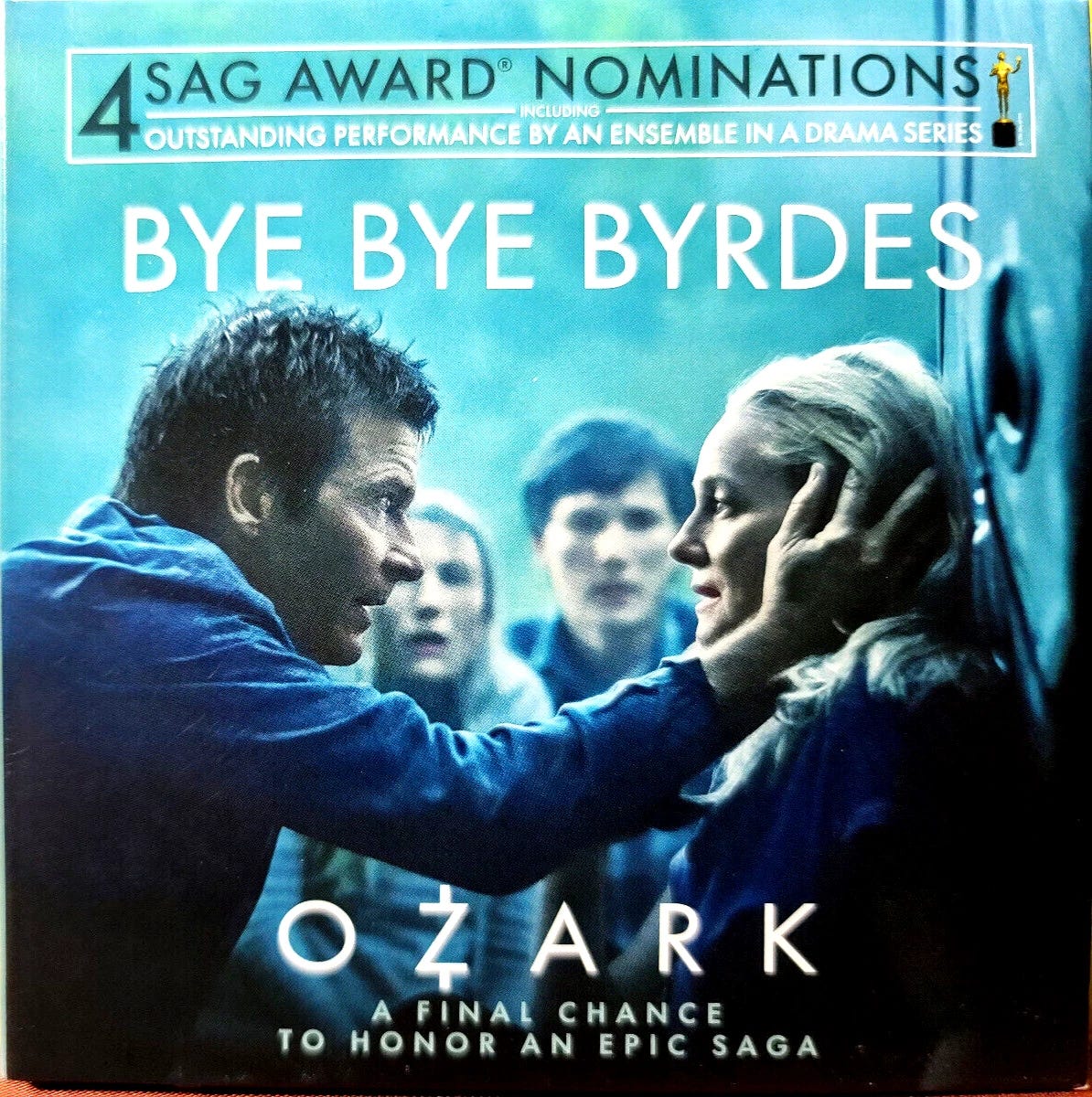
There are plenty of television shows about criminals. Few understand crime. Ozark does.
At first glance, it’s a money-laundering story. Financial adviser Marty Byrde relocates his family to the Missouri Ozarks after a deal with a Mexican drug cartel goes catastrophically wrong. But that’s merely the setup. The real story is how ordinary people convince themselves they can control extraordinary evil—and how quickly they instead become part of it.
From a law enforcement perspective, Ozark gets one thing exactly right: organized crime is not so much transactional as relational. Every favor creates another debt. Every compromise becomes the starting point for the next. Marty and Wendy Byrde aren’t just laundering money; they’re slowly surrendering every moral boundary they once believed was immovable.
The series also understands something investigators see repeatedly: intelligence is no substitute for judgment. Marty may be the smartest man in almost every room he enters, but intellect can’t outmaneuver the fundamental reality that cartels enforce through fear and violence — not negotiation. Every clever solution merely postpones a reckoning while making the next crisis even more dangerous.
Julia Garner’s Ruth Langmore is the show’s breakout character because she embodies the tragedy of generational crime. She possesses remarkable instincts and resilience, yet she’s trapped by an environment where criminality isn’t an aberration—it’s an inheritance. Police officers encounter versions of that story far too often.
Another major character is the Ozark region itself. Beautiful, ugly, stark, forbidding, bucolic… the lakes and woods of the Ozarks serve as a reminder that violent, organized crime can exist anywhere.
No television drama perfectly mirrors reality, and plot-wise Ozark occasionally asks viewers to accept coincidences and operational successes that would be extraordinarily difficult to sustain in the real world. Still, its portrayal of the corrosive effects of money laundering, corruption, intimidation, and narco violence feels authentic.
Perhaps the show’s greatest achievement is refusing to romanticize criminal life. There are no real winners in Ozark. Wealth becomes meaningless. Family becomes collateral damage. Trust disappears. Survival replaces living.
That’s the lesson every veteran investigator eventually learns. Crime may promise power, freedom, or prosperity. In the end, it almost always delivers fear, isolation, and destruction. Ozark understands that truth—and that’s what makes it one of the most compelling crime dramas of the last decade.
Still streaming now, on Netflix. And we’ll see you over the weekend for our weekly Ops Drop and another Nightwatch episode!

I really enjoyed Ozark because it showed the slow corruption that a criminal life leads to.
I found The Sopranos to be disgusting, I stopped watching it after the first season and I have no desire to watch it at all
The saga of the bird family is closer to the reality of the hopeless violence that is behind fortune's such as this.
I was on the job in the '80s. Just a white white shield. Dead anti-crime and got out after 5 years. Class of '82, we were a legend.
Sorry for the misspellings but I'm dictating this
I absolutely despise how the media glorifies these psychopaths