I had never heard of Electra Glide in Blue before this week. It didn’t sound like a cop film, and I’m not a big motorcycle fan. But this is great movie and a fantastic commentary on law enforcement and the United States in general as it existed in the early 70’s.
The Electra Glide is a top-of-the-line motorcycle produced by Harley Davidson starting in 1965. It was often used by police motorcycle patrols since its creation and is the reference for the title of this movie.
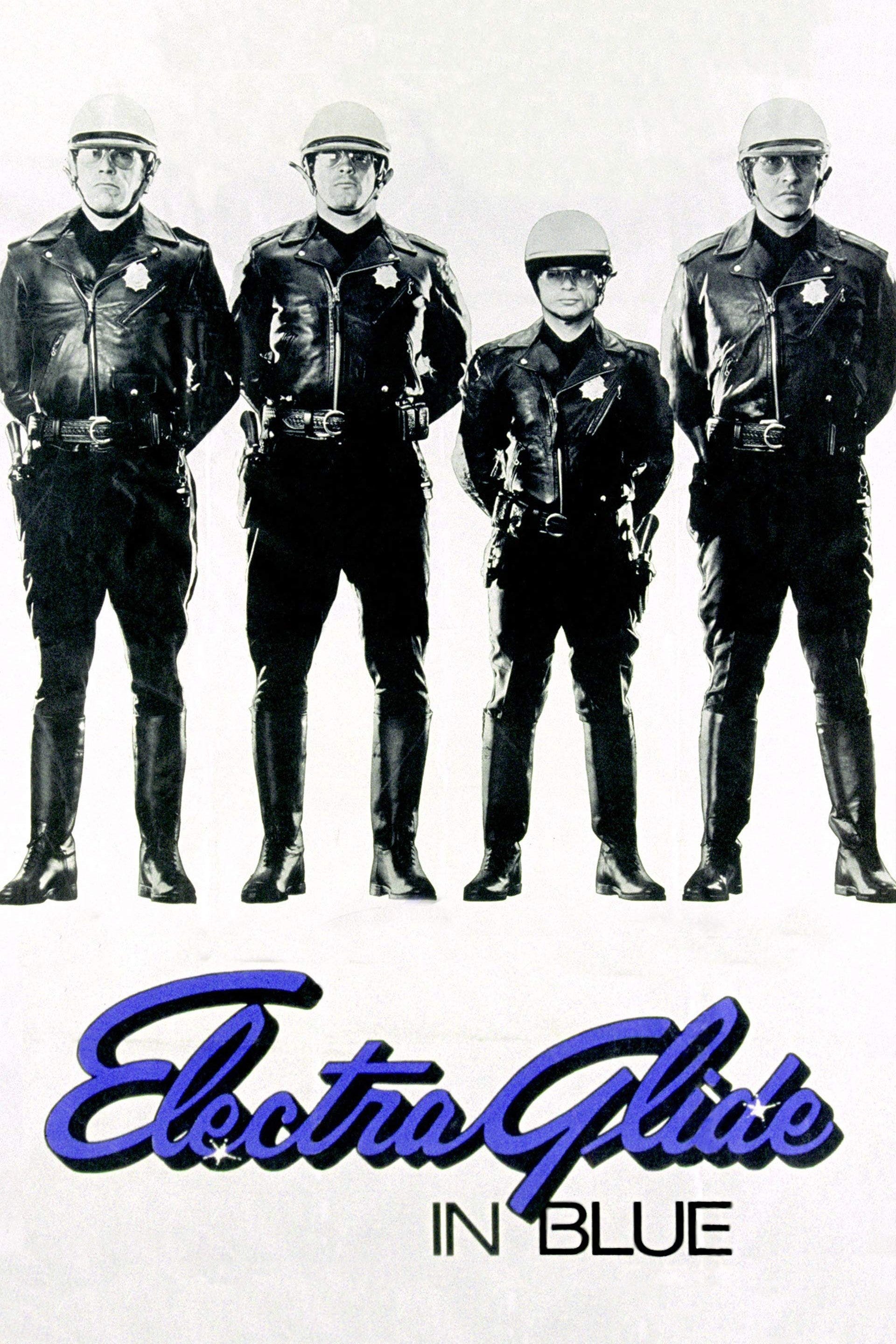
Electra Glide in Blue’s protagonist is Patrolman John Wintergreen, a diminutive motorcycle cop for the Arizona Highway Patrol. Wintergreen has big dreams of becoming a homicide detective. He writes to tickets to anyone and everyone – other cops, veterans, probably his own mother - who crosses his path with the most minor of traffic violations. He is relentless in his efforts to get noticed as a good cop – this is probably not the way to do it. I was not a big fan of writing tickets – this guy would drive me nuts.
Wintergreen gets called to an apparent suicide. As the first responding officer, it’s his scene. He insists that it is a homicide and argues with the medical examiner, who wants to call it a suicide and move on. Detective Harve Poole shows up and comes to the same conclusion as Wintergreen. Poole gives him a chance to work the case together – it’s Wintergreen’s big chance.
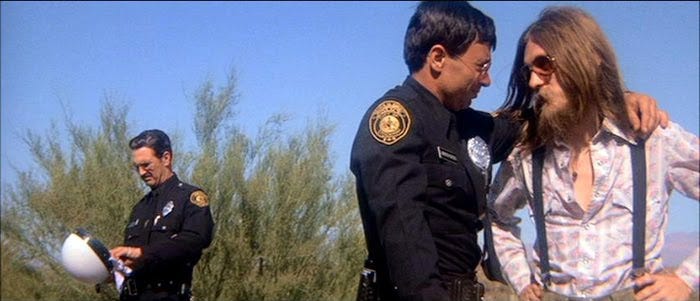
But the grass is not always greener. Wintergreen finds himself as lonely as when he is on solo patrol on desert roads. He is alone in every sense. He quickly realized that Harve Poole is not the idol he imagined. Wintergreen doesn’t seem to be the sharpest tool in the shed, but he resolves to investigate the homicide his way. In doing so, comes to question everything he believes in.
Robert Blake is Patrolman John Wintergreen. I often found Blake to be a little over the top as an actor (not to mention his own homicide arrest and acquittal), but he is really good here. It might be his best performance. Mitchell Ryan plays the heavy handed and impulsive Detective Harve Poole. Billy “Green” Bush plays Officer Zipper Davis, Wintergreen’s shift mate and all-around loafer.
The director of the film was James William Guercio. Guercio was more well known as the producer of the band Chicago’s first 11 albums. He brings the band in on this side project. Several members of Chicago including Terry Kath and Peter Cetera play roles in the film. Kath (one of the greatest guitarists of all time) writes and performs some of the soundtrack including the closing number “Tell Me”.
Although Electra Glide in Blue can stand alone as a solid police story, it is much deeper than that. It is a narrative of loneliness in America. Several disparate groups in conflict with one another, and people adrift in modern society. Loneliness leads to one tragedy after another throughout the story. The film recalls scenes from High Noon – isolation and a man alone in the desert – it draws many parallels with that Gary Cooper classic. One moral man alone fighting a corrupt and cowardly society.
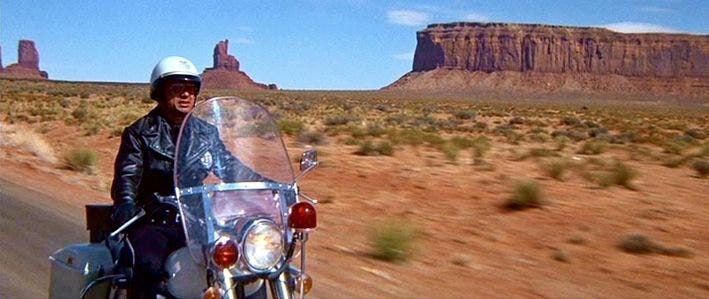
Corruption is a wide-ranging theme of Electra Glide in Blue. It is not just the in-your-face corruption of theft or physical abuse that we see throughout the film. Detective Poole points out that “Incompetence is the worst form of corruption”. We can sympathize with that. It seems to be the maxim of many levels of American government, and unfortunately, we both saw it during our police careers. Patrolman Wintergreen realizes at the end that he wants nothing to do with the corrupt system and changes his approach to his job – he is a man reborn.
Electra Glide in Blue runs a little less than two hours. The plot is ranging, but it all ties together at the end with numerous twists and surprises. You can catch the movie for free on YouTube. Enjoy this deep modern western as a lonely and lost cop learns about crime and life in the vast openness of the Arizona desert.
Thanks for reading The Ops Desk. Stay Safe!