

The Good Shepard (2006)
The Good Shepherd tells a complicated story – and understandably it is a complicated movie. It’s a movie about the CIA, but If you are looking for a spy thriller, this isn’t quite it. Not much action, but an interesting fictional look at the Central Intelligence Agency that is a primer for a deeper dive into the history of our nation’s primary intelligence service. It’s an important story for those concerned about national security, foreign policy, and government overreach.
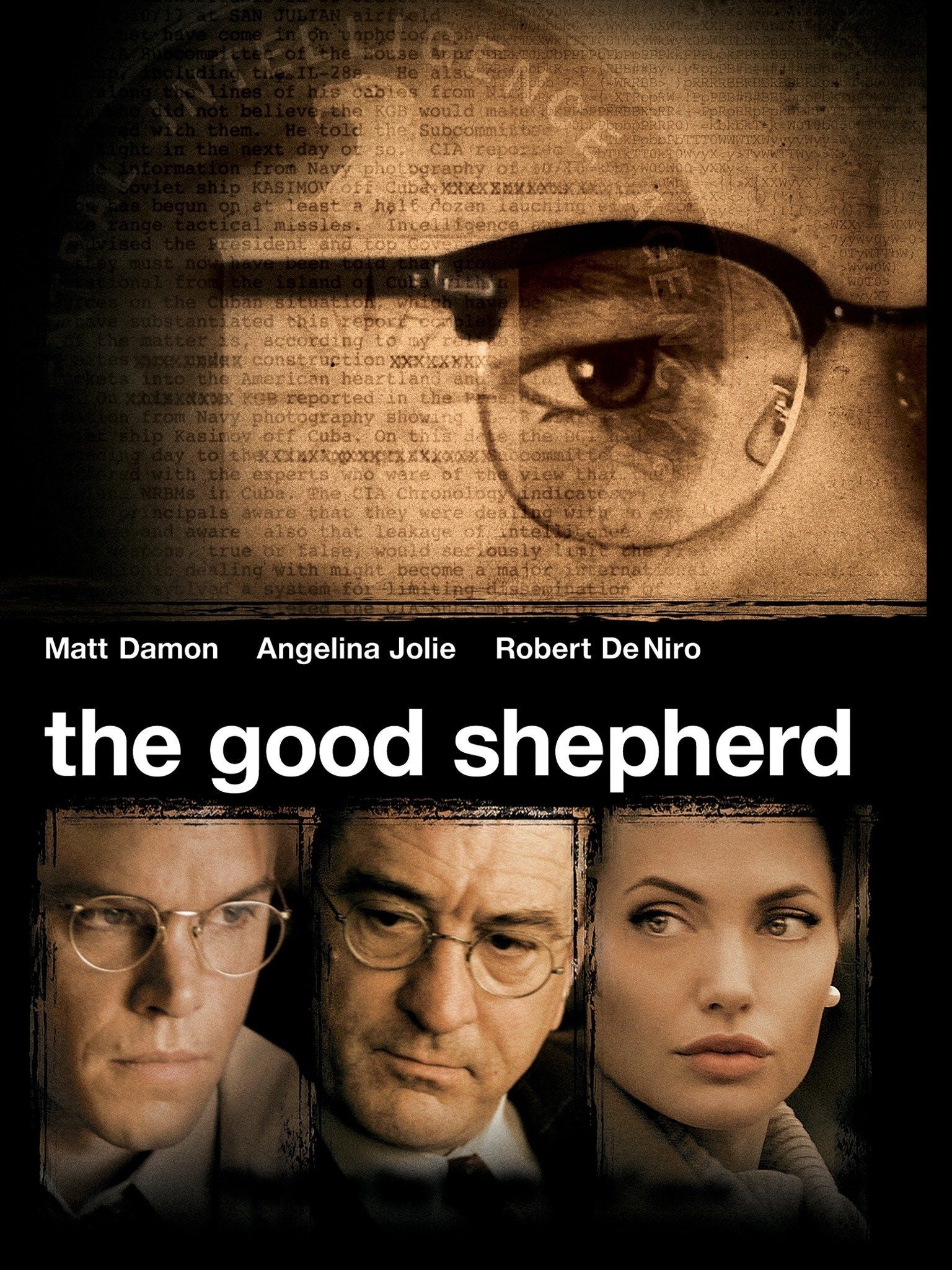
The movie is a series of historically based allegories about CIA operations. The characters are themselves composites and stand-ins for real people who started and steered the CIA in its early days. I would hesitate to call it a fictionalized history – it’s too far off the facts for that. It is, however, a thematic exploration of problems within the CIA told around a background of real events.
The main character is Edward Wilson Sr., a Yale graduate and Skull and Bones member portrayed by Matt Damon. Wilson is a composite of early CIA bosses Allen Dulles, James Jesus Angleton, Richard Bissell, and others. Political rabble-rouser and TDS sufferer, Robert De Niro directs the film and plays General Bill Sullivan. (I know some will take a hard pass after this sentence - fair enough.) Sullivan is a substitute for OSS chief “Wild” Bill Donovan. Angelina Jolie portrays Margaret “Clover” Russell, Wilson’s wife, and a stand-in for Allen Dulles’ wife Martha “Clover” Todd.
Other actors include Alec Baldwin as FBI Agent Sam Murach, William Hurt as CIA Director Philip Allen, Joe Pesci as mobster Joseph Palmi, John Turturro as Wilson’s assistant Ray Brocco, and Billy Crudup as Archibald Cummings, a character representing Cambridge Five turncoat Kim Philby. Other actors include Timothy Hutton, Michael Gambon, and Tammy Blanchard. It’s an all-star cast, and they make up for the slow pace of the film.
The film uses Damon’s Edward Wilson Sr. to tell a tale of the early days of the OSS and CIA, from the Second World War through the Bay of Pigs debacle in 1961.
It is an exploration of the changes, missteps, and mission of the CIA. Naturally De Niro takes a negative view of The Agency, but there is some accuracy in the organization’s flaws portrayed in the movie.
The United States essentially had no intelligence service before the war. People like Donovan, Dulles, Angleton, and Bissell started blind, relying mostly on the British for guidance. Early leaders were east coast elites who recruited from places like Yale, Columbia, and Princeton. They assumed that intelligent men were needed for an intelligence agency, and their blue-blood pedigrees would make them impervious to compromise. They were wrong. Much like MI6, the CIA soon became infiltrated by Soviets, and its complex schemes often resulted in deadly disaster.
In the film treachery, suspicion, and paranoia destroy the character’s personal and professional lives. This was unfortunately true for many early CIA leaders.
Characters are often seen talking shop with a drink in hand, another similarity with the men who formed the CIA. Alcoholism permeated The Agency, contributing to poor judgement, poor security, and anesthetizing the consequences of deadly mistakes.
There are moments in the film that foretell the growth of the CIA from the intelligence gathering service it was intended, to an operational agency fomenting and funding wars and coups around the world. De Niro’s Bill Sullivan warns Edward Wilson of this possibility, saying, “I have to tell you, I have some real problems with this whole thing, despite how much we need it. I’m concerned that too much power will end up in the hands of too few. I see this as America’s eyes and ears. I don’t want it to become its heart and soul.” In the story’s telling, Sullivan’s warning was proven prescient.
The film’s culmination comes on the shores of Cuba, at the ill-advised Bay of Pigs disaster. The Good Shepherd uses the Bay of Pigs as a representation for several CIA missteps in the 50’s and 60’s. The movie portrays the cause of the mission’s failure as a single compromise that tipped off the Communists. That is not accurate but meets the needs of the plot. Sometimes most trusted, elite, and highly regarded recruits were proven to be flawed men, inadequate for the task.
The Good Shepherd, like the CIA, is flawed. It is not exciting, it tries to do too much, and its objective likely missed the mark for most viewers. Despite this, it is a solid film that invites questions about our intelligence services. The CIA’s failures are well known, its over-steps are front page news, but its successes well hidden, and its dedicated Americans operators are mostly anonymous. That makes it easy for people like De Niro to criticize, and hard for advocates to defend, the Central Intelligence Agency.
Speaking of the CIA in the film, “Wild” Bill Sullivan knows, “we need it”, but safety and security are often inversely related to liberty. The Agency’s operations are often a lesson in unintended consequences, but where the United States would be without it is impossible to know.
The Good Shepherd runs close to three hours. I was able to find it for free on YouTube or can be rented on the streaming services. Take a critical look into this deep dive into Hollywood’s version of the early days of American intelligence.
Thanks for reading The Ops Desk. Stay Safe!

Wow, it really is an all star cast
I would watch the movie however Robert De Niro is in it and I wouldn't be caught dead watching any movie that asshole makes forever more. Thank you, God bless America 🙏🇺🇸