

Tinker, Tailor, Soldier, Spy (2011) is a fascinating depiction of a compromised intelligence service and its efforts to root out a spy within its ranks. The movie is inspired by true events and mirrored the significant infiltration of western intelligence by the Soviets.
When the CIA was stood up in 1947, the United States found that they had no idea how to run an intelligence agency. The CIA was, for the most part, winging it for much of their early history. And that didn’t work out too well.
The CIA turned towards a more senior intelligence agency for knowledge, tradecraft, and sources. That was the British Intelligence Service of MI5 and MI6. The intelligence services of the two countries became intertwined in many ways,
One of the negative repercussions of this partnership was the fact that British Intelligence – and therefore American Intelligence - was seriously compromised by Soviet spies. Soviet infiltration was so pervasive as to make most operations immediate failures.
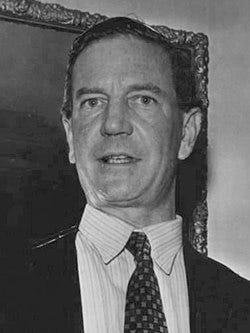
The Brits later discovered the existence of the “Cambridge 5” group of communist ideologues and Soviet spies that had risen to high positions within MI6 and the Foreign Service. This group compromised multiple British and American operations for years and was the inspiration for the book and movie Tinker, Tailor, Soldier, Spy.
The film takes place in 1970’s Britain in an unnamed agency that mirrors MI6. A compromised operation and political upheaval have led to the dismissal of several high-ranking officials including the agency head, known as Control, and his deputy, George Smiley.
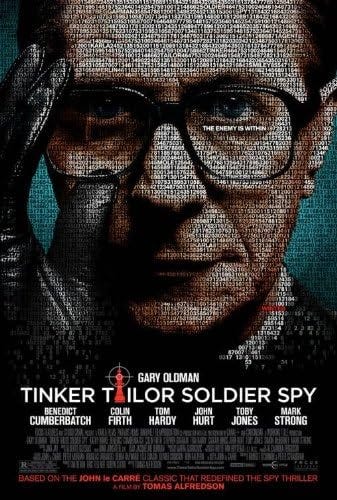
It is quickly determined that the operation was compromised by a mole within the agency. George Smiley is re-hired with the objective of identifying and eliminating the Soviet mole.
What is depicted is the elaborate operation designed to purge the agency of this deadly threat. George Smiley conducts his investigation with patience and cunning – all the while watching his own back from potential backstabbers within the agency. This is more than simple detective work – it is an elaborate trap.
The film is based on the novel by John le Carre. Before becoming an author, le Carre worked for both MI5 and MI6. His experience and knowledge bring a stinging reality to the book and film.
This is not an action-packed thriller. The movie accurately illustrates the political intrigue and bureaucratic workings of a government agency involved in a deadly business. There are no car chases, shaken martinis, glamorous women, or wild shootouts. This is a mundane but deadly business.
Thomas Alfredson directs a truly fantastic cast. The film is not only full of big names, but also of big talent – the two are not always the same. Gary Oldman, one of the greatest actors of our time, takes the lead as George Smiley. He is supported by luminaries such as Benedict Cumberpatch, Colin Firth, Tom Hardy, Ciaran Hinds, and John Hurt.
The film captures the feel of the drudgery of a 1970’s British bureaucracy - dull features, cigarette smoke, boring beige and washed-out colors. The environment relates the oppressive atmosphere of a government spy agency on a tight budget – no marble floors, ornate offices, or big expense accounts here. Characters are seen as isolated and lonely. The camera frequently frames characters behind glass, in reflections, or through doorways. This gives the impression that the audience is spying on the characters, just as Smiley is spying on everyone as he hunts his prey. There is a feeling of great weight and pressure throughout the film.
Tinker, Tailor, Soldier, Spy runs a little more than two hours. It can seem slow at times, but pay attention. There is more going on than the action belies. This is a complex film. I first saw it in the theater, but story is more illuminated and more enjoyable in a second watching.
You can catch Tinker, Tailor, Soldier, Spy on Amazon Prime or YouTube for $4. The movie is a case study in counterintelligence, a meditation on loyalty and betrayal, and a rare cinematic portrayal of what real intelligence work feels like. Enjoy the film.
Thanks for reading The Ops Desk. Stay Safe!
Thanks, Paul for a meaningful review. John le Carre was a writer who opened the public’s view of Intelligence. While not as flamboyant as Ian Fleming, also a veteran British intelligence practitioner, John Le Carre (David Cornwell) brought the reality of his world to his readers.
When I was traveling in Europe a few years ago, I found a remarkable book by Christopher Andrew and Julius Green, two University academics. The book is STARS AND SPIES, subtitled 'Intelligence Operations and the Entertainment Business.' It is fantastic. The book goes into the connection between the World of Intelligence and the Entertainment Business. According to an old Viking poem (Havamal), “He is truly wise who has traveled far and knows the ways of the world. He who has traveled can tell what spirit governs the men he meets.” Entertainers often find themselves in that unique position.
As Paul points out, at the beginning of our American Intelligence adventure, the Office of Strategic Services (OSS), the forerunner of the CIA, relied heavily upon our British friends for guidance while it moved into previously unknown territory recruiting its sources of information. STARS AND SPIES illuminates the blending of the entertainment industry over the years as it came up against political information collection.
STARS and SPIES was published in 2021 by Bodley Head, a subsidiary of Penguin Random House, UK. The hard cover goes for 502 pages and for history buffs, is a “not to be missed” read. It can be found for sale in the US from some select booksellers online. Happy Reading!
JCK
I saw it by mistake several years ago it was who was in it that caught my attention but when it was over I was totally engrossed. Time to re-watch one of the gifts of getting older is not remembering everything exactly! lol