


Right now the nation seems unable to think or talk about anything other than the tariff bombshell just dropped by the Trump administration. Will it cause a recession? Or will it indeed usher in a new “Golden Age of America”?
And in light of The Ops Desk’s usual topics… are there security implications?
You could argue that self-sufficiency — among the goals of the tariff blitz — is the key to security for any nation. But of all the sectors the President just hit with tariffs, there is one that punches at a higher weight than any other:
Steel.
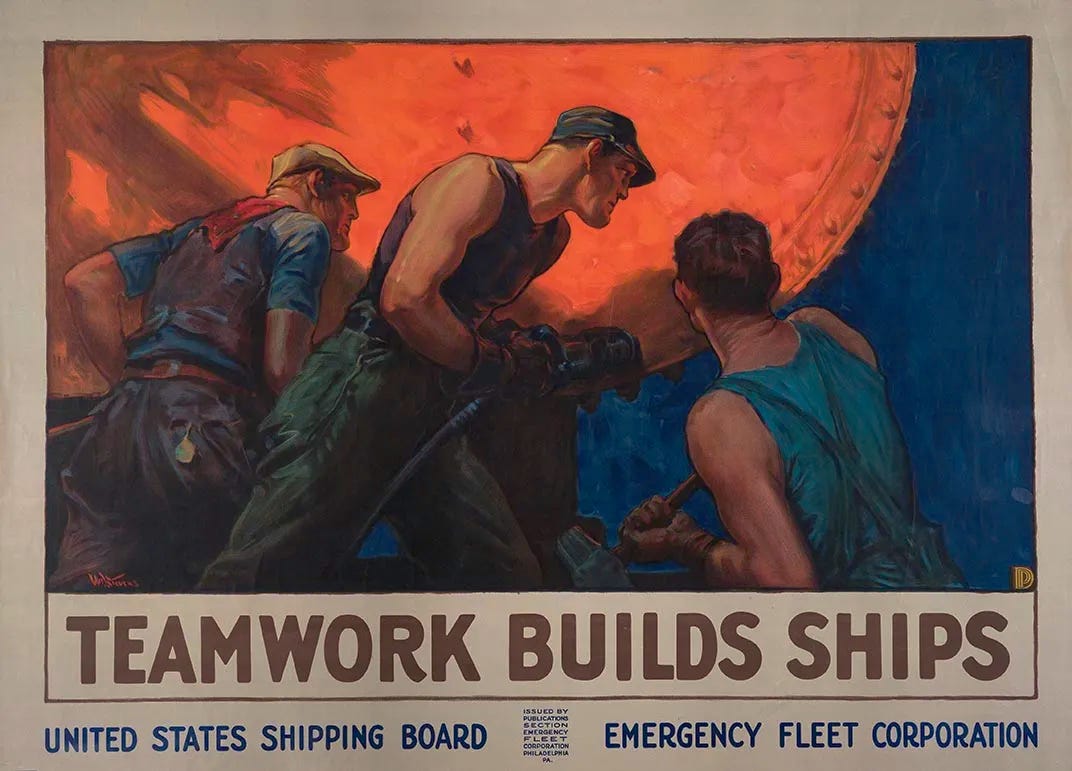
Let’s posit a few things. As many historians have held, a compelling theory of warfare is that the nation that produces the most steel, wins. America’s rapid industrialization in the runs-up to the two World Wars is generally cited as a prime example — especially World War I.
So why does it matter today? Because due to American reliance on foreign steel, the nation is once again unlikely to be prepared for a major conflict — especially one that develops from a rapidly escalating situation.
Let’s look at the history. In 1914 when World War I began, the U.S. steel industry was focused on domestic infrastructure and consumer goods, not war materials. Steel production wasn’t geared towards the high-grade alloys needed for all sorts of military equipment; war steel has to be very strong to make resilient tank turrets, armored vehicles, warships, etc.
Additionally, the government had no coordinated system in place to shift into armament production. As a result, when the U.S. entered the war in 1917, there were significant delays and inefficiencies in scaling up the production of military-grade steel — which is why our initial entry was somewhat less-than-impactful.

It took a nationwide government effort, including the creation of the War Industries Board, to reorganize priorities and increase output — but shortages and bottlenecks continued to hamper mobilization. These delays likely prolonged the war and caused thousands more casualties — while keeping the war’s outcome in doubt.
We’re in the same boat today, but for different reasons: in recent years, the country has become heavily reliant on imported steel. In 2023, for instance, the U.S. imported nearly 25% of the U.S. market share, with the top four suppliers being Canada, Mexico, Brazil, and South Korea. What would happen if this pipeline were shut off? How could we possibly scale up to produce and deploy an exponentially larger amount of steel?
Additionally, while much of today’s imported steel is sufficient for commercial use, it is not always suitable for producing armaments. Domestic capacity to produce such steel has diminished, and many U.S. mills today focus on recycled steel, which is less suited for many crucial defense uses.
The current dependence on foreign sources, combined with a limited domestic base for high-grade military steel, has to raise questions about our ability to respond swiftly and effectively to a sudden major conflict (think: China).
Wars happen — it’s an inevitability of history. We of course hope we don’t see another one for a long, long time. But one of the reasons we haven’t had a major war in a long long time — why the world has been the beneficiaries of a Pax Americana — is that no nation could realistically hope to stand against us.
That is changing. And if we don’t want to find ourselves wondering why our tanks are falling apart every time they fire or why our battleships break up in rough seas, we need any nation on earth to look at confrontation with America and say, “Nope. Not worth it.”
So we need to learn from 1917. America’s wartime steel capacity needs to increase now — before a war. Which is the best way to ensure we don’t have to fight one.
Of all the tariff moves made by the Trump administration, this one strikes us as the most defensible.
Indeed — as necessary.
Whatever Happened To Congress?
So the President is wasting no time in his second term, charging ahead with his executive agenda—including a bold new order requiring proof of U.S. citizenship to vote in federal elections. But just as quickly, the lawfare strikes: 19 Democratic Attorneys General have filed suit, arguing the move violates states’ rights and oversteps constitutional bounds. Shocker.
Led by California AG Rob Bonta, the coalition of blue states says Trump’s order is a power grab that disrupts state-run election systems and threatens federal funding for those that don’t comply. The administration, in turn, insists it’s a common-sense safeguard to ensure “only Americans vote in American elections.”
Who could argue with that?
Guess.
Now, the political instincts behind the order are clear—but so is the pattern: Trump takes executive action, the courts step in, and the policy gets tied up in months of legal drama. From firing DEI-linked CIA employees to invoking wartime powers to deport gang-linked migrants, judges have repeatedly stepped in to block Trump’s efforts, often within hours.
Which raises the obvious question: Why not go through Congress?
While executive orders get headlines and signal urgency, they also make easy targets for activist judges and Democratic attorneys general. A voter ID law passed through Congress—particularly one with backing from sympathetic moderates (think: the recent Wisconsin referendum)—might prove harder for courts to swat down, and far more durable long-term.
Trump was elected to shake up Washington, and he clearly isn’t afraid to. But with a Republican House and Senate and issues like immigration and voter ID often getting bipartisan support, the legislative path strikes us as his best shot. And once in, these are the sort of laws that tend to be difficult to repeal.
For now, the executive order stands—but with lawsuits already filed and the hearings coming, its fate may rest in the hands of federal judges, not voters or legislators.
And that’s a shame — because so many people worked so hard to bring some sanity to Washington.
Here’s hoping the one big beautiful bill won’t be enough.
As Goes Sudan….
The Trump administration’s decision to revoke all U.S. visas held by South Sudanese nationals signals more than a diplomatic dispute—it may well be a glimpse into what’s to come.
Secretary of State Marco Rubio said the move was necessary because South Sudan has refused to take back its deported citizens. The action halts visa renewals and new entries from the country entirely—a sharp escalation, whatever the nation.
This isn’t isolated — Trump recently pressured Colombia with similar threats. And more nations may be next. This was a dilemma the U.S. was going to have to face, soon enough: What to do when foreign governments refuse to accept deportees? Now that we have millions of them loaded up?
The opening salvo seems to be: tough visa penalties.
Now, critics will of course say it’s overreach that punishes innocent travelers and students. But the administration’s position is clear; essentially, “If a nation won’t take its citizens back, why should its elites have access to ours?”
And clarity alone is a step forward from the last administration. Never mind siding with America.
As Trump ramps up deportations, expect more confrontations like this—especially with governments that are hostile, unstable, or simply unwilling to cooperate.
The left will, of course, meltdown, as is their specialty. As they advocate incessantly for the due process rights of anyone who’s ever seen America on a map, one wonders if they will assert similar rights for people who hold foreign citizenship — and whose nations-of-origin now refuse them.
This one isn’t hard. They are citizens of another nation, expelled from a nation they entered illegally.
They go back.
The Continuing Mysteries of Jeffrey Epstein
So at this writing, the expected public release of the Epstein-related documents has yet to occur. It’ll come, one suspects — likely in a week or two. What it will actually look like is anybody’s guess.
But whatever that is, it doesn’t change the air of mystery around Epstein himself — and we don’t mean his death. We have, as the saying goes, questions.
There’s a lot here. So join Paul, Chris, and Eric over at the podcast where we do a deep-dive on a case that, one suspects, will never be entirely clear.
Click below for a preview — and HERE for the full thing.
And finally…
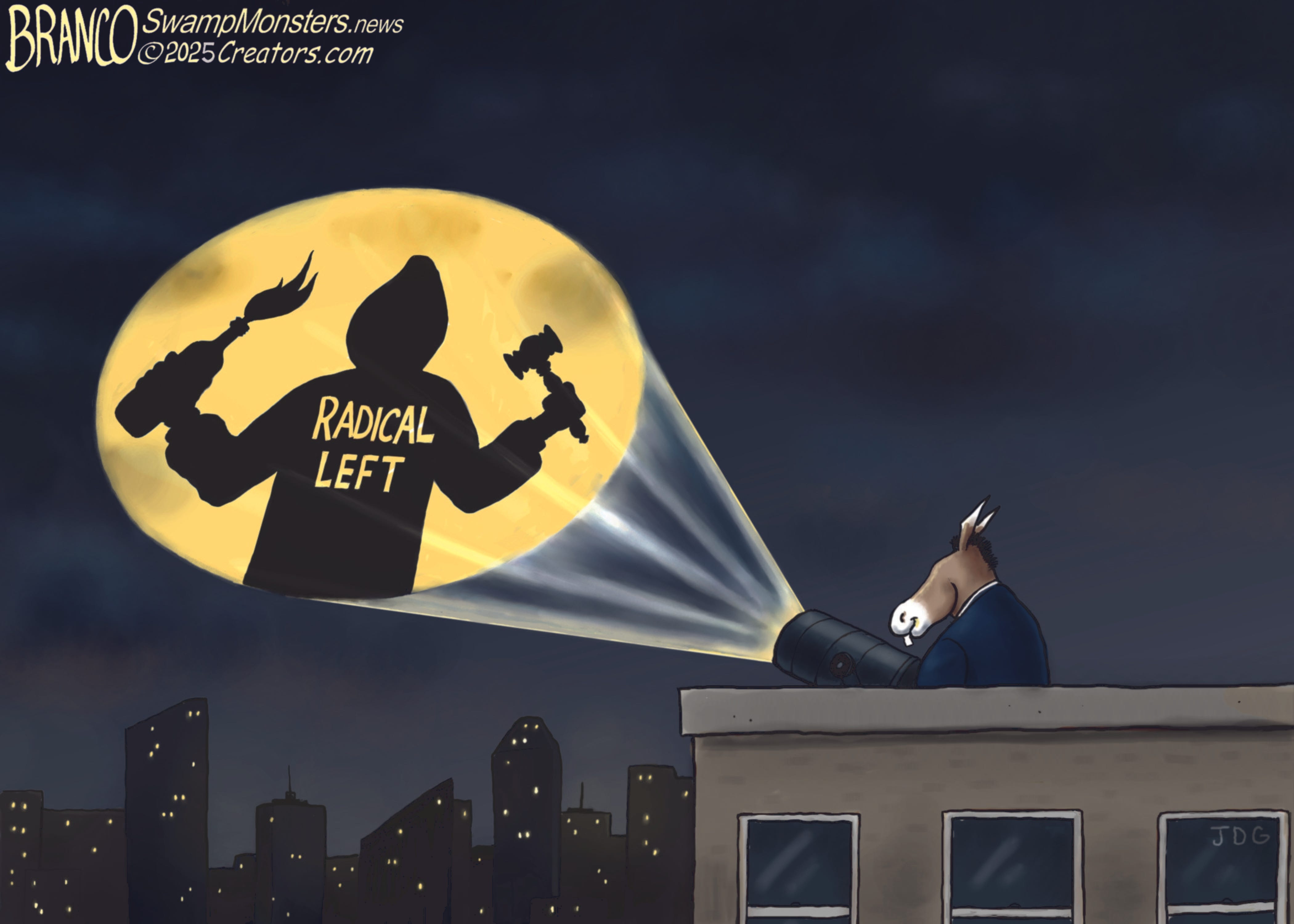
They’re just getting started, trust us.
It’s only going to get worse.

Great column, but I think the line "Here’s hoping the one big beautiful bill won’t be enough."
should have been WILL BE instead of WON'T BE.