



You know the narrative. For years, progressive politicians in America treated law enforcement as the problem instead of the solution. They defunded police, demonized immigration enforcement, emptied jails, downgraded prosecution, and convinced themselves that “root causes” mattered more than removing dangerous people from the streets.
And yet, something interesting is happening.
Law and order is coming back anyway.
Just not from the places where it used to come from.
Brace yourself, readers: suddenly, the feds are the good guys.
Let’s look at the arrest sheet. In the last week alone, the feds and Nigerian authorities took out the number two guy in ISIS; the feds also brought back for prosecution Mohammad Baqer Saad Dawood al-Saadi, an Iraqi Hezbollah member accused of targeting multiple locations — including synagogues — in the United States and Europe. His motive was apparently retaliation for the Iran war.
Funny — the Dems say we’re losing that war. Looks like the enemy and their allies don’t quite see it that way. Otherwise, why would al-Saadi bother? (See Chris’s article, below).
Also: the feds have taken the dangerous Tren de Aragua gang head-on — indicting and for the first time extraditing a TdA member to face American justice here.
Also this past week, federal prosecutors unveiled a major indictment against 25 TdA members here. You see that number? Twenty-five. And there have been numerous other multi-defendant cases made here against this gang. You know — a gang the Biden administration let into the country because they didn’t exist.
Some hilarious context? Alejandro Mayorkas — among the most incompetent, politicized federal law enforcement leaders this nation has ever produced— now says he kinda sorta made a mistake by letting in 10 million illegals. Tren de Aragua among them, of course.
Thanks, Alex! That changes everything. Can we book you for a nice expensive speech now?
Think how far we’ve come from the traitorous Mayorkas. Along with the usual three-letter agencies, J.D. Vance and Dr. Oz are leading the charge on all sorts of government fraud, Tom Homanis identifying and removing the worst-of-the-worst illegals, DEA, ATF, HSI, etc, are street-deployed to Washington, D.C. to make cases, major drug-runner Nicolaas Maduro and his wife were snatched up, Raul Castro facespossible indictment… we could go on.
If you’re paying attention — and we are — suddenly, it looks like the cops are back.
But notice something else. Almost all of it is happening at the federal level.
Where are the local blue-city politicians?
Where are the big-city district attorneys?
Where are the city councils that spent the last five years lecturing everyone about “over-policing”?
Where are the mayors of New York, Chicago, Los Angeles, Denver, Seattle, or San Francisco demanding major gang takedowns and organized criminal prosecutions?
Crickets.
The sad truth is that many progressive-run cities have fully abandoned the idea that aggressive enforcement is morally legitimate. Oh, they still want the appearance of public safety — press conferences, slogans, fudged crime numbers — but not the hard-edged policing and prosecution required to achieve it.
The result has been a bizarre inversion of roles. Washington — traditionally focused only on big headline cases and comfortable white collar cases — is increasingly doing the real work of cleaning up our streets. While local governments more and more morph into sociology departments with emergency sirens.
Say what you want, but the feds are getting it done.
And you know what? The public is starting to notice. Disorder, danger, open-air drug use, lack of enforcement… there’s a reason that Steve Hilton is in the running for California Governor, Spencer Pratt is closing in for L.A. Mayor, Bruce Blakeman is gaining hard on Governor Kathy Hochul… even some local races around the nation are starting to tighten based on this issue. Without safety, without order, nothing else matters.
So sure, the midterms will be tough for the Republicans. But they have one great ally: feckless Dems who tell us that conditions in our unlivable cities are all in our heads.
The irony is rich. Many blue-city politicians spent years resisting cooperation with federal immigration enforcement, denouncing gang databases, attacking RICO prosecutions, and treating proactive policing as a civil-rights violation.
But when the public starts demanding order again, suddenly it’s federal agents — not local reformers — who are left doing the heavy lifting.
And to his credit: Donald Trump — who could’ve let these municipalities rot and then pointed to them, to make political points — is the one demanding order. Despite what local blue politicians want.
Is America actually rediscovering that law and order matters?
It starting to feel so. And that rediscovery is happening thanks to local politicians — and they’re continued insanity.
The First Step? Admit You Have A Problem
So safety-wise, how bad — or good? — are things in our communities? Can we even really tell?
The FBI used to be considered innovative and on the cutting edge of law enforcement when it started tracking Uniform Crime Reporting data in 1930. The annual reports became synonymous with the Bureau. The Uniform Crime Reports tracked “index crimes” — significant offenses including murder, rape, robbery, aggravated assault, burglary, grand larceny, vehicle theft, and arson — along with arrests tied to those categories.
In reality, the idea originated with the IACP, the International Association of Chiefs of Police, which began implementing the program in 1927. The FBI took over national crime reporting in 1930, and for decades it dutifully and accurately measured crime statistics.
That system remained the gold standard until Bill Bratton introduced CompStat in New York in 1994. Within a few years, the NYPD was tracking virtually everything. How many robberies occurred in the 46th Precinct between midnight and 2 a.m.? How many quality-of-life summonses were written in the 73rd Precinct on the day tour, and how did that affect residential burglaries? Carefully documented statistics could answer those questions. It was, truly, pinpoint, intelligence-led policing.
Soon, departments around the country began following that model. Probably not to the obsessive degree of the NYPD — we were a stats-driven department — but the numbers mattered. They allowed police to respond quickly, and often innovatively, to crime trends.
The results were dramatic. Crime dropped like a rock in New York City and then generally around the country.
But as time went on, unfortunately, the FBI and DOJ got left behind. The feds continued using the same UCR system until 2021. After years of stagnation, they introduced NIBRS in an effort to better categorize crime. Could the federal agencies actually change with the times?
It was a mess. NIBRS has been plagued by technological and reporting problems, and it still does not capture nationwide crime data in the granular way needed to fully understand trends. Even the NYPD — masters of number crunching with a small army of statisticians — struggled to get NIBRS data integrated into their systems.
In the NYPD, the mantra was simple: you cannot determine effectiveness if you do not measure accurately. The DOJ has little idea what is truly driving crime. That is why they rarely affect crime trends. The feds often make great cases, but to what end? Are those cases reducing crime overall?
Truth is, they do not know. What programs work? Again, no clear answer. Yes, they can assist local law enforcement when requested (see above), but they are far less capable of identifying investigative strategies that would lower crime nationwide. It’s tactics without strategy.
This week I intended to write about the apparent increase in statutory rape crimes committed by females, particularly teachers (google it; it’s a statutory rape crime wave). But is the rise real, or simply the product of greater media attention? As hard as I looked, I could not find concrete evidence showing whether the crime is actually increasing or just being reported more often.
Nothing is more frustrating to a cop who had every number at his fingertips for 25 years in the NYPD than encountering a complete lack of accurate information. There were only vague estimates and educated guesses instead of hard numbers. How can we combat a crime affecting our youth if we do not even know the scope of the problem?
The NIBRS system is an improvement, and as Paul notes above, the feds are making important cases at the local level that many jurisdictions are not. But if the feds are going to go back to truly combating violent crime at the local level, their systems of measurement still have a long way to go. The DOJ and FBI remain badly behind the curve in measuring and assessing crime trends. Without solid and complete data, they are fighting partially blind. And given the technological advances available today — especially with AI — that is unacceptable.
******
Last week the Department of Justice arraigned Mohammad Baqer Saad Dawood al-Saadi in federal court in Manhattan. Al-Saadi was charged with terrorism-related offenses in a plot targeting Jewish Americans.
Al-Saadi had been communicating with an undercover law enforcement agent posing as a Mexican cartel member. He allegedly offered the agent $10,000 to carry out arson and bombing attacks on Jewish centers and synagogues in New York City, Los Angeles, and Scottsdale, Arizona.
Turkish authorities captured al-Saadi and turned him over to the United States for prosecution. He was charged with conspiracy to provide material support to Kata’ib Hizballah, an Iran-backed Iraqi Shia militant group, and Iran’s Islamic Revolutionary Guard Corps, conspiracy to bomb a place of public use, and destruction of property by means of fire or explosives, among other charges.
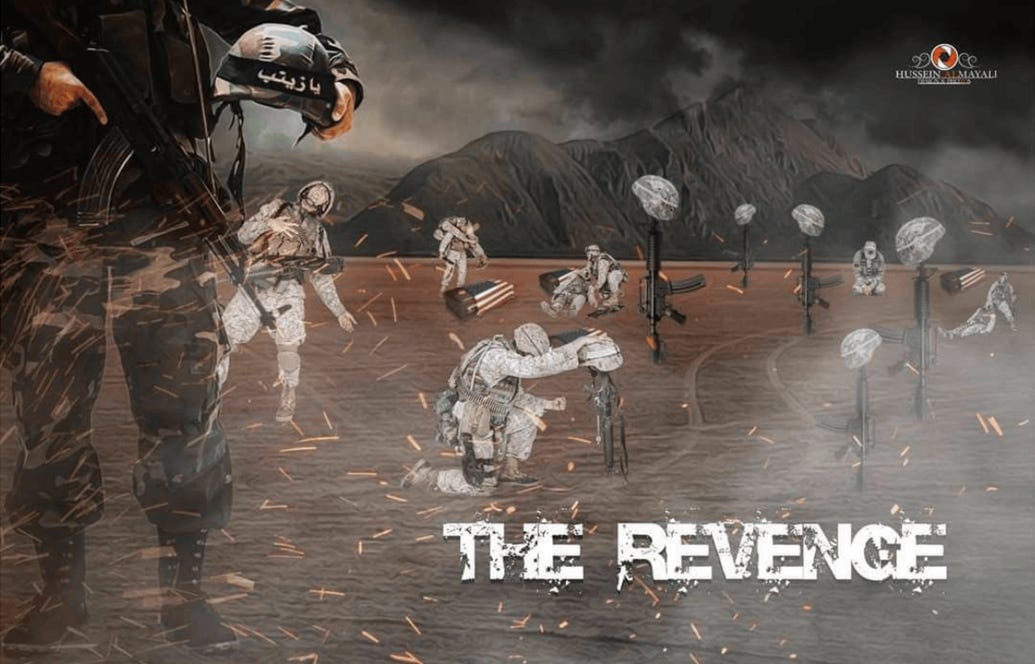
These planned attacks underscore the continued targeting of Jewish people by terrorist groups. In recent months, a synagogue in Michigan was attacked by a Hezbollah-inspired man who rammed the building and opened fire with a rifle. In London, there were 10 arson and bomb attacks on Jewish targets linked to the IRGC. In Golders Green, a man carried out a stabbing spree targeting Jewish people. In Brooklyn, the Chabad headquarters was targeted in a ramming attack. Jewish schools and synagogues have also been attacked in Amsterdam, Liege, Rotterdam, Toronto, Istanbul, and Oslo. Some of these attacks were allegedly coordinated by al-Saadi, while others were unrelated.
The al-Saadi plot comes at a time when Israel faces increasing criticism from Americans from both the right and left. The erosion on the (far) right is particularly surprising; conservatives have long been considered a bastion of Israeli support.
Much of the criticism focuses on Israeli influence over American politics and foreign policy. Americans have every right to debate those issues, and most people dislike foreign influence in U.S. politics. But while Israel lobbies American politicians, Americans should be far more concerned about adversarial nations like China and Russia funneling money — and in some cases spies — into American political circles.
This indictment is a reminder that Israel and the United States share a common enemy in radical Islamic terrorism. That reality is unlikely to change anytime soon, regardless of the policies either country adopts.
Critics of Israel should also remember that if Israel laid down its arms, radical Islamic groups would attempt to wipe the country and its population off the map. Israel lives with that existential threat every day.
America and Israel are separate nations, and while many of our interests align, not all do. It is up to American policymakers to determine the best course for the United States without abandoning Israel to forces that would gladly bring about a second Holocaust against the Jewish people.
Israel acts in its own interests, just as every nation does. The current trend towards vilifying it is not only politically and historically loaded — it smacks of scapegoating.
If nothing else, an objective viewing of all those looking to commit violence against the Jewish state elicits one undeniable response: Israel is making all the right enemies.
Weekly Pod: An Explosive New Biography of RFK, Jr.
NY Post writer Isabel Vincent takes on yet another controversial topic
Friends, join us this week for a conversation with journalist/author Isabel Vincent. You last saw her here chronicling the federal case against NJ Senator Bob Menendez (currently in federal prison, where Isabel amply demonstrated he belongs…).
Now, it’s a just-released book on yet another compelling figure of our times: RFK, Jr. And wow, did we learn a lot.
For instance: Did you know:
Jr. not only believes Sirhan Sirhan did not kill his father — but believes he knows who did?
Did you know that there’s a good chance he is going to challenge for the Presidential nomination in 2028 — and has a shot? Or may instead play spoiler by splitting the Republican vote?
Did you know this crusader for Americans’ health was a heroin addict — for 14 years?
Did you know there’s a secretive corporation that houses the Kennedy money, going all the way back to Joe, Sr (You recall him — the bootlegger who worked with the mafia)?
Did you know that many of the other Kennedys hate his guts? And campaign against him? And that he could care less?
These are just some of the facts Isabel — who obtained access to Kennedy’s diaries, believe it or not — teases out in her newly published biography. It’s fascinating material regarding one of today’s most compelling figures — by one of today’s most compelling journalists.
So while the general public continues to see Kennedy as just the standard-bearer for MAHA, suffice to say that he’s thinking in larger terms. And with the first truly informed biography on him, Isabel discovers why (yes, there is indeed, “a plan”) (he’s not a Kennedy for nothing, people).
So join us for a wide-ranging discussion of the definitive book on the man who could swing the next presidential election: RFK, JR: The Fall And Rise, by Isabel Vincent.
Click below for the sizzle… and HERE for this week’s full pod!)
True Crime Girl: Saint Luigi and The Loons Who Love Him

The modern American criminal has always had a patron saint.
Bonnie and Clyde. Charles Manson. The Columbine killers. Even the Unabomber found admirers in dark corners of the culture (generally, in the faculty lounge). The internet guarantees that no matter how depraved the act, somebody somewhere will mistake notoriety for meaning.
Now investigators are beginning to confront a troubling new possibility: the emergence of alleged copycat fascination surrounding Luigi Mangione.

To be clear, the publicly documented number of criminal suspects who explicitly referenced or appeared fixated on Mangione remains small. Team Luigi is not a mass movement. We are talking about a handful of cases — at least so far. But seasoned investigators know these things can metastasize quickly once media mythology takes hold.

The most notable example to come to light recently is Jonathan Rinderknecht, the California man accused in connection with the devastating Palisades Fire. Federal prosecutors allege that Rinderknecht became obsessed with Mangione after the killing of healthcare executive Brian Thompson. According to court filings and reporting, investigators uncovered internet searches including “free Luigi Mangione” and statements comparing his own alleged conduct to Mangione’s supposed desperation and anti-system grievances.
That matters.
Because in modern criminal investigations, digital evidence often tells the real story. Search histories, encrypted chats, memes, social media follows — these are the fingerprints of ideological contamination. Detectives are no longer just searching bedrooms for manifestos. They are searching cloud accounts for emotional allegiance.

Then there is Chamel Abdulkarim, accused in a massive, unrelated Los Angeles warehouse fire that caused at least $500 million in damage. Prosecutors allege Abdulkarim compared himself to Mangione during the investigation, stating, “Luigi popped that mutherf---er… a lot of people are going to understand."
Again, not proof of an organized movement — but another data point in what may become a recognizable pattern: alienated individuals projecting themselves onto a criminal figure elevated online into a kind of anti-establishment folk hero.
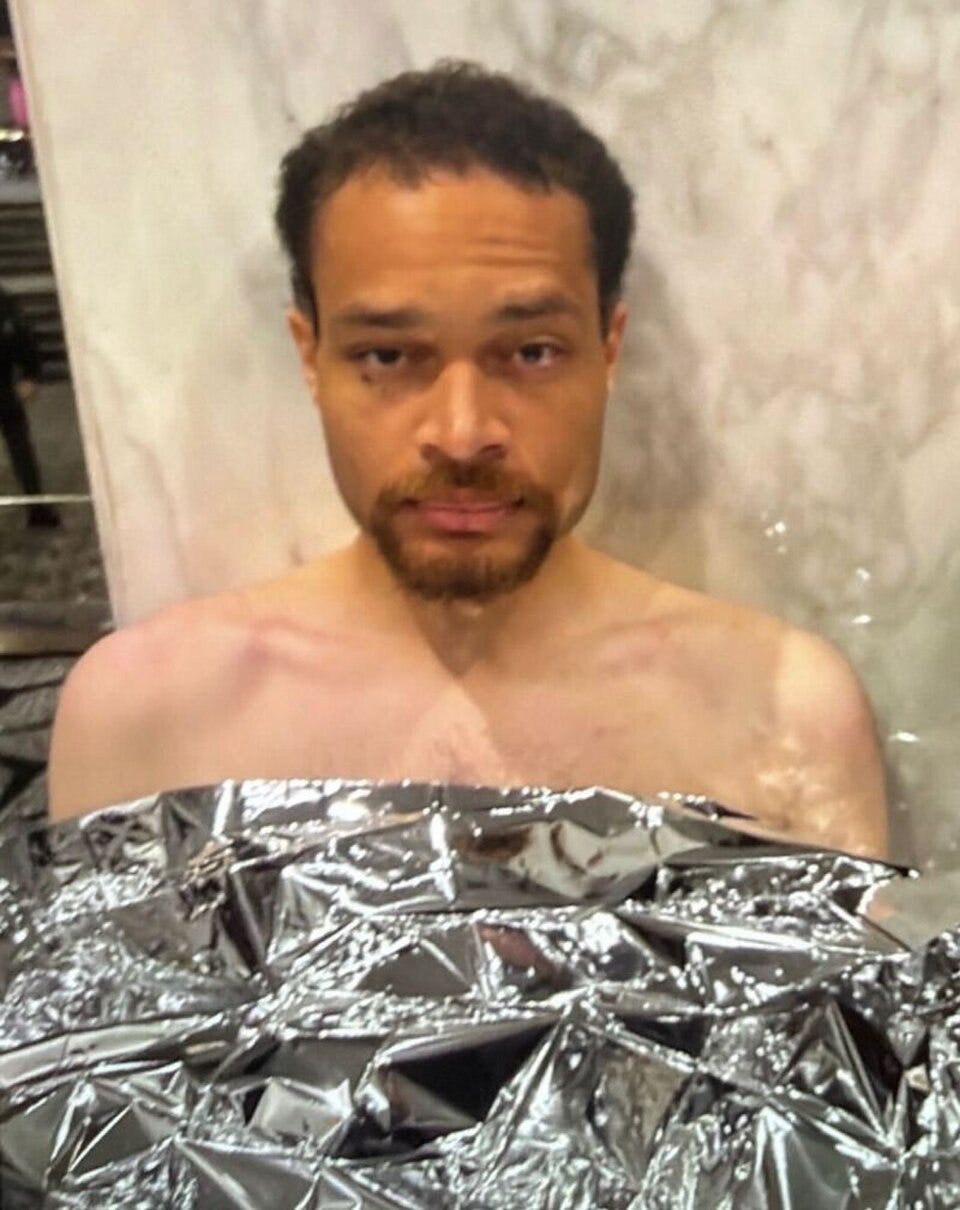
Then there’s the most recent case, the attempt on Trump’s life at the White House Correspondents Dinner by Cole Thomas Allen. Public reporting has discussed alleged similarities between Allen and the Mangione online fandom ecosystem, though investigators have not publicly established a direct inspirational claim from Allen himself. Still, media and social media narratives increasingly bundled the two together symbolically — and symbolism matters in radicalization culture.
That is where this story becomes dangerous.
America now operates inside an algorithmic amplification machine. Every notorious defendant immediately acquires fan accounts, merchandise, memes, Reddit threads, TikTok edits, and ideological interpreters. Criminal defendants are transformed into avatars for larger political frustrations. Some become celebrities before they even reach trial.
Mangione’s upcoming prosecution could intensify that phenomenon dramatically.
High-profile trials historically create copycat risk. The publicity surrounding Charles Manson, Ted Kaczynski, and the Columbine High School massacre generated waves of fascination that extended far beyond the underlying crimes themselves. Criminologists call it contagion. Cops call it what it is: dangerous losers seeking identity through violence.
The concern is not that thousands of Americans suddenly support murder. They do not.
The concern is that a tiny subset of unstable, grievance-driven individuals increasingly consume these cases less as cautionary tales and more as empowerment narratives. Once a defendant becomes mythologized online, the line between observer and imitator can narrow fast.
And if Mangione’s trial becomes a media circus — saturated with viral clips, ideological commentary, and online hero worship — investigators may find themselves monitoring not just one defendant, but the audience watching him.
If there was a pivotal moment when it appeared the media began to treat terrorists like rock stars, it was like this: Dzhokhar Tsarnaev on Rolling Stone’s cover:

Dzhokhar and his brother killed four people that day, including an 8-year-old boy.
Some hero.
And finally….
This headline caught our attention recently, via The NY Post:

Explains a lot, huh?

You guys are the experts on law enforcement. Yet, isn't the simplest solution to put criminals ( all the subway lunatics) behind bars? Incarceration. De Blasio’s “ I want to close Riker’s Island “ has not worked. All these guys have lengthy arrest records - we are failing all the good citizens.
Round up those aliens. They are dangerous!!! 👍👍👍