



The question regarding Minneapolis now isn’t whether the anti-ICE rhetoric of Walz and Frey helped set the stage for chaos. It’s whether that rhetoric crossed the line into something prosecutors know and apparently Minnesotan leaders don’t: criminal liability. Specifically, 18 U.S.C. § 111—assaulting, resisting, or impeding federal officers—and its trusty sidekicks, aiding and abetting and conspiracy.
Cue the nervous laughter. Who, us? But we’re Minnesota-nice!
So: Will these “nice” guys be locked up?
Let’s be clear up front. No one is talking about criminalizing disagreement. You’re allowed to dislike ICE. You’re allowed to say mean things about ICE. You’re even allowed to cosplay as Che Guevara on Twitter. What you’re not allowed to do—under settled federal law—is encourage, facilitate, or materially support actions that impede federal officers performing lawful duties.
That’s not politics. That’s black-letter law.
Which brings us to The Marxist Brothers — Tim Walz and Jacob Frey.
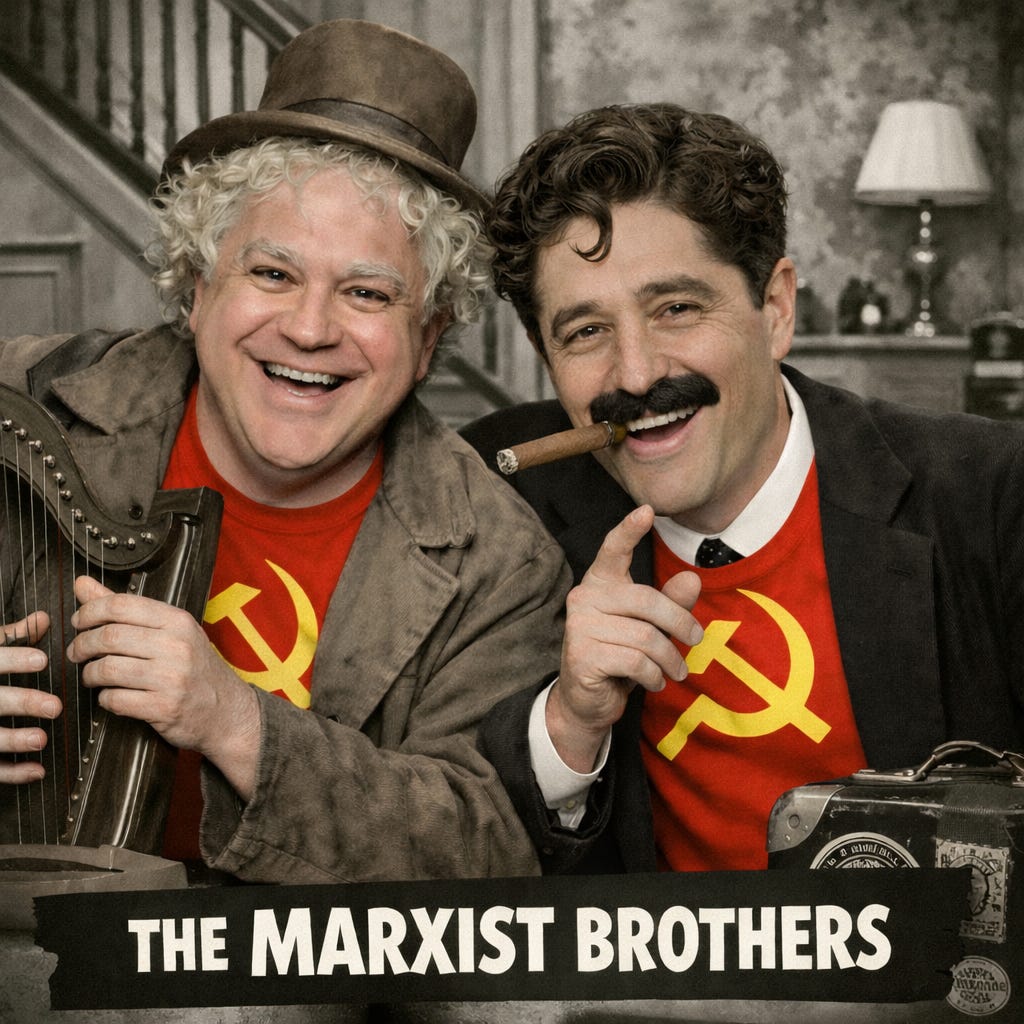
Over the past weeks, both men have clearly cultivated an environment where federal immigration enforcement is framed not as law enforcement, but as an occupying force—“chaos,” “terror,” “atrocity,” you name it. When public officials repeatedly characterize lawful federal operations as illegitimate or murderous, the predictable result is not civic dialogue. It’s confrontation — sometimes deadly.
If you’re not convinced, consider this reporting from Liz Collin, documenting activist coordination, advance warning systems, and explicit encouragement to interfere with ICE operations—as official policy of Minneapolis schools.
This is exactly the kind of thing federal prosecutors look at when they ask whether encouragement, endorsement, or willful blindness by officials crossed the threshold into Aiding and Abetting.
Under 18 U.S.C. § 2, anyone who aids, abets, counsels, commands, induces, or procures the commission of a federal offense is punishable as a principal. Under 18 U.S.C. § 371, Conspiracy requires only an agreement to achieve an unlawful objective and an overt act.
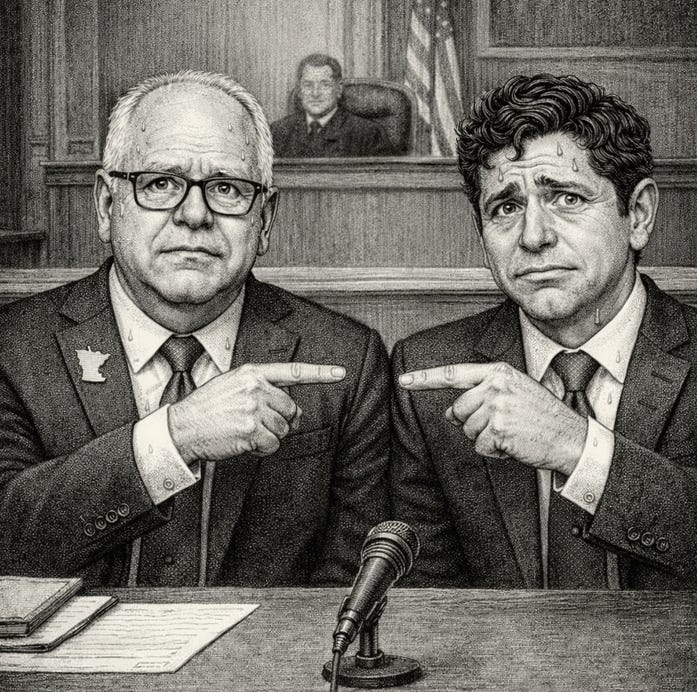
So understand: prosecutors don’t need Walz or Frey to throw a Molotov cocktail. They need evidence that officials knew their words and policies were encouraging interference with federal agents—and kept doing it anyway.
Pattern matters. Context matters. Foreseeability matters. And when you have repeated incidents of activists physically obstructing ICE after numerous examples of official rhetoric framing those agents as existential threats, the legal math starts getting pretty simple.
This is why smart politicians usually choose vague platitudes over inflammatory slogans. Walz and Frey chose differently.
Will DOJ bring charges? That’s a separate question—one that could depend as much on prosecutorial appetite as legal sufficiency. But the notion that elected officials enjoy a magical First Amendment shield while encouraging conduct that predictably violates federal law is a dangerous assumption if you’re the one doing the encouraging.
So — how to get hold of communications that could show that sort of agreement? Or a willingness to aid and abet?
Well… here’s an idea:
Memo to Harmeet: SUE This Clown Car!
At this writing, ICE agents, counter-protestors, and regular people just looking to eat lunch still face sustained violence across Minnesota. Meanwhile, Walz and Frey seem to have decided the best reaction is to make jihadi videos.
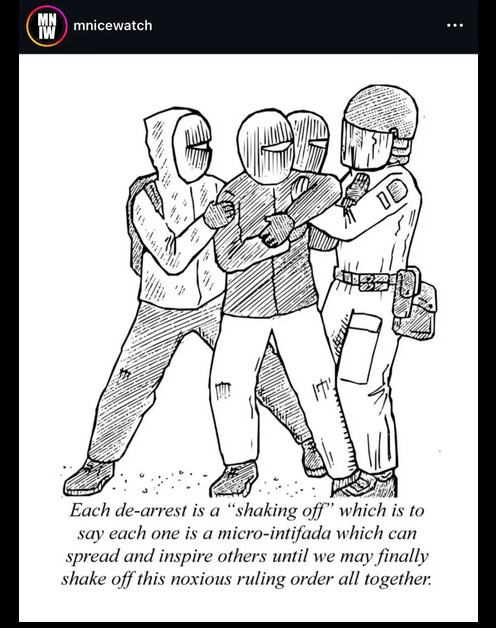
This, while a Minnesota-based activist group, ICE Watch, circulated a “de-arresting” manual to protesters — explicitly likening tactics for confronting police to a “micro-intifada.”
This wasn’t a guide to lawful protest. It promoted physical interference, arrest obstruction, and coordinated crowd tactics to overwhelm officers.
Now, criminal charges are one thing; ultimately, they require a showing of beyond a reasonable doubt (generally considered to be someplace around 97% certainty). But civil-rights enforcement is quite another thing; that only requires a finding by a jury of a preponderance of the evidence (really, just a 51% certainty).
This is why even in situations where the government suspects criminality, they’ll sue instead if they have weak evidence (it’s why Letitia James’s b.s. lawfare case against Trump was a lawsuit, not a prosecution).
Now, the DOJ’s Civil Rights Division has long used “pattern-or-practice” authority — under statutes like 42 U.S.C. § 14141 and § 1983 — when local police agencies fail to protect basic liberties.
So, under the present circumstance: What if DOJ sued Minnesota and Minneapolis not for over-policing, but for under-policing — for tolerating conditions that enabled violence against federal officers performing lawful duties? And thereby turned the streets into a no-go zone for normal citizens? (I assume there are some left in Minnesota…).
When activist groups openly distribute manuals advocating confrontation, while elected officials vilify federal agents and local police stand down, violence becomes foreseeable. And foreseeable violence that’s tolerated is civilly actionable.
Police departments have a duty to preserve public safety and protect constitutional rights — including the right of federal officers to do their jobs and residents to live without intimidation. If Minneapolis PD and the Minnesota State PD allowed streets to become battlegrounds, and that inaction led to injury or suppressed lawful activity, the elements of systemic civil-rights failure may well be met.
At this point, one thing is clear: all this isn’t about immigration policy. It’s about the fact that the Dems let in 10 million unvetted illegals under the Biden administration, lost the 2024 election over the issue, and now the Trump administration is looking to fix it — a circumstance the left convinced themselves could never happen.
So now we get real violence, organized obstruction, and neighborhoods left unsafe because officials are choosing paralysis over enforcement. Hmm… wonder why?
Even without a civil trial, the case discovery — that is, the exchange of evidence prior to any trial — would alone be devastating. Depositions, internal emails, stand-down directives, contacts with activist groups — discovery would show who decided not to act, and why.
And would undoubtedly lead to the Governor’s and Mayor’s mansions.
Suing Minnesota and Minneapolis wouldn’t just make headlines. It would force facts into daylight — and accountability with them.
The DOJ Civil Rights Division is a unit that, historically, just loves suing cops. But now its headed by Harmeet Dhillon. She was put there by Donald Trump.
So that faint clacking sound you hear in the distance? Could well be DOJ attorneys typing up subpoenas….
You hear it too, Chief O’Hara?
This Week’s Podcast
A real coup (no pun intended!): We have Carrie Filipetti, former Deputy Assistant Secretary of State for Venezuela and Cuba under the first Trump administration.
What do we do now that we kinda-sorta own Venezuela? Is it coming apart already?
How does Venezuela figure into the Iran situation? Will we strike that nation militarily? And what’s next in Ukraine?
If you don’t think these issues will affect your life, your safety, and your pocketbook… reconsider. They will.
Carrie explains why. A fascinating woman, and a great interview.
(So as ever, click below for the sizzle, and HERE for the full pod).
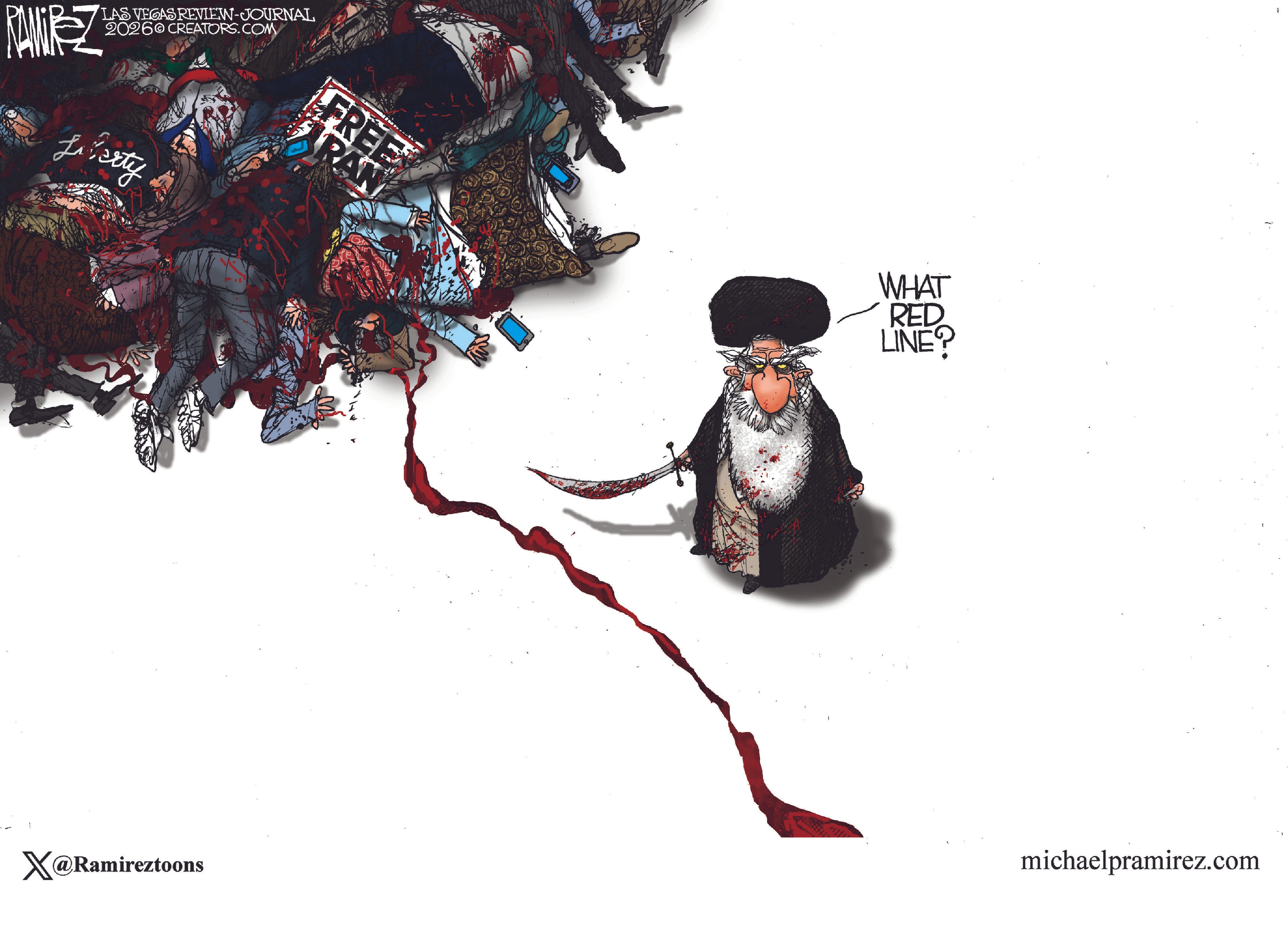
Meanwhile, In Iran
Funny — nobody occupying our nation’s campuses in support of Iran’s population.
Couldn’t be that the progressives side with the mullahs against America, Israel, and the West, could it?
Nah.
What DOJ Should Do Now
So by this point, we have seen hundreds of violent confrontations between ICE agents and crowds in the street. Some incidents have involved ICE agents using force such as pushing, hitting, and pepper spraying individuals to prevent interference with lawful apprehensions. It doesn’t look to be getting any better.
The local police departments have been sidelined by radical politicians. They are being prevented from keeping their streets orderly and chaos-free, as required by the oath as cops. Local police departments should have a uniformed presence with every ICE convoy to keep the streets open and allow agents safe passage through their jurisdiction. By failing to do their jobs, they are endangering protesting citizens and federal agents. Renee Good would likely be alive if a few uniformed patrol officers were on hand to enforce basic local laws.
ICE and federal agents have a different set of laws that they can enforce. They cannot be out there issuing summonses for blocking streets or arresting people for disorderly conduct – those are local laws. But pushing people out of the way or spraying pepper spray is no deterrent. The people are right back minutes later, angrier than ever.
What ICE should be doing is setting up investigative teams and coordinating with US Attorneys to stop these people. Agents should be armed with dash cams, body cameras, and a dedicated video team. They should be streaming or sharing all video with an Assistant US Attorney dedicated to prosecuting people who illegally interfere with their lawful mission.
This AUSA can review video, determine when federal law has been violated, and initiate a prosecution. Video of lawbreakers should be shared with a federal investigative team who can use license plate data, clothing descriptions, facial recognition technology, and other tools to identify these people. Once identified, warrants can be issued and agents can make arrests. Not on the streets in the heat of the moment, but with normal warrant enforcement procedures.
A team of federal agents knocking on your door at 6 am armed with a warrant is a safer and more effective way to stop these unlawful actions than a shove by an agent on an icy street. A trip through the booking process followed by an arraignment in front of a judge is cleaner, safer, and more effective than any use of force.
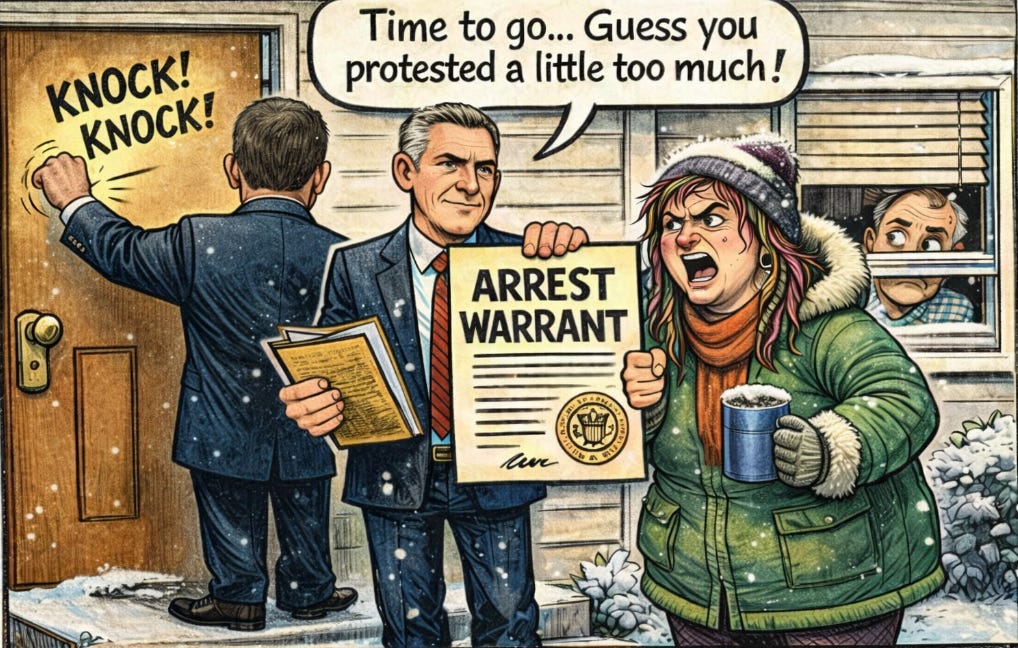
This will deter law breakers, make ICE’s job easier, and make the streets safer for both lawful protesters and ICE agents. It is high time that the DOJ pulls out all the stops and goes after these insurrectionists.
The Other Green New Deal
In recent years, many states have moved to legalize marijuana. Almost all of them sold legalization as a way to fill state coffers with cash for politicians to spend (read: waste). We were assured that regulation and oversight would make cannabis use safe, while conveniently adding fines and fees to boost revenue.
The harmful effects of marijuana were downplayed—more proof that politicians will say anything to grab more money. Instead, the focus shifted to claims that marijuana effectively treats anxiety, pain, and insomnia.
To make a government-controlled cannabis industry more palatable, states often began with “medical” marijuana. Anyone who has spent time with a chronic cannabis user would question the drug’s medical benefits, but states persisted, clearly seeing dollar signs ahead.
Once enough people were comfortable—or hooked, depending on your view—states moved to the next profitable step: full legalization and sales through government-licensed shops. Stores appeared almost overnight and sales surged. Tax receipts often fell short of promises, frequently due to incredible management, as we saw in New York.
Now that most Americans live where recreational marijuana is legal, disturbing studies are emerging.
A recent Journal of the American Medical Association study found marijuana use is associated with increased psychotic symptoms and generalized anxiety disorder. Daily use is linked to higher risks of heart disease, heart attacks, and strokes. The study found no evidence cannabis treats insomnia or pain. Even claims about nausea relief in cancer patients and seizure disorders—the original justification for medical marijuana—appear overstated, with only modest symptom reduction.
Another JAMA study from last January confirmed the stereotype: chronic marijuana users showed reduced brain activation during memory tests, with impaired short- and long-term memory.
We don’t consider marijuana use the crime of the century. Paul and I both worked narcotics units and made plenty of marijuana collars (usually resulting in a simple summons). In hindsight, it was often a poor use of resources. But government support for—and enrichment by—marijuana legalization is a terrible and immoral idea.
Now more people are hooked on cannabis, and governments are hooked on the tax revenue. That makes reversing legalization unlikely. Weed is here to stay, no matter how many people suffer. Thanks to our politicians—always looking out for us.
For most of the 20th century, governments worked to dismantle organized crime, often successfully. They broke the mafia’s control of numbers running, gambling, drugs, bribery, and no-show jobs. The government beat the mafia—and to the victor go the spoils. If you say the government eliminated the competition, you might be right.
In fact — you definitely are.
And finally….
Sometimes, you just gotta laugh at them.
Via The Babylon Bee:

Sadly the Minnesota mind virus is contagious and Oregon, Californiia, Tennessee, NCarolina and others or just a city within a state...like Philadelphia or Houston. So many mindaltered people having drank the koolaid are destroying what it is they are screaming FOR, democracy.
We are a Constitutional Republic OF States, joined together, by a federal government. In which each state represents its own constituency, the electoral college represents each states choice, democratically, largest tally to reach the needed set number of votes.... WINS.
These states, cities and elected political officials are thwarting the fundamental principles and values that founded this Country. Pastor John Robinson, from Holland, taught the pilgrims for 12 yrs before steeping on the coast of Massachusetts The Principles of Moses.
Its not jist about calling out the blatant insurrection and tyranny of the leftist propaganda as antifa, blm/lbgtqia+, and other tds funded groups <iesoros>.
This is what happens when performative politics collides with black-letter law. Walz and Frey spent years demonizing federal agents, signaling stand-downs, and treating ICE like an occupying army—then act shocked when mobs take them at their word. The First Amendment isn’t a force field. You don’t get to incite obstruction, normalize interference, and outsource enforcement to activist street crews without consequences. Prosecutors don’t need Molotovs; they need patterns, foreseeability, and receipts—and Minnesota is swimming in all three. Criminal case or civil hammer, discovery alone would be nuclear. If DOJ moves, this won’t be about immigration. It’ll be about accountability for officials who lit the fuse and walked away.