

In scale, Ireland is not America, and it is not mainland Europe; it does not have the space to quietly absorb mass migration the way larger countries might. It is a small island with two separate countries, the Republic of Ireland and Northern Ireland, and with an unusually strong and recognizable national character and culture – one shaped by conquest, famine, partition, emigration, and the Troubles. That is why the current migration crisis is not landing there as an ordinary policy dispute. It has now moved exactly where it was clearly headed: from political controversy, to street anger, to public disorder.
As the EU’s new migration rules were set to take effect on June 12th - making Ireland even more vulnerable to mass migration ideology - the island was already under pressure from asylum placements, housing strain, and rising public anger. When June 12th arrived, Belfast was already burning, Dublin was on edge, Brussels was defending its plan, and Elon Musk was somehow being cast as the problem.
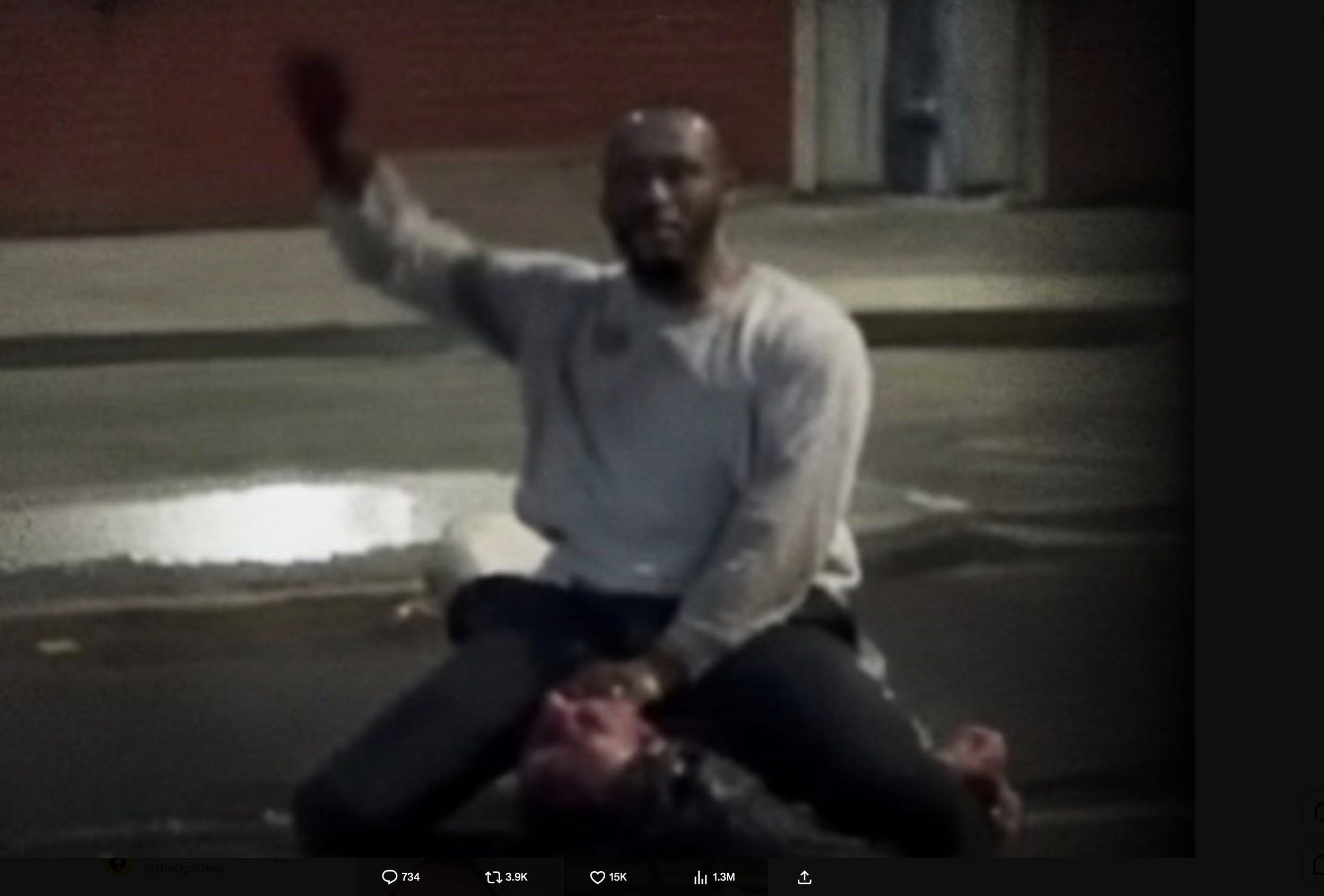
The latest trigger was very ugly. A Sudanese migrant, Hadi Alodid, has been charged with attempted murder after a brutal knife attack on a man in Belfast, Northern Ireland. Reports say the victim suffered deep cuts and lost an eye; some outlets described it as an attempted beheading, with the Sudanese attacker straddling the victim almost ritualistically, until a local resident beat him off with an Irish hurling stick. Video of the incident spread online, and the people hit the streets (WARNING - VERY graphic video). Houses were burned and lists of migrants were reportedly compiled. Police used water cannons and plastic bullets to stop the riots. Nineteen arrests followed.
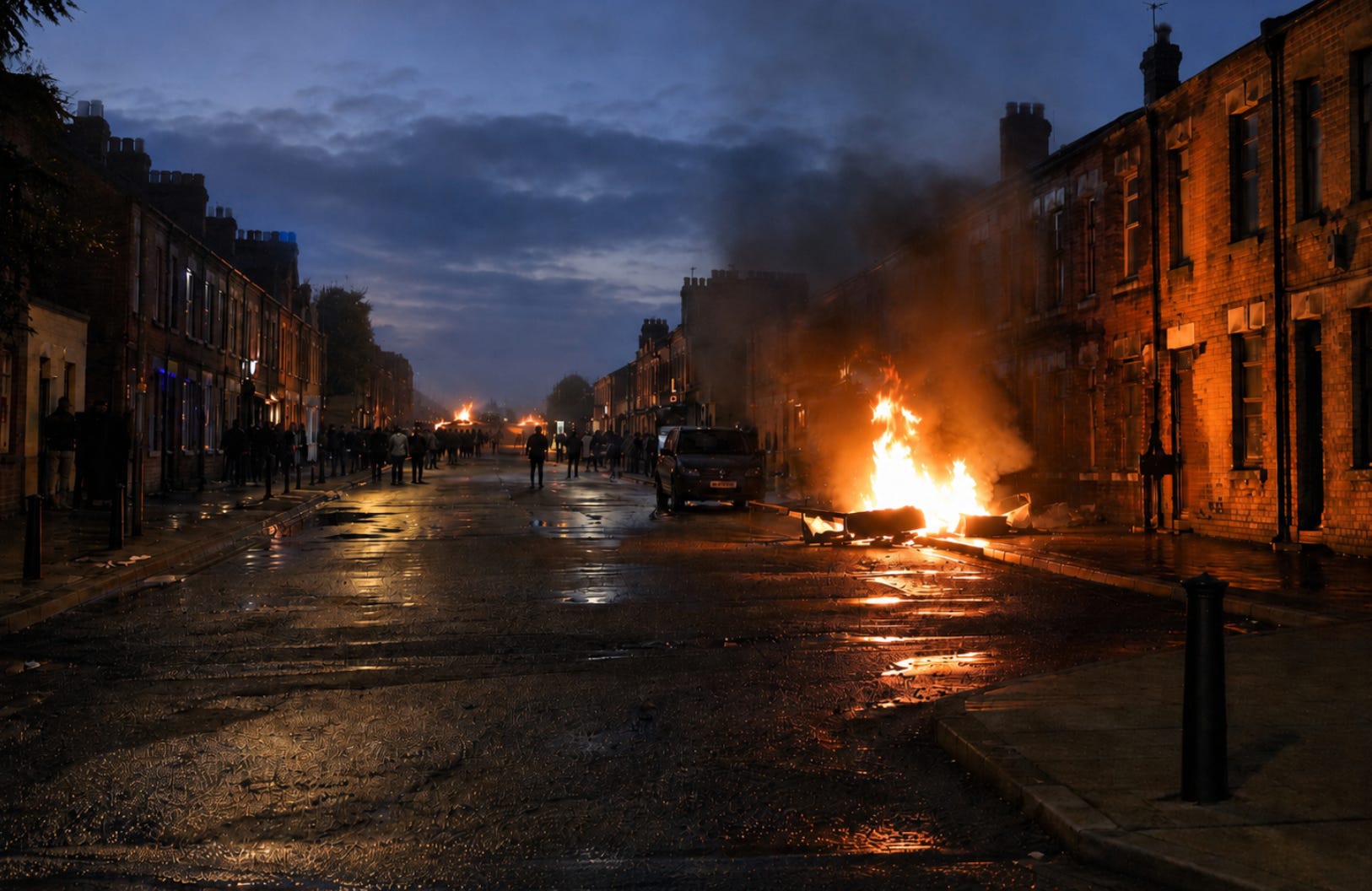
This is neither new nor isolated. In 2025, Ballymena, Northern Ireland erupted after two immigrant teenagers were charged in connection with the alleged sexual assault of a teenage girl - charges that were later dropped. And the latest unrest comes on the heels of the conviction and sentencing of Vickrum Digwa, a Sikh man of Indian origin, for the murder of 18-year-old Henry Nowak in Southampton, England. That case sparked a national furor after police body-cam footage showed officers initially focused on Digwa’s false claim that he had been the victim of “hate speech,” while Nowak - the actual victim - lay dying from a stab wound.
The Republic of Ireland has the same problem: asylum numbers up, housing under strain, local communities furious, and a political class in Dublin trying to explain why a small island country has to keep absorbing this problem.
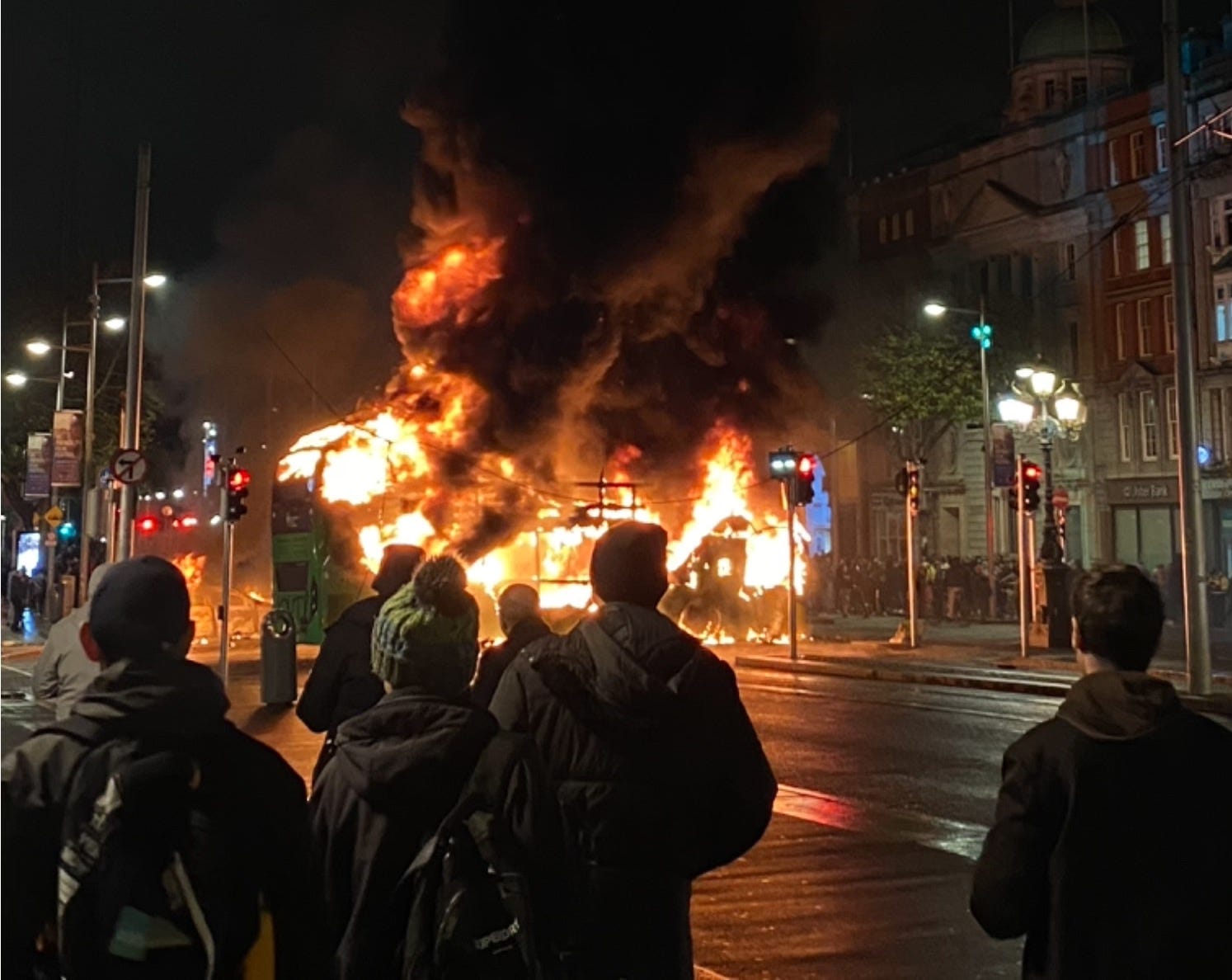
It’s been building in the Republic for a while also. The trial of Riad Bouchaker is currently underway in Dublin for the horrific November 2023 knife attack on children outside a school in Parnell Square. Bouchaker, a native of Algeria with no fixed address, is appearing in court through an Arabic interpreter. This week, witnesses gave harrowing testimony about Bouchaker wildly stabbing children outside of a school/child care facility, and bystanders rushing in to stop the attack. Dublin exploded after the attack left three children and a woman severely injured. Buses were torched, shops were looted, and riot police were attacked. The center of the Republic’s capital - the ancient heart of Irish civic life - looked like a war zone. Many Irish at the time discounted the event as an anomaly, but in retrospect that was the Republic’s warning shot.
.jpeg)
Then again in October 2025, Dublin saw violent unrest outside the Citywest Hotel, an asylum-accommodation site, after a migrant was charged in connection with an alleged sexual assault of a 10-year-old girl nearby. Irish law prevents the disclosure of the accused in sexual assault cases, but it is reported he is from Africa, in the country illegally, and is speaking through an Arabic interpreter. Again, the streets burned. And now, immigration violence is an ongoing political issue.
While not new, last week’s violence in Belfast does feel like a watershed. Vigilantes burning occupied migrant homes - including homes with children inside - and compiling lists of other migrant properties for possible future targeting signals a dangerous escalation. This is no longer just protest.
To be clear, the island has hardly collapsed into anarchy; normal life still goes on. But more people in both countries are starting to recognize - and admit - that these events are not isolated eruptions. And the ones who recognized it early have given up on the government controlling the matter. Northern Ireland’s Chief Constable warned last week that, “This has got to stop. We cannot have a society that allows this to happen.” Things are getting dark quickly.
A Complicated Border
While border disputes are hardly novel in Europe, the border between Ireland and Northern Ireland presents and exacerbates the migration problem unlike almost anywhere else on the continent.
The Republic of Ireland is an independent country. Northern Ireland is part of the United Kingdom. They are on the same island with different sovereign systems. That split goes back to Irish independence in the early 1920s, when most of Ireland broke from Britain but six counties in the north stayed with London. Irish nationalists viewed the north as occupied Irish territory. Unionists viewed it as British soil. That was the wound.
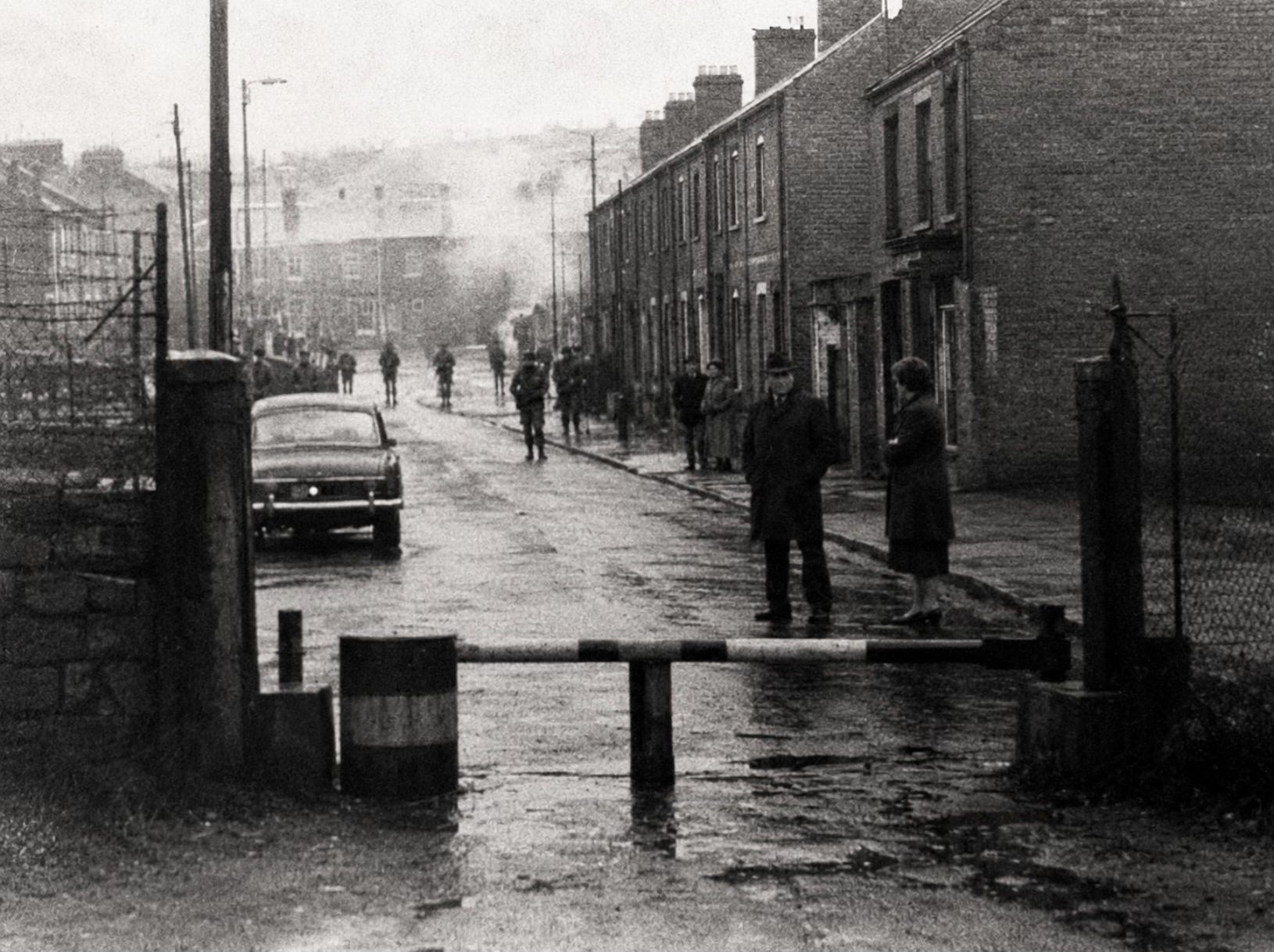
Then came the Troubles. From the late 1960s through the 1990s, Northern Ireland lived through an urban horror show: IRA bombings, British reprisals, hunger strikes, marching, informers, revenge, and funerals. Most of it played out not on some distant battlefield, but in tight neighborhoods, on hard streets where everyone knew everyone - what church you attended, what pub you drank in, your last name, and which side you were presumed to be on.
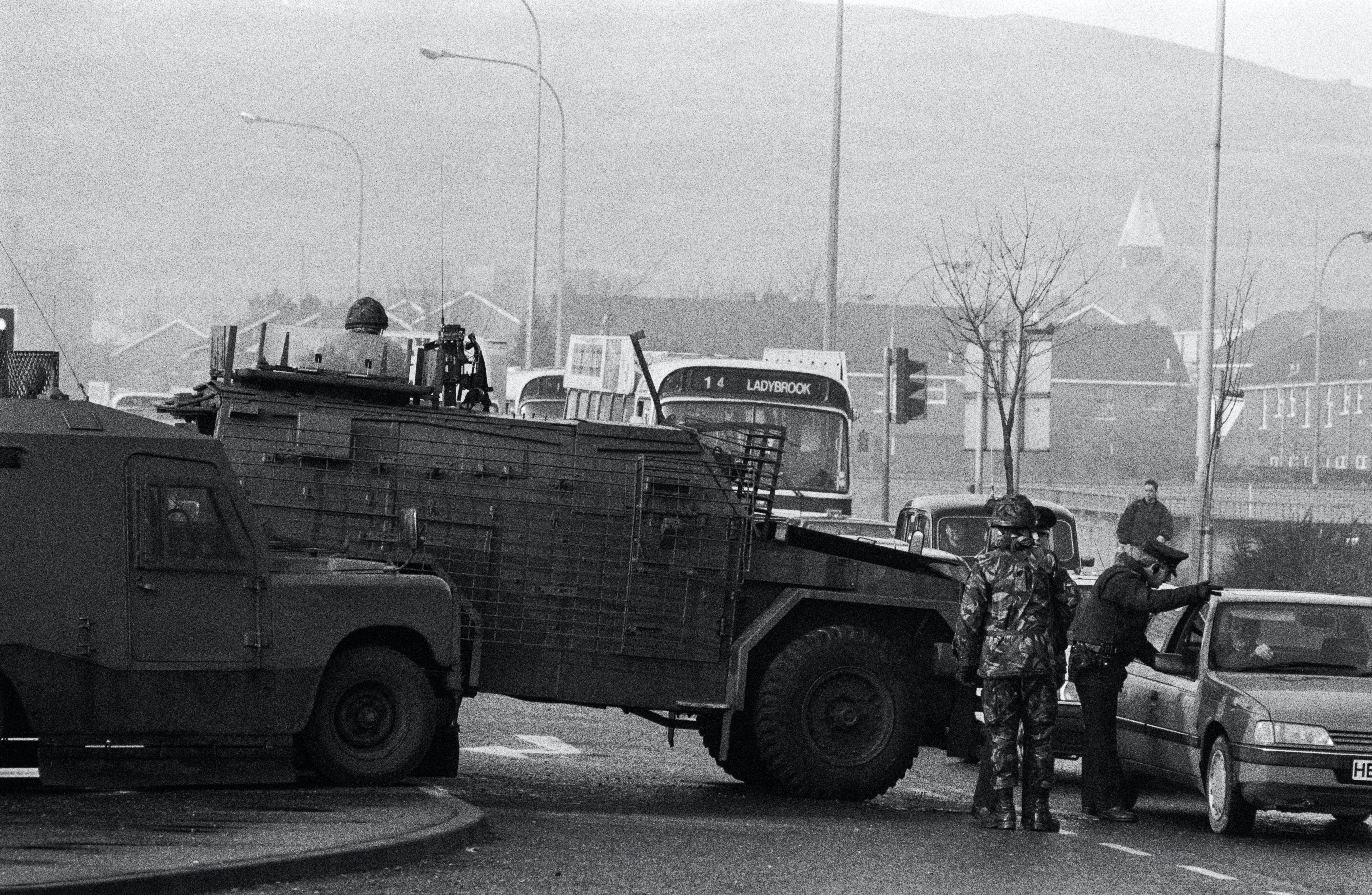
The formal border between the Republic and Northern Ireland was part of that war. Anyone who drove the M1/A1 between Dublin and Belfast during that period likely has images of the checkpoints, watchtowers, patrols, and searches etched in their memory. The Good Friday Agreement in 1998 helped end that violence, and one of its great achievements was making that militarized border disappear – allowing people on both sides of the island to move, work, worship, and live without the border dominating daily life.
Mass migration has now found that weak spot.
There is still a legal border on the island. But there is not a normal border in practice. The Good Friday peace agreement made a hard border politically toxic, and there are no routine immigration checkpoints between the Republic and Northern Ireland. Open borders exist elsewhere in Europe, but this one is different. France, for example, can put checks back on the Belgian border for security or to slow surges. Ireland cannot casually rebuild the old border without touching the peace settlement.
Then Brexit made it worse.
Not because Brexit created the open border. It did not. The border was already wide open. But Brexit made that openness even harder to touch.
Once the UK left the EU trade system and the Republic stayed in, the border became a legal problem again. Goods moving from the Republic into Northern Ireland were now technically moving from the EU into the UK. They had to be checked somewhere. Put those checks back on the land border, and you risk reopening the wound of the Troubles. Put them in the Irish Sea, and unionists feel cut off from their own country. So the lawyers moved much of the trade-control problem away from the land border while keeping the border itself invisible. It’s not perfect, but it was a workaround.
That compromise did one more thing: it confirmed how untouchable the border had become. Nobody wants to put real security back between north and south, and protocols after Brexit effectively codified that. So that border is open. Full stop.
Then, on June 12, 2026, the Republic made things more difficult by voluntarily opting into the EU’s new Migration and Asylum Pact. While individual asylum cases are still heard in Dublin, Brussels now largely decides how many asylum seekers Ireland is responsible for under the EU’s new “burden-sharing” system - their preferred euphemism.
So now you have one island with two countries, two immigration systems, and an open border between them - with Brussels deciding how many asylum-seekers Ireland must admit. And the migrants are working this border anomaly for every possible advantage. The Belfast suspect who sparked last week’s riots reportedly traveled from Sudan to Paris to Dublin, and then across the border into Belfast.
While the recent public anger may have been predictable, something else was less easily foreseen: mass migration may in fact be scrambling the old Irish divide. Researchers say anti-migrant activists from the Republic are now showing up alongside British loyalist networks in Northern Ireland - the same kinds of groups that would once have been on opposite sides of the Troubles. And the reverse is also true: protests in the Republic have drawn figures from Northern Ireland’s loyalist-paramilitary world.
That does not prove some formal IRA-loyalist alliance. And there are hardliners on both sides that specifically reject that notion. But it does suggest one thing rather clearly: old enemies are beginning to occupy the same anti-migrant space, and protecting their neighborhoods is nothing new to them. Ireland spent decades trying to get politics out of the hands of street muscle. Mass migration may be dragging it back.
The Demographics
The small North Atlantic island is now seeing what America saw during the four years of open border under the Biden administration. But there is one big difference: scale. The Republic has only about five million people. Northern Ireland has fewer than two million. A continued migration surge there will not merely be disruptive; it could become transformative very quickly. Small neighborhoods are already changing. Public services are feeling the strain. And if left unchecked, the island risks losing its greatest export and greatest draw: its very well-defined culture.
Ireland has seen immigration surges before, especially during the brief Celtic Tiger years of the late 1990’s and early 2000’s. But that was different. Then, most of the new arrivals were workers from Poland, the United Kingdom, and other European countries, coming into a booming economy that needed labor. Cultural proximity, and in most cases a shared Christian background, made assimilation easier. Many also came just for work, not permanent resettlement, and planned to return home. It was a labor wave.
The current surge is different. This is not the older pattern of mostly European workers moving within a familiar labor market. It is larger, more visible, and arriving at a moment of housing shortages, strained services, and a weaker economy.
In Northern Ireland, critics often trace part of the shift to Boris Johnson’s post-Brexit immigration system, which ended the old EU-first model and opened the UK to far more non-European migration through work, study, family, and asylum routes.
In the Republic, the most politically volatile arrivals are not coming through ordinary labor channels either, but through the international-protection system - i.e., asylum claims - often without immediate work authorization, recognized credentials, or an obvious path into the Irish labor market. The Republic also still has more than 120,000 Ukrainians admitted under the EU’s Temporary Protection regime.
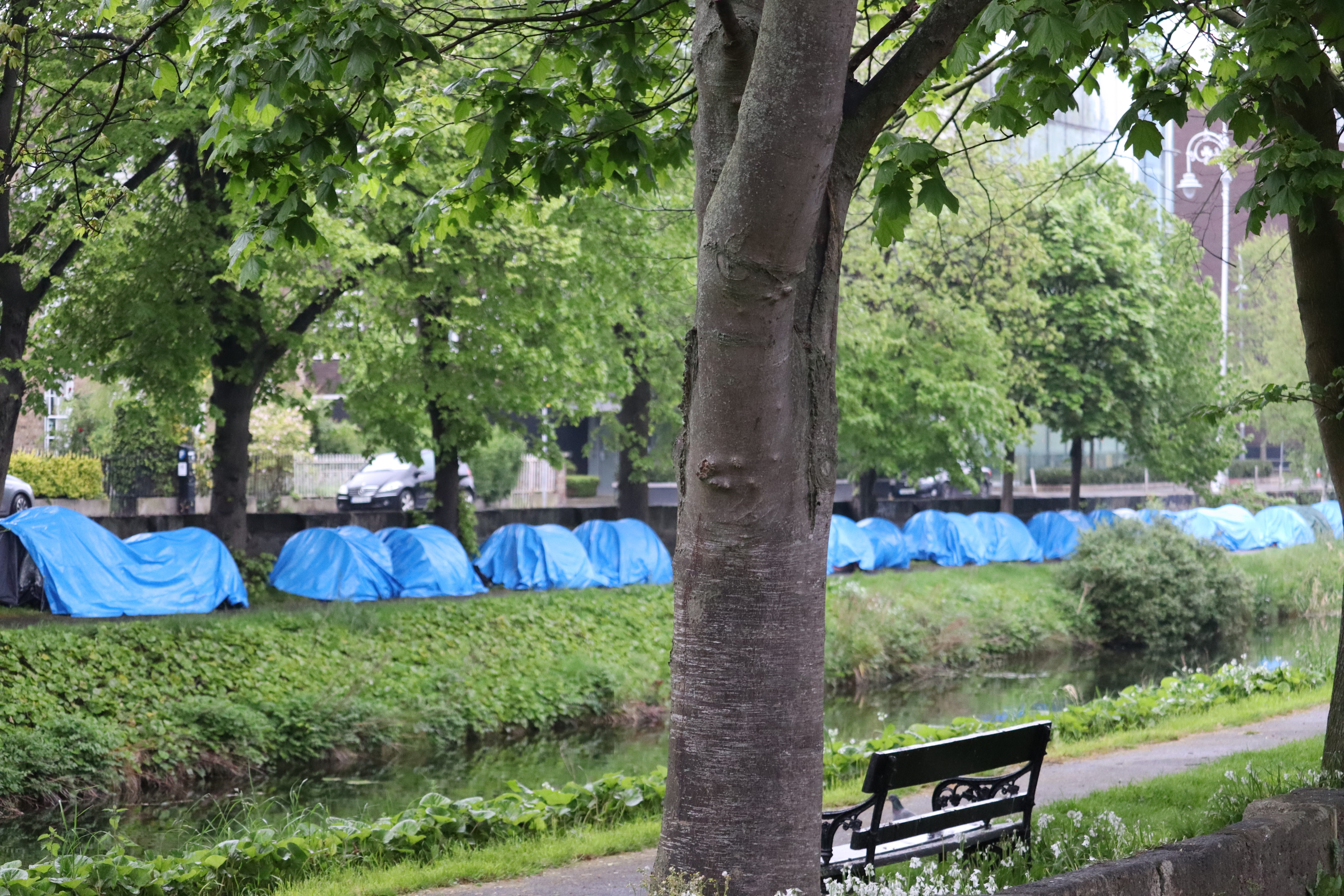
In 2025, the leading countries for international-protection applicants in the Republic were Somalia, Nigeria, Pakistan, and Afghanistan - countries with very different languages, institutions, and migration patterns from Ireland’s earlier European labor wave. That makes the integration challenge more visible, more complex, and more politically combustible.
Ireland is not yet dying out by births and deaths alone; births still exceed deaths. But the margin is shrinking. In the Republic over the last five years, births exceeded deaths by roughly 104,000. In 2025, births exceeded deaths by only about 18,500. While in just the one year preceding April 2025, roughly 125,000 total immigrants entered Ireland. That number includes immigrants from many different categories including returning ex-pats, but the vast majority are non-Irish. That is the pressure point: the native birth/death margin is narrowing while immigration has become the main engine of population growth.
Ireland’s Response
The reasonable response to the migrant issue should be for the island - north and south - to limit and control the migration for its own benefit. But Ireland’s ideological ruling class just handed the immigration reins to the EU and built itself a moral escape hatch. Because Ireland has a long history of sending its own people abroad, Dublin’s ideologues present their open-border posture as an act of national virtue: we left, so we must let others in.
In reality, however, Ireland faces the same forces that pushed America into its own open-border disaster: internationalists chasing a one-world community, political number-counters looking for future voters, and unadulterated Trump derangement syndrome. Closing the borders would mean Ireland admitting what they still cannot say: Trump - America - was right on mass migration.
Brussels, though, is starting to say it, though very slowly and very carefully. The new EU migration system does promise some stricter border rules, faster asylum decisions, and more deportations. EU Migration Commissioner Magnus Brunner said last month that Europe needs to “get control back” over who comes, who stays, and who leaves. Hardly a Trump rally, but perhaps a start.
But there is good reason to doubt that any real fix is coming. Once the disorder began, the political response followed a familiar liberal-government script: instead of treating immigration, asylum failure, and border weakness as the core problem, officials shifted attention to speech, social media, and the nearest Trump-adjacent villain - Elon Musk
Officials quickly pointed to video of the recent knife attack being shared on X for the civil unrest. They don’t blame the crime, but the video of the crime. The British Prime Minister has promised now to crack down on X, and a formal investigation may be coming in a matter of months.
In the Republic, X is already under investigation by Ireland’s media regulator under the EU Digital Services Act. The Republic’s probe into Musk was not born in a vacuum: Ireland announced that its investigation was supported by information from HateAid, a German online-speech NGO whose own materials identify immigrants among the groups they seek to protect from what they consider “hate speech.”
So who is HateAid, and who funds it? The answer points back to the same ideological world: migration advocacy, anti-“hate speech” activism, and a “one-world ideology.”
HateAid’s early work was supported by the Robert Bosch Stiftung, a foundation whose CEO later moved on to become the Chief Operating Officer at George Soros’s Open Society Foundations. A money trail is also worth noting here: In 2022, Soros’s Open Society gave an organization called Campact a one-time €300,000 donation for “democracy projects, especially combatting hate speech.” Campact professes to be a migrants-rights advocate. Campact then funded HateAid giving it €200,000 in 2022 and another €200,000 in 2023 for “democracy” related projects. So the chain is simple: Soros’s Open Society gave to Campact. Campact gave to HateAid. And HateAid gave the info to Dublin.
To be clear, there is no evidence, at least on the public record, that Open Society (or anyone else) was pushing for Dublin to investigate Musk for his version of free speech - they likely don’t need pushing. And none of this is illegal on its face. But the ideology behind all of it is clear; and showing migrants committing heinous crimes on social media is certainly not part of that culture.
Ireland’s ruling class may still pretend their immigration problem is about social media, housing, or some inherited moral obligation from the centuries when Ireland exported its own people. It is not. It is a sovereignty problem, a border problem, and a national-survival problem.
The Irish people are clearly getting worried. The question is whether their leaders are worried - or whether they have already decided that transformation is the price of virtue. A small island with a hard-won peace, and a culture older than most modern governments, simply cannot absorb unlimited migration without ceasing to be itself. Nor can Dublin outsource control to Brussels, absorb the consequences at home, and scold its own people for noticing what is happening.
“Chief Constable warned last week that, ‘This has got to stop. We cannot have a society that allows this to happen.’”
But they do have a society that allows it to happen. The left has allowed these third and fourth world, failed state, immigrants to come to the west “just because” they’re from failed states.
The clash of distinctly different cultures is inevitable - brutal, corrupt, Sharia based system vs. western liberal rule of law based open societies. What could go wrong? Literally everything you see happening - corruption and fraud, male gang brutality, religious based lawlessness, an unwillingness to integrate - was all predictable.
The Irish love the Palestinians so much, they are welcome to them.
Also, with Rosie having returned to the US, I'm sure there's now room for 7 more normal people.