So as France and other European cities burn, and French President Emmanuel Macron blames Trump, many in the commentariat are warning that if we’re not careful, “this could come to America.”
They’re forgetting that it already did—just a few years ago. Same groups, same motivations, same mindless, nihilistic destruction.
And when it comes back again, it’ll make last time look like coffee and cake.
There’s an old saying: “History is an argument with no end.” As the west seeks to defend itself and its heritage of classical liberalism, things come at us so fast that we often forget even our recent history.
One reason I don’t forget it is I was stuck in it. I first saw this all coming together during 2011’s Occupy Wall Street demonstrations, which very often devolved into street fights with police. The movement was notionally about the use of a small park in lower Manhattan. But then various uninvolved anti-capitalism groups decided to make it their cause and a series of moronic Hollywood types threw their support behind it, and it escalated. Cue the riots on the Brooklyn Bridge.

But the “any cause will do” operating principle of today’s left reached full-flower during the so-called “Summer of Love” in 2020. I was still working for NYPD as the George Floyd/BLM riots came to town. What I saw that week I recall vividly: groups I had never heard of instantly mobilized, funded, and organized; placards appearing overnight in their thousands; students and old hippies who had no idea of the facts of the Floyd case screaming at the barricades; fires started, stores looted, cops and firefighters attacked, and any symbol of the west or government defaced with graffiti that often invoked communist heroes. The hammer-and-sickle was ubiquitous.
At one point police had to rush to Macy’s, a veritable institution here in NYC, to keep the looters from burning the place down. Just because.
And of course it wasn’t just New York. A federal courthouse was torched in Portland. Seattle had the declared “autonomous zone” of CHAZ. Rioters in St. Louis killed retired police Captain David Dorn… I could go on.
A black retired police officer, by the way. Didn’t matter.
And then, of course, it all just went away. Officer Derek Chauvin was sent off to life in prison, despite major inconsistencies in the case. The entire BLM movement was exposed as a scam. The CHAZ zone was dismantled after a wave of gun violence and at least two murders.
Occupy surprised me; the BLM riots shocked me. This was in New York, after all. The NYPD had literally nothing to do with the Floyd incident. At the time, the NYPD was hitting historic lows in not only crime numbers but also incarceration rates and police shootings.
Didn’t matter. Any cause would do.
Which, by the way, is what the ridiculous term “intersectionality” was devised to provide cover for. It’s the usual academic drivel designed to couch the left’s hair-trigger rage in loftier terms.
And so we have today’s Europe, where cities in France and elsewhere are seeing the very fabric of their cultural identities under siege (by “students”—right), and feckless invertebrates like Emmanuel Macron and other EU leaders quiver in their designer suits as they attempt to placate the mob.
The problem for them is that they are dealing with an added, and unyielding, factor: unchecked migration from Islamic nations, a legacy of France’s colonial past that is clearly not paying off as expected. The “red-green alliance”—red for communism, green the traditional color of Islam—is hitting peak volatility in France today.
And here in America, the red-green coalition is starting to make itself felt in the same way it began in France and other European nations: local politics. Zohran Mamdani. Abdul el-Sayed. Ilhan Omar. Rashida Talib. Anyone who thinks that these avatars of the alliance are not enjoying every moment of what’s happening in France, you’re not paying attention. I can only imagine the texts flying between and among this crew and fellow travelers like AOC and Bernie Sanders.
While that sounds like sarcasm—it’s not. Because this time around, if/when we get the DSA leading the riots here at home, there will be the element of islamism that wasn’t present for Occupy or BLM. Not Islam, note; “islamism.” Political islamism bent on islamisizing the west. The sharia imperative.
Because that is what today’s left and the islamists have in common: the desire to eradicate the western tradition. It is in fact the only thing they have in common; there are very few other things the two groups agree upon.
No matter. Destroying the west is apparently enough for now. We’ll sort the rest out later.
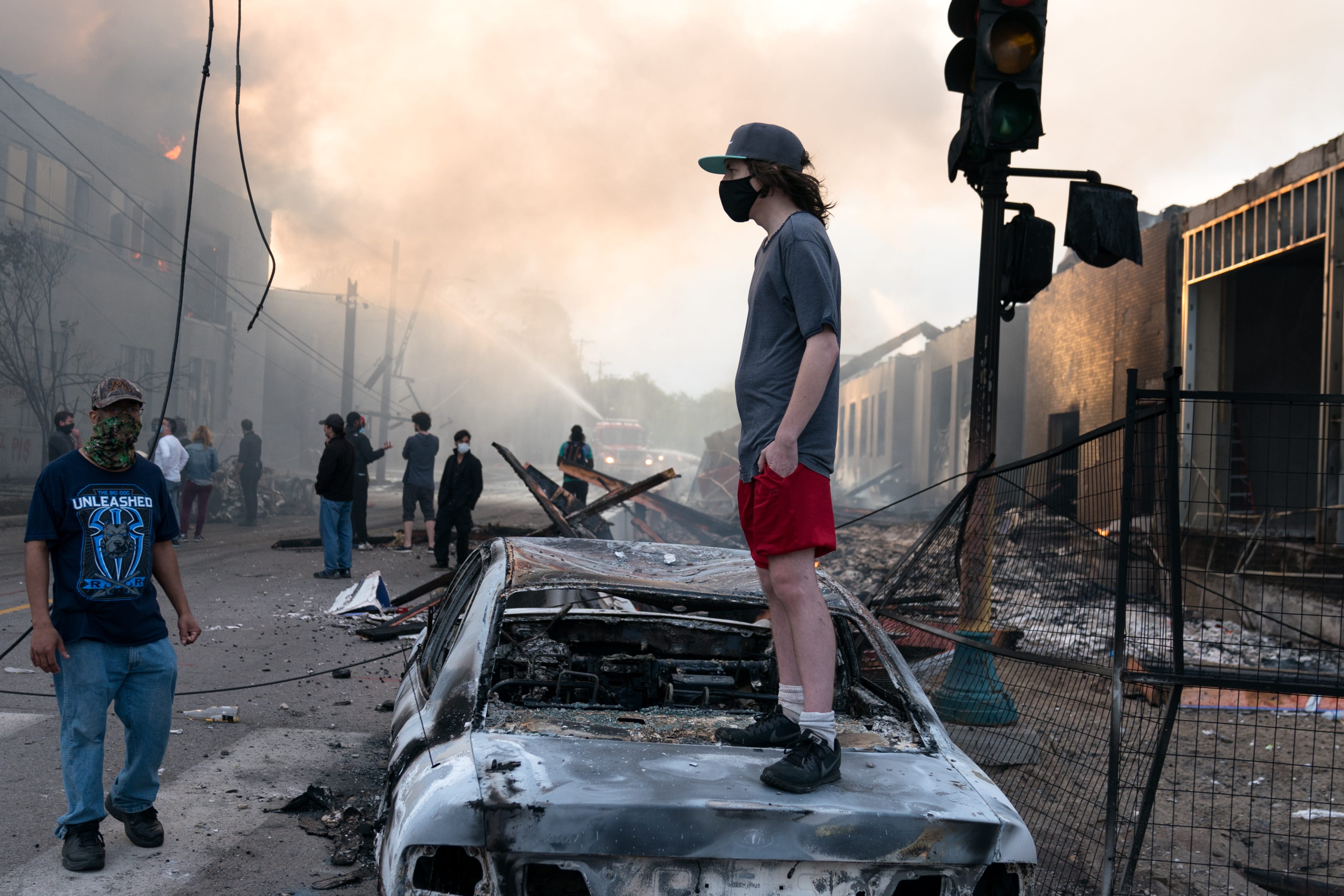
So friends, I ask you to consider this: the 2020 the Summer of Love rioters, abetted now by naive students who couldn’t find Gaza on a map of Gaza, screaming, “Free Palestine!” and raised to maximum fury by a biblical dispute of which they have no understanding.
Add their anxieties over AI and the diminishing value of their liberal arts degrees.
Then maybe throw in Antifa and a few hundred thousand migrants from Biden’s open borders who sense an opening.
Stir in a burgeoning islamism movement.
Top it off with a Democrat party that is increasingly captured by its most radical members who will tacitly validate, or maybe openly, encourage all this.
Then tell me it can’t get as bad here as it is in Europe.
If you’d been out there with us in 2020 (and perhaps you were?), you’d not only know it can happen here again.
You’d know that it also will likely be immeasurably worse.
Ops Wire Editor:

Europe’s Next Political Earthquake: Germany’s Alice Weidel Wants the Migrants Out. All of Them.
As unrest spreads across Europe, the leader of Germany’s surging AfD party says millions of refugees must go home, including Syrians, Afghans, and eventually even Ukrainians. And she isn’t talking about voluntary departures.
The riots engulfing France are spreading across Europe, with violent clashes also occurring in Belgium, Italy, and elsewhere.
The French government and much of the international media initially characterized the upheaval as protests over school conditions and economic grievances. But those explanations hardly accounted for burning public buildings, widespread looting, and attacks on police. That subterfuge faded fast.
French authorities have now admitted the obvious and blamed ultra-left extremists for much of the destruction — Black-bloc anarchists mixed with radical-left organizations and pro-Palestinian activists.
And the political implications could be enormous. Nowhere is the situation more consequential than Germany, Europe’s largest economy and arguably its most important political power. Germany was already undergoing a political transformation before the rioting began.
This week, the leader of the party driving that transformation made clear just how far she intends to go.
If you don’t know her name: you soon will.
Meet Alice Weidel
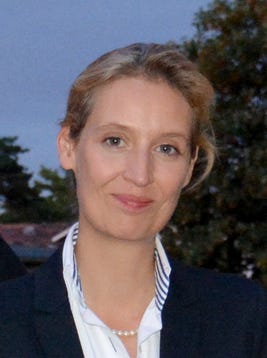
Alice Weidel leads Alternative for Germany, or AfD, a right-wing party surging in popularity largely by challenging Germany’s immigration policies.
Weidel is something of a paradox; a traditionalist, she is nonetheless openly lesbian, lives primarily in Switzerland, and her wife is a Sri Lankan adopted as an infant by a Swiss family.
Nonetheless, in an extraordinary interview with The Economist last week, Weidel outlined an immigration program extending far beyond stopping illegal border crossings. Instead, she wants millions of refugees already living in Germany to leave. And she was specific about who should go.
When The Economist’s editor-in-chief, Zanny Minton Beddoes, asked whether Syrians and Afghans legally living in Germany could remain, Weidel rejected the premise. Asylum, she argued, is temporary protection, not an automatic entitlement to permanent residence.
She called for returning all Syrian refugees, arguing that Syria’s war has ended and their protection is no longer justified:
“100% of the Syrians, because the war ended in Syria, 100% of the Syrian citizens have to go back to their country.”
She demanded Afghan refugees also be returned, criticizing Germany for admitting additional Afghans.
And Ukrainians, she said, must return once their war ends.
Weidel isn’t simply proposing deporting illegal immigrants. She wants large refugee populations removed, including people legally entitled to live in Germany.
She estimates her program would mean the departure of four to five million people.
And She’s Talking About Enforcement
Weidel also called for detaining criminals and religious extremists, directly connecting Germany’s immigration policies to violent crime. Accusing the government of tolerating criminality and Islamist extremism, she declared, “We don’t want a caliphate in our country.”
That language has helped make the AfD increasingly powerful. Germany’s experience with Islamic terrorism provides important context.
Just this past July, an Islamist extremist drove a van into people near Berlin’s annual Gay Pride celebration, killing one woman and injuring dozens. Investigators subsequently uncovered evidence of allegiance to ISIS.
Germany has endured years of Islamist terrorism, including the December 2016 Berlin Christmas market massacre, when an ISIS-inspired terrorist drove a truck into a crowded holiday market, killing 12 and injuring dozens. Such attacks have intensified Germany’s bitter struggle over immigration, terrorism, and domestic security.
Weidel points to what she calls skyrocketing crime since Merkel opened the borders in 2015, particularly serious violent offenses, connecting those increases to Syrian and Afghan migration.
Her message could hardly be clearer.
Her proposed remigration program would dramatically expand deportations and remove refugee populations whose protection she considers unjustified.
There are parallels with President Trump’s campaign to expel immigrants unlawfully present in the United States. But Weidel also targets people currently possessing legal refugee protection. That distinction makes her program especially far-reaching — and increasingly popular in Germany.
How Did Germany Get Here?
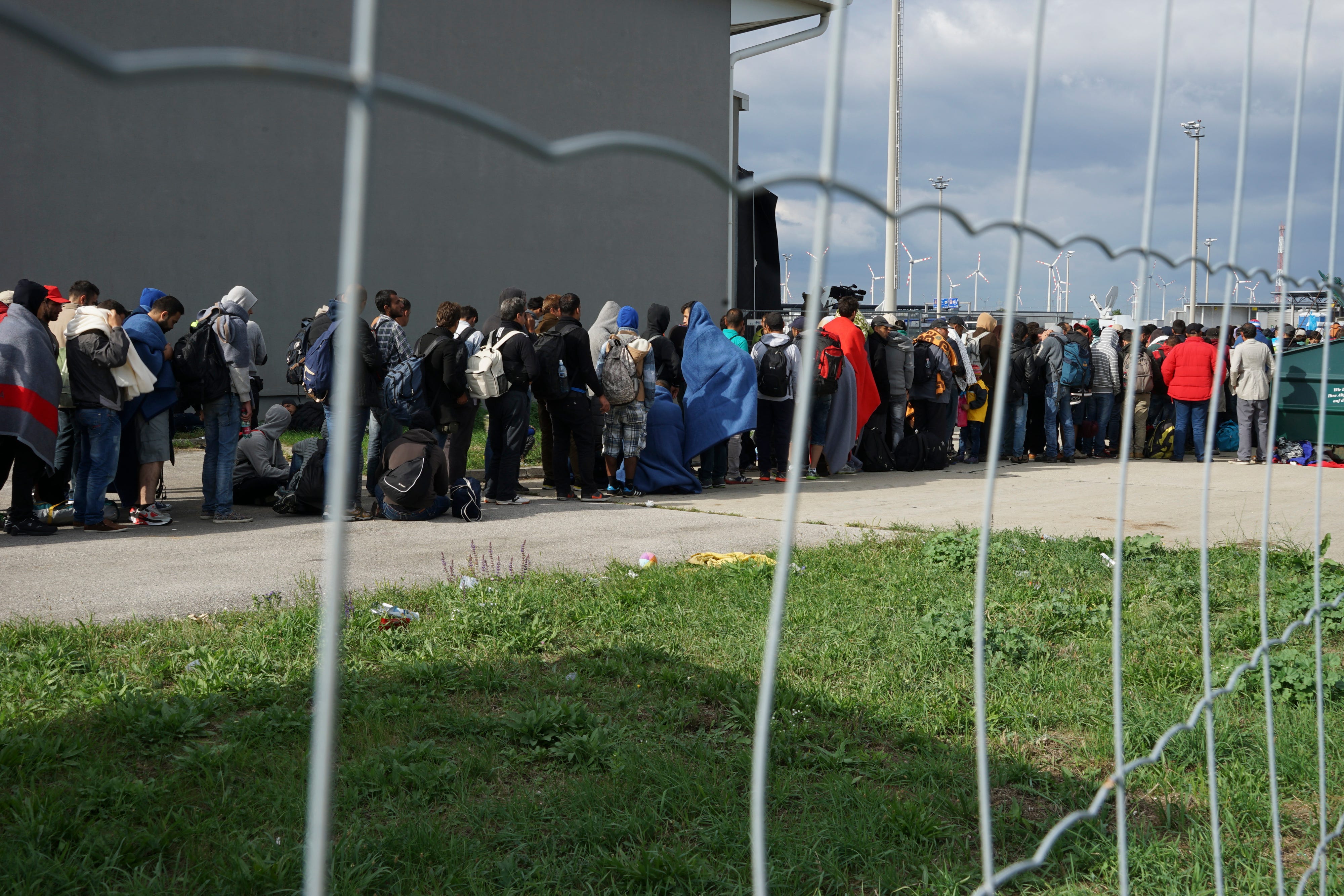
Much traces back to former Chancellor Angela Merkel’s 2015 decision to admit hundreds of thousands of asylum seekers, predominantly from the Middle East and Africa.
The policy generated lasting disputes over integration, housing, public benefits, criminality, and the government’s inability to deport large numbers of rejected asylum applicants.
Merkel’s decision was couched in a great deal of humanitarian phraseology, but the need to support public benefits for Germany’s aging population was a major motivation. Whatever the motivation, public anger over the influx has transformed Germany’s political landscape.
Meanwhile, Germany’s economic model has struggled. Its once-dominant automobile industry faces fierce Chinese competition, manufacturers confront expensive energy, their tech industry is anemic at best, and growth remains weak. Germany’s economy ministry reported another industrial slowdown this month.
These difficulties reverberate throughout the European Union, where Germany remains an economic and political powerhouse.
Taken together, they’ve created an opening for the AfD.
In Germany’s 2025 national election, the party doubled its vote share to 20.8 percent, becoming parliament’s second-largest party. More recently, it made major gains in eastern state elections, areas that have been traditionally more conservative.
The momentum continues. An October national survey placed AfD support at 27 percent, ahead of Chancellor Friedrich Merz’s center-right Christian Democrats at 20 percent. Approval of the governing coalition had fallen to just 10 percent.
Sweden Has Already Done It. And It Worked.
Germany wouldn’t be the first major European country to reverse its immigration policies.
Sweden already did.
Once among Europe’s most welcoming countries for asylum seekers, Sweden reversed course after years of gang violence, shootings, integration failures, and public anger.
Under a center-right government supported by the Sweden Democrats, the country tightened asylum requirements, strengthened deportation procedures, and expanded enforcement.
And the changes produced results.
By September 2025, Sweden’s government reported asylum applications had fallen nearly 60 percent since 2022, while returns to countries of origin increased more than 60 percent.
Shootings also dropped dramatically, although broader policing and criminal-justice reforms contributed alongside immigration restrictions. Sweden demonstrated that a European government can reverse permissive immigration policies and achieve substantial change.
Weidel wants Germany to undertake a far larger removal program.
Doing so would require confronting German constitutional protections, European asylum law, and international obligations governing individual deportations.
But growing numbers of Germans appear willing to try.
Will Weidel Actually Take Power?
Germany’s next national election is scheduled for 2029. But it could come sooner if the governing coalition collapses and constitutional procedures lead to parliament’s dissolution.
Unlike the United States, Germany is generally governed by multiparty coalitions. When those alliances collapse, early elections can follow. It happened in 2025.
Weidel’s obstacle is that Germany’s established parties refuse to govern with the AfD, even if it wins the largest vote share. This barrier, called the Brandmauer, or “firewall,” is an agreement among mainstream parties to exclude the AfD from power.
But cracks are appearing. Some parties have cooperated with the AfD on individual parliamentary issues while rejecting a formal alliance.
Whether that firewall can withstand the AfD’s popularity is becoming one of Germany’s biggest political questions. The French riots are undoubtedly weakening the wall.
And immigration isn’t Weidel’s only proposed upheaval.
She wants Germany to stop financing and arming Ukraine, negotiate an end to the war, and restore relations with Russia.
The AfD favors lifting sanctions and restoring Russian energy imports, including through the Nord Stream pipelines. Weidel argues Germany has sacrificed its economic interests through sanctions, expensive energy, and continued involvement in Ukraine.
Such policies would fundamentally alter Germany’s relationships with Russia, Ukraine, and its European partners.
In short: it would transform Europe… and potentially bring Germany more in-line with President Trump’s agenda.
Why Germany Matters
The French riots didn’t create Germany’s political upheaval. It was already building through years of disputes over immigration, public safety, economic stagnation, and dissatisfaction with the establishment.
But Europe’s spreading disorder is focusing renewed attention on those issues.
Weidel’s interview leaves no doubt about the scale of her ambitions: millions leaving Germany, including refugees currently living there legally.
Whether German law permits such a program, and whether the AfD can assemble the parliamentary support to enact it, remain open questions.
But the implications extend far beyond Germany.
As Europe’s largest economy and the central force in the European Union, Germany helps determine the continent’s political direction. So a fundamental immigration reversal in Berlin wouldn’t remain merely a German issue. It would likely reshape the debate throughout Europe.
And thereby, potentially: save it.
NIGHTWATCH: A Discussion With Asra Nomani
All, join me this week for an in-depth conversation with former Wall Street Journal and current Fox News reporter, Asra Nomani.
If you haven’t heard it already, the red-green alliance that is currently ripping Europe apart is well-established here in America—and gaining. Yet why do we remain so ignorant of what is, to my mind, the biggest threat to the West since the end of the Cold War?
The red-green coalition, aided by China, Russia, and naive American billionaires, seeks the total destruction of the West. Yet so few are paying attention to it.
Well, we are here at The Ops Desk. As is the great Asra Nomani.
Join us for a no-holds barred look at what we face today—and why you need to know about it. And about this important journalist.
Click below for a clip… and HERE for the entire Nightwatch! episode. (With new episodes each Saturday at 8 pm).
(You can also find Asra HERE on X, and HERE on the Fox News website).
True Crime Girl:

A College Nightmare in Manhattan
There has recently been a lot of attention paid to an alleged gang rape at Cornell University, but not nearly as much to the alleged intentional drugging and rape of a young woman who died following a fentanyl overdose in a dormitory at Manhattan’s Fashion Institute of Technology (FIT) on March 18 of this year.
One has to wonder why.

Federal prosecutors have accused 19-year-old Bronx resident Moises Freire of supplying fentanyl disguised as cocaine to two female college roommates. He allegedly told them it was cocaine that he had obtained from a trusted source in Mexico.
Freire refrained from using the drug himself, and both women lost consciousness almost immediately. He then allegedly raped one of the women, Annabel Richter, and took photographs of both women while they were incapacitated, sending the images to others.
Rather than immediately seeking medical assistance, Freire allegedly waited approximately 45 minutes before approaching campus security. Even then, prosecutors say, he initially claimed the women had simply consumed too much alcohol. After three days in a coma, Annabel died from complications of acute fentanyl intoxication. Her roommate survived after receiving emergency treatment. Toxicology tests confirmed that both women had ingested fentanyl, but no cocaine.
Annabel was from São Paulo, Brazil. News reports differ on her age, listing her as either 20 or 21 years old. She had come to New York to pursue a career in fashion. Her mother, Flavia Rocha, described her daughter as having a contagious laugh and loving art and music.
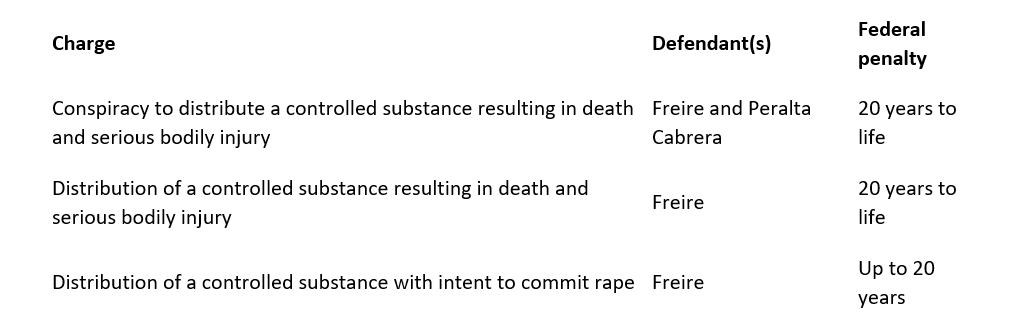
Prosecutors claim that Freire knew the substance was dangerous because he had tried it himself approximately a week earlier and described it to a friend as “poison.” They allege that he and another defendant, 18-year-old Brian Peralta Cabrera, conspired to distribute fentanyl.
Even more disturbing, prosecutors allege that Freire openly discussed with Peralta Cabrera his desire to get the women addicted to drugs. According to the indictment, Freire said he needed drugs strong enough to last all night and described the possibility of getting the women addicted as a “win win situation.”
These statements could be central to establishing Freire’s knowledge of the drugs’ dangerous nature and his intent in supplying them. They also raise serious questions about premeditation. What sort of depraved person would want to do such a thing, and for what purpose?
A third man, Harry Rosales Pino, was previously charged in connection with the drug distribution. He has since pleaded guilty and is awaiting sentencing. He’ll presumably testify against his co-conspirators.
An October 15 superseding indictment contains three counts:
Freire’s defense attorney has sought to characterize the events leading up to the overdoses as a tragic incident involving young people acting recklessly rather than a deliberate effort to harm the women. The defense has also reportedly asserted that Freire and Richter had a prior consensual relationship.
But the allegations in the indictment suggest something potentially far darker.
If prosecutors can prove that Freire knowingly supplied fentanyl disguised as cocaine, discussed getting the women addicted (for whatever purpose), deliberately avoided taking the substance himself, sexually assaulted an incapacitated woman and then delayed seeking emergency medical assistance, this case goes far beyond ordinary youthful recklessness.
Parents have always worried about the dangers their children might face when they leave home for college. But today’s students face a frightening new reality: a single encounter with someone willing to exploit their trust, armed with drugs as deadly as fentanyl, can turn what should be the best years of their lives into an unimaginable tragedy.
But as this case doesn’t implicate any frat boys at an Ivy League school, it remains a local story. And not the subject of an international debate over gender.
Three Minute Look-Ahead for Sunday, 18 October, 2026
And finally….
Over at the E.U…

"You're thinking of Europe as Germany and France. I don't. I think that's old Europe." — Donald Rumsfeld to an interviewer, January, 2003. Rumsfeld was roundly criticized in the media over the remark.