


Something may be taking shape in South Florida—and you can tell by who’s reportedly being called.
Reports circulating online claim that federal grand jury subpoenas have reached a striking group of former officials tied to the early Trump–Russia investigation. If accurate, that’s not a random cross-section. That’s a cluster tied directly to one of the most scrutinized federal investigations in modern history.
And if those reports hold, this wouldn’t look like a fishing expedition. It would suggest structure — and a serious case indeed.

This Isn’t About One Decision—It Would Be About a Pattern
The key tell here isn’t any one figure. It’s the clustering.
According to previous credible reporting, former CIA Director John Brennan, former FBI supervisor Peter Strzok, and Strzok’s former paramour, DOJ attorney Lisa Page, have all been subpoenaed into the grand jury in Florida.
Now comes word that former Director of the FBI, James Comey, has similarly been subpoenaed.
So what’s going on?
If prosecutors are in fact pulling multiple officials from the same operational ecosystem—intelligence assessment, FBI predication, and internal handling of politically sensitive material—that would suggest they are examining more than isolated decisions. It would point toward a pattern case: one built by stacking statements, decisions, and internal communications to test whether they reflect coordination rather than coincidence.
That distinction matters. A bad judgment call isn’t a crime. A coordinated series of them—if tied together with intent—potentially can be.
The Legal Lane: Narrow First, Then Broader
At the center of any such probe would likely be a question prosecutors have circled for years: whether senior officials misrepresented what they knew, when they knew it, and how certain they were—particularly in dealings with Congress or in formal intelligence products.
That issue has been examined before, most notably in the Durham Report, which criticized aspects of the FBI’s predication and handling of intelligence in opening the Trump–Russia investigation—though it did not establish a broader criminal conspiracy.
If prosecutors are revisiting similar ground, the most realistic exposure would be narrow: false statements or perjury tied to discrete representations that can be proven without reconstructing the entirety of 2016.
But even that raises timing issues. Federal false-statement and perjury statutes generally carry five-year limitations periods, meaning prosecutors would need to rely on later statements or a broader framework to stay within the statute.
Which leads to the more ambitious possibility.
If prosecutors were to explore whether actions across agencies were coordinated in a way that affected investigative or governmental processes, that begins to edge into conspiracy territory. In that context, individual false statements could be viewed not just as standalone offenses, but as acts in furtherance of a larger agreement.
As in: federal Conspiracy charges.
That’s a steep hill to climb—and at this point, speculative. But the scope of the reported names undeniably imports the question of whether all the familiar names tied to the Crossfire Hurricane hoax are about to find out.
Why Florida Would Matter
And if this is being run through a grand jury in Florida, that would not be incidental.
Venue decisions can shape everything from jury pool to courtroom dynamics. Bringing a case outside Washington, D.C., would create distance from the institutional environment where many of the underlying decisions were made and defended.
Critics would call that forum shopping. Prosecutors would call it strategic venue selection.
So Where Is All This Heading?
Big conspiracy cases rarely land cleanly—especially those involving intelligence and law enforcement decisions made in gray zones.
The more plausible near-term outcome would be narrower: discrete charges tied to specific statements that can be independently proven. Prior efforts to bring cases out of that same investigative orbit—such as those involving United States v. Michael Sussmann and United States v. Igor Danchenko—ended in acquittals, underscoring how difficult these cases can be to prove.
But even absent charges, the process itself—sworn testimony, internal communications, compelled records—can surface details that reshape the broader narrative.
So if the reported subpoenas are real, an attempt may be underway to answer a question that has lingered for nearly a decade now: whether the machinery of federal investigation and intelligence was weaponized against a president that the apparatus decided it just couldn’t endure.
Maduro’s Noriega Problem
There’s a familiar script playing out in lower Manhattan this week — and it’s one we’ve seen before.
Nicolás Maduro is back in federal court facing narco-terrorism and cocaine trafficking charges, part of a case that could put him behind bars for life. But the real fight isn’t just about drugs. It’s about something bigger — whether a foreign leader can hide behind sovereignty to escape prosecution.
If that sounds familiar, it should.
Because this is the Noriega playbook, updated for 2026.
Back in 1989, Panamanian strongman Manuel Noriega made the exact same argument Maduro is making now: I’m a head of state. You can’t try me. The U.S. response was simple — and the courts agreed. If you’re running a criminal enterprise that targets the United States, you don’t get a diplomatic shield. You get a defense attorney.
Noriega was captured, brought to the United States, tried in federal court, and convicted. The precedent was clear: sovereignty is not a get-out-of-jail-free card.
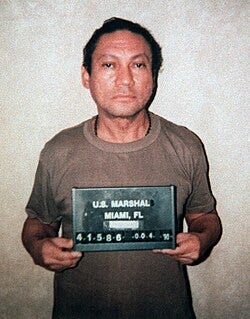
Maduro is now trying to revive that argument — loudly. At his initial appearance, he declared himself the legitimate president of Venezuela and challenged the legality of his capture, setting up a direct immunity fight.
It’s unlikely to work.
First, U.S. courts generally defer to the executive branch on recognition. And Washington has long treated Maduro’s “presidency” as illegitimate. That alone weakens any head-of-state immunity claim.
Second — and more importantly — the charges matter. This isn’t a policy dispute. Federal prosecutors allege Maduro ran a narco-terrorism operation tied to international drug networks flooding cocaine into the United States. That places the conduct squarely within U.S. criminal jurisdiction.
And that’s exactly where Noriega lost.
Courts are far more willing to reject immunity when the alleged conduct is commercial or criminal, not sovereign. Running a drug pipeline isn’t diplomacy. It’s racketeering under the cover of a flag.
Maduro’s defense will also lean heavily on the argument that he was “kidnapped” by U.S. forces — an issue his lawyers have already signaled they’ll litigate aggressively. But here again, Noriega casts a long shadow. U.S. courts have historically been willing to proceed even when the method of capture is controversial. (Indeed, a leader of the Sinaloa cartel was recently tricked into coming into the country by private plane — where he was swiftly detained).
That leaves Maduro in a tight box.
The sovereignty argument is politically powerful — especially on the world stage. But in a U.S. courtroom, it’s a legal loser more often than not.
Because the rule that came out of Noriega still holds:
If you use the power of a state to run a criminal enterprise that targets the United States, you don’t get immunity. You get indicted.
And it holds up.
The Never-Ending FBI Shenanigans
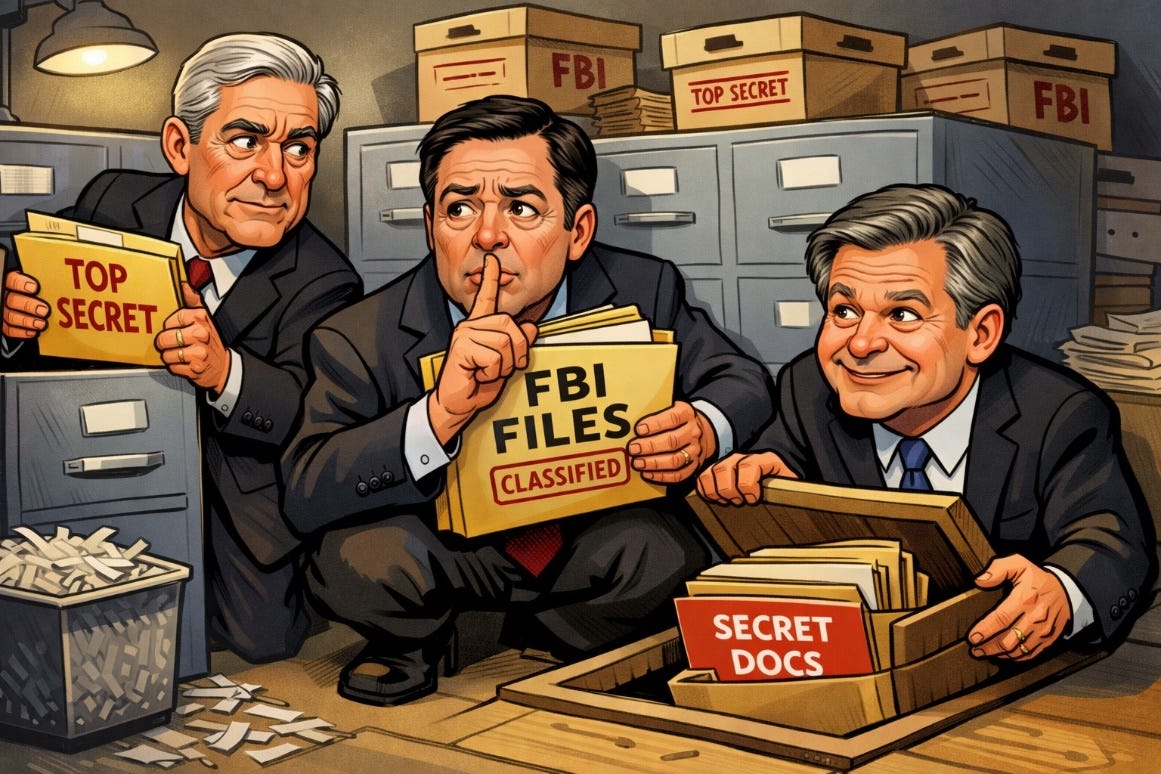
Trust is critical to any legitimate law enforcement agency. Without it, the agency cannot function effectively. That’s the real problem raised by recent reporting from Matt Taibbi and others, who claim the Federal Bureau of Investigation maintained “prohibited files” inside its Sentinel system that were effectively shielded from normal oversight channels. These prohibited files differ from “restricted files,” which are searchable but not accessible to most employees. Prohibited files are not even searchable, meaning no one can tell if they exist.
These files reportedly include cases on agent misconduct and spying on federal lawmakers, such as the Arctic Frost investigation. The practice appears to date back at least to 2007, when the late Robert Mueller was director. James Comey and Christopher Wray did nothing to end it.
Prohibited files are built into the FBI’s Sentinel system, the bureau’s central digital case management platform. Sentinel is supposed to track investigations, evidence, communications, and internal documentation—and ensure Congress can review bureau activities when necessary. Agents have access to the system, but according to Taibbi, most were unaware prohibited files existed within it. Congress clearly had no idea.
That should alarm anyone who believes in accountable government.
Congress is not an outsider to federal law enforcement. It is the constitutional branch tasked with oversight of executive agencies. When lawmakers request information, they are exercising a core check within the American system.
If the FBI created internal categories designed to avoid that scrutiny, it represents a breakdown in the relationship between the bureau and the officials responsible for supervising it. Senate Judiciary Chairman Chuck Grassley was informed and immediately sent a letter to Kash Patel and Pam Bondi demanding more information and an internal investigation. He should also be calling Comey and Wray to testify about the purpose and use of these files.
But the larger issue is not simply oversight—it’s public trust.
For decades, the FBI enjoyed a reputation as the premier investigative agency in the world. While it has had instances of misconduct—from COINTELPRO to surveillance controversies and even Hoover’s secret files—it generally maintained public confidence. That confidence has eroded, and these hidden Sentinel files are another blow to the Bureau.
In recent years, the FBI has been repeatedly drawn into political controversies. Investigations involving presidential campaigns, FISA authorities, and internal decision-making have fueled a growing perception that the bureau is no longer a neutral law enforcement agency.
When the public believes an agency operates with hidden processes, biased agendas, and limited accountability, confidence disappears quickly—as it should.
A modern law enforcement agency cannot operate like a private intelligence service that answers only to itself. If the bureau has developed mechanisms that shield certain files from oversight—and from the American people—that practice must end, and a full accounting is required.
But fixing a few administrative procedures will not be enough. The deeper issue is that the FBI’s mission has expanded far beyond what many Americans believe it should be.
Originally, the FBI focused on criminal investigations—bank robbers, organized crime, kidnappers, spies. Its mission was clear: enforce federal law and protect national security.
Today, its reach includes domestic extremism, social media monitoring, and political corruption inquiries. Some of these roles are necessary. Others blur the line between law enforcement and political activity in ways that make Americans uneasy. And the Bureau is not exactly excelling at tackling government corruption. Successful cases have been few, and now it appears the FBI itself may be part of the problem.
When an agency’s mission grows too broad, accountability weakens. When that breadth is used to justify secrecy, the problem worsens. That is why the FBI may need more than internal reform—it may need a structural reset.
Such a reset could include narrowing its mandate, strengthening congressional oversight, and increasing transparency around internal systems like Sentinel. It could also clarify the boundary between criminal investigations and intelligence gathering, which operate under very different legal standards.
None of this means dismantling the FBI. The United States still needs a capable federal investigative agency. Organized crime, cybercrime, terrorism, and espionage remain serious threats. But the Bureau cannot perform these missions if much of the country no longer trusts it. Law enforcement institutions depend on legitimacy—and once that erodes, it is extremely difficult to rebuild.
If reporting about hidden Sentinel files is accurate, it should be a wake-up call. Reforming the FBI is critical. Without meaningful reform, the Bureau risks becoming something far more dangerous than a flawed agency. Congress should take these allegations seriously and reconsider the FBI’s mandate.
Is SCOTUS Finally Going To End A Biden-Era Immigration Scam?
Temporary Protected Status (TPS) was created by Congress in the Immigration Act of 1990, in part as a response to humanitarian crises stemming from turmoil in Latin America, where Cold War conflicts between communist forces and U.S.-backed governments forced hundreds of thousands to flee countries like El Salvador and Nicaragua.
Lawmakers needed a lawful mechanism to allow certain foreign nationals already in the United States to remain temporarily when returning home was unsafe, without overhauling the broader immigration system. The TPS legislation was designed to serve that purpose; a humanitarian pause button.
The statute itself was straightforward. Designations are granted in limited increments of 6, 12, or 18 months and may be extended only if the underlying conditions in the country involved continue to meet statutory criteria.
But over time — as always seems to happen — the program evolved far beyond its original conception.
Repeated time extensions became common. A Government Accountability Office review found that some countries received numerous consecutive extensions, in some cases, for decades. What was intended as temporary relief, in practice, began to function as long term residency for tens of thousands of recipients.
Then came the Biden administration. Unsurprisingly, the crew running policy for an insensible president pushed the program to the breaking point, using the law as a tool to implement its open border policies. It expanded and repeatedly redesignated TPS on a massive scale, transforming what Congress created as a narrow, temporary humanitarian protection into a broad, long term immigration mechanism. This allowed large populations of migrants to come and remain in the United States under the label of “temporary” protection.
So when Donald Trump came to power he moved to terminate this abuse, with the Department of Homeland Security choosing to secure the homeland rather than foreign lands.
While these DHS decisions are clearly within the power of the Executive Branch, they nonetheless triggered the predictable legal challenges. Advocacy groups sought injunctive relief in federal court, asking (often friendly) judges to block terminations and preserve migrant protections while litigation proceeds.
The U.S. Supreme Court, when asked to step in early in these disputes, has largely issued short, unsigned orders, generally allowing DHS to end TPS, but without detailed explanation. That silence has mattered.
Without clear Supreme Court guidance, lower courts have continued issuing rulings that effectively preserve TPS protections while litigation continues, notwithstanding the executive branch’s clear direction as to what it deems to be in the interests of homeland security.
But that is likely about to end.
Two major cases now sit before the Supreme Court of the United States which, at bottom, are not so much about specific TPS designations as they are about constitutional authority.
As we have seen consistently of late, U.S. federal district courts have set themselves up as a last line of the “resist” Donald Trump movement. They justify their actions by pointing to their constitutional role to provide a check on the executive branch, and that is true in a general sense. But not like this. And they know it.
Federal judges understand the difference between properly allowing their ideological beliefs to influence an unsettled gray area of the law and ignoring the law based on those beliefs. It is perfectly clear that the executive branch alone makes decisions relating to immigration and homeland security. This is not a close call, and the Supreme Court will likely remove all doubt.
SUNDAY POD: INDICTMENTS for Comey, Brennan, Strzok & Page?
So numerous reports have surfaced that a grand jury investigation is underway into the Crossfire Hurricane/Russia Collusion hoax that dogged Donald Trump’s first term. Will it go anywhere?
There seems little doubt at this point that the entire affair was spun from whole cloth. A former MI-6 officer on the Clinton campaign’s payroll, an Australian “source” who seems never to have existed, an “Intelligence Community Assessment” that was only published because it “had the ring of truth to it” — we could go on.
And as is well-known now, a core group of intelligence officials appear to have been involved in the affair — to include CIA Director John Brennan, FBI Director James Comey, FBI Special Agent Peter Strzok, and Strzok’s paramour at the time, DOJ attorney Lisa Page. All have reportedly been subpoenaed into the grand jury — in a red district in Florida.
But will anything actually come of it? What are the weaknesses here? Do we actually need indictments to get some measure of justice?
And hasn’t the statute of limitations run already? If not — why not?
Join Paul, Chris, and Eric as they examine this quiet bombshell of a case that seems to be percolating below-the-surface of today’s news cycles.
If you want to know what the likely prospects are for this one — you need to hear it here.
So click above for the sizzle... or subscribe for the full pod!
And finally….
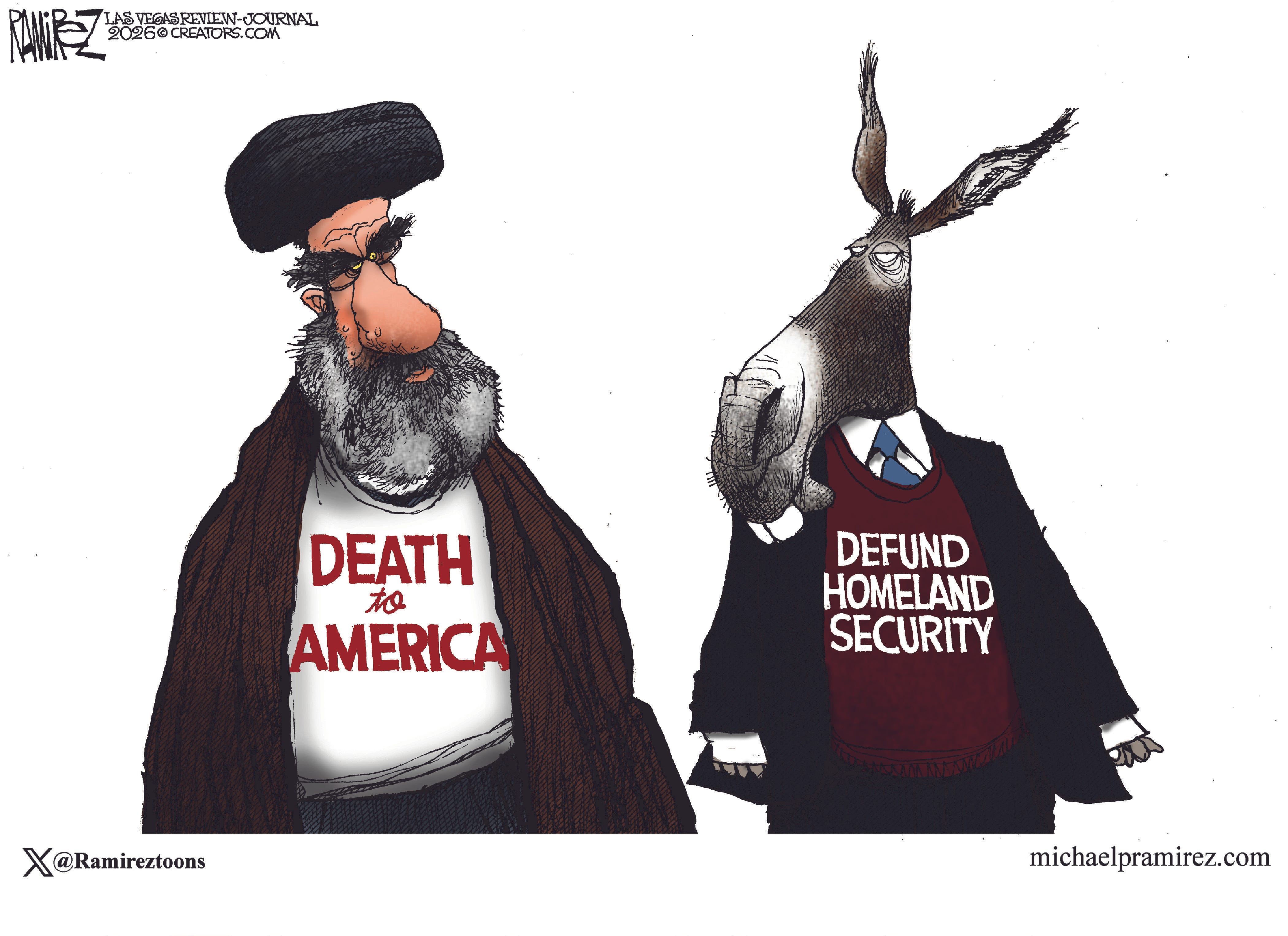
Don’t they make a cute couple?

If these subpoenas are real, the dam may finally be cracking. You don’t haul in names like James Comey and John Brennan unless you’re building something structured, not symbolic. For years, Americans were told the system worked, that there was nothing to see. Meanwhile, careers were wrecked, a presidency was targeted, and trust in institutions collapsed. This isn’t about revenge—it’s about restoring credibility. If officials misled, coordinated, or abused power, it has to come out. Not in press leaks, but under oath. Because without accountability, the next version of this story is guaranteed.