

The press is fighting for access. Prosecutors are fighting to protect their investigation. What is everyone so anxious to uncover?
From immigration fraud to political financing and national security, the federal investigation of Ilhan Omar raises questions extending far beyond one congresswoman. The Justice Department is refusing to release the search warrant used in its investigation of Congresswoman Ilhan Omar, and the American press wants to know why.
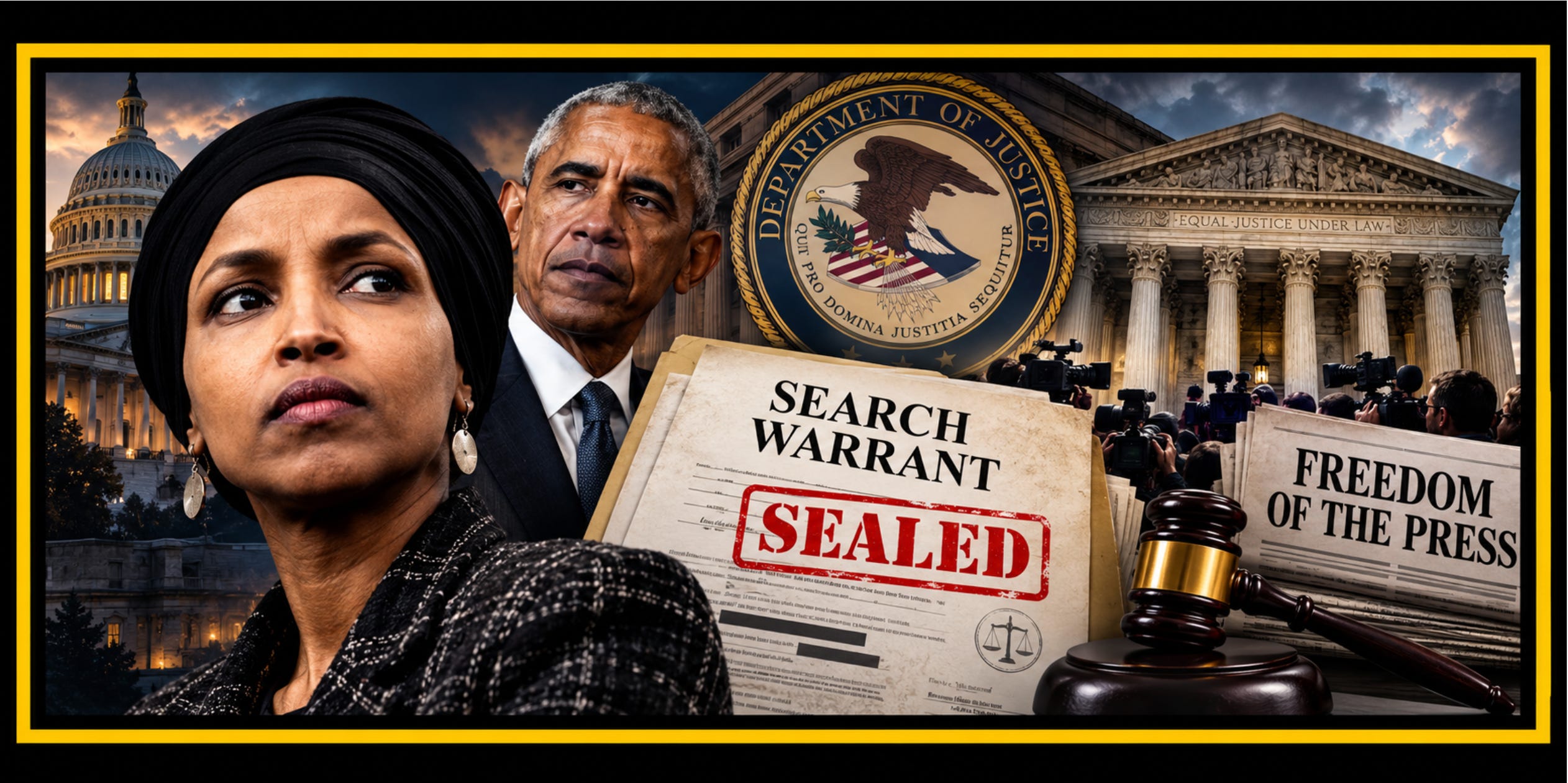
More than a dozen news organizations have gone to court seeking documents from the October 12 search of Omar’s Washington residence. U.S. Attorney Jeanine Pirro is fighting to keep them sealed, arguing that disclosure could interfere with an ongoing federal investigation.
But the more important question is not simply what investigators have found. It’s where this investigation might lead. There are several possibilities, some extending far beyond Omar’s political future.
What might the immigration investigation reveal?
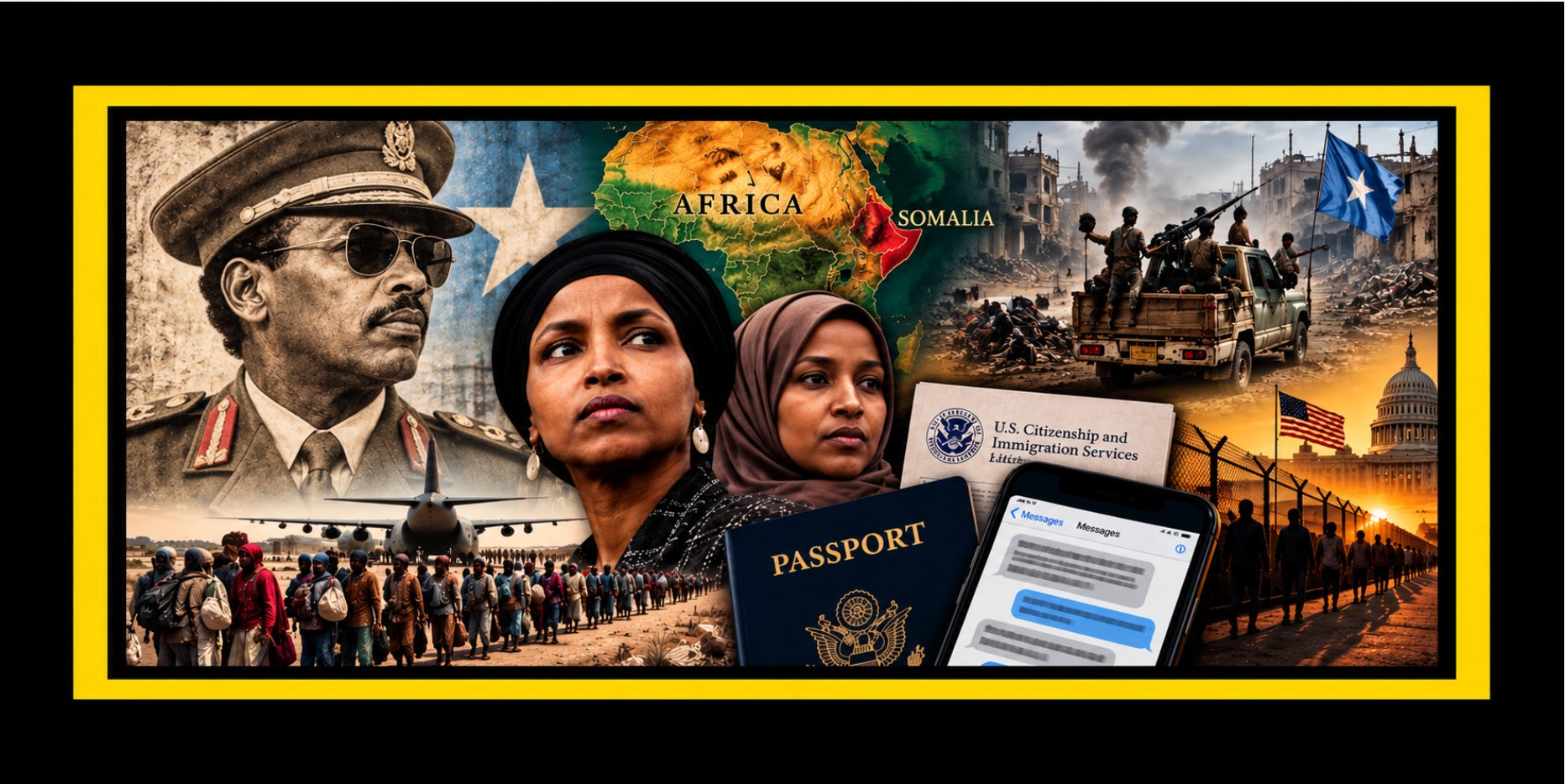
Federal investigators are examining whether Omar or family members made false representations in immigration documents dating to their arrival from Somalia in the 1990s. More than a dozen grand jury subpoenas have reportedly beenissued, including to relatives, and agents have seized Omar’s phone and other materials.
Investigators reportedly obtained text messages from a sister’s phone and used them to help secure the warrant. Such communications could contain years of potentially incriminating information never intended for public consumption.
The inquiry also raises questions about America’s immigration and naturalization systems, particularly after the Biden administration’s border policies and amid Europe’s struggles with mass migration.
Omar’s late father, Nur Omar Mohamed, was reportedly a colonel under Somali dictator Siad Barre, whose regime committed genocide against the Isaaq population. Investigators are examining whether his military background was properly disclosed.
How thoroughly was the family vetted? Were material facts concealed? And could any concealment have affected the granting of citizenship? Could the financial investigation lead somewhere bigger?
Could the financial investigation lead somewhere bigger?
Pirro has confirmed a separate investigation into Omar’s financial disclosures, following enormous discrepancies in the reported value of businesses associated with her husband, which Omar attributes to accounting errors.
Where did the money originate, who invested, and what relationships exist with political organizations or outside interests?
Congressional investigators have demanded business and investor records. Given Omar’s connections to progressive organizations, political action committees and major donors, could the inquiry extend into campaign financing, government grants, international development funds or broader progressive political networks?
Could investigators reach USAID-funded organizations, Black Lives Matter groups, other far-left activist networks or major political financiers? No established evidence currently links those entities to misconduct by Omar. But investigators follow financial relationships wherever they lead.
Is there a connection to Minnesota’s massive fraud scandals?
Minnesota has become something of a ground zero for progressive governance’s excesses: political disorder, failed oversight and spectacular fraud.
The 2020 George Floyd riots made Minneapolis an epicenter of violence, looting and anti-police agitation. The Black Lives Matter movement subsequently became embroiled in major fraud allegations.
During violent confrontations over federal immigration enforcement in early 2026, Governor Tim Walz and Minneapolis Mayor Jacob Frey escalated tensions with Washington. Two residents were killed by federal officers amid the unrest.
Meanwhile, the $250 million Feeding Our Future fraud produced dozens of convictions. A state audit identified inadequate oversight under Walz’s administration, with Keith Ellison serving as attorney general.
There are documented connections to Omar’s political circle. Former staffer Guhaad Hashi Said pleaded guilty to conspiracy charges involving fraud and money laundering. A legislative committee identified campaign contributions from several defendants, which Omar returned.
None establishes Omar’s criminal involvement. But could Minnesota’s fraud networks intersect with the political and financial relationships of one of its most prominent Democratic politicians?
Why is Barack Obama defending Omar — and why aren’t all Democrats following?
Obama has forcefully defended Omar, accusing the Trump administration of using law enforcement against a political opponent.
But why intervene so emphatically in this particular investigation?
Omar represents a heavily Democratic district likely to elect another progressive if she leaves office. Her removal would hardly threaten Democratic congressional prospects.
Is Obama defending her personally, convinced of her innocence, establishing a broader principle against Trump, or motivated by something else?
His intervention has turned the investigation into a confrontation between a former president and the sitting president over federal law enforcement’s legitimacy.
On October 26, 175 House Democrats, including Hakeem Jeffries, Katherine Clark and Pete Aguilar, demanded that Justice and Homeland Security refrain from actions affecting Omar’s reelection, accusing the administration of pursuing a predetermined political outcome.
Not one Republican signed. More significantly, 39 House Democrats - nearly one in five - also declined.
Does this expose divisions between progressive Democrats and more moderate colleagues? Or do some recognize the danger of defending Omar before investigators reveal their evidence?
Any criminal findings could deepen that division. Obama’s intervention has heightened the need for an independent investigation free from political or media interference.
Could the investigation raise national-security concerns?
An October 21 Justice Department filing identified Omar as “Ilhan Nur Said Elmi, a/k/a Ilhan Abdullahi Omar,” a discrepancy she disputes.
Her congressional staff also reportedly requested changing her recorded birth year from 1981 to 1982 in 2019. That matters because investigators are examining whether she qualified for citizenship through her father’s naturalization in 2000. If she did not qualify through that process and has no other valid basis for citizenship, her citizenship status could be in question.
The Constitution requires House members to have been American citizens for seven years. Whether citizenship was obtained through fraud or erroneously granted, Article I empowers the House to examine members’ qualifications independently of criminal proceedings. Removing a seated member involves additional constitutional procedures, but investigating qualifications does not require a conviction.
Omar advocates abolishing ICE and ending the “criminalization of people crossing our border.” Her congressional website calls for an immigration system that “welcomes and protects all human beings.”
Those positions reflect an expansive internationalist philosophy some would describe as a “one world” approach.
They are not evidence of treason or constitutional disloyalty. But concerns about foreign influence, wealthy ideological financiers including Roy Singham and George Soros, Minnesota’s fraud scandals and congressional access to sensitive information underscore the importance of citizenship verification and safeguards against improper foreign influence.
Which brings us back to the sealed warrant.
Investigations rarely follow predictable paths. A financial transaction leads to an associate, an associate to an organization, and a document to an unidentified witness. Seemingly unrelated matters become interconnected, potentially transforming the scope of an investigation.
Or the evidence closes those avenues, leaving a narrow case - or none at all.
That is why the press wants the warrant. It could reveal where investigators are headed.
But that is also why prosecutors have legitimate reasons to keep it confidential.
Revealing evidence, witnesses or emerging theories can alert subjects, encourage destruction of evidence, influence testimony and permit witnesses to coordinate their accounts.
Public-interest arguments for disclosure are legitimate, especially when a sitting congresswoman faces investigation shortly before an election. Courts must weigh those interests carefully. But the press’s desire for answers does not automatically outweigh the government’s responsibility to investigate properly.
Omar is entitled to the presumption of innocence. The public is entitled to accountability. And investigators are entitled to follow the evidence without announcing every turn.
The investigation may ultimately prove narrow, broad or unfounded.
Until the evidence establishes which, the Justice Department has good reason to keep its cards close to the vest. And that, ironically, is exactly why everyone wants to see them.
What a web! I am very anxious to know. Thanks for laying this out for us.