


Friends, as we approach the midterm elections, we at The Ops Desk have been reflecting on a recurring feature of American politics: the extraordinary number of narratives Democrats and their media acolytes have asked us to believe, only to have those narratives ultimately collapse after they’ve served their purpose.
And the remarkable thing isn’t simply how often this happens. It’s how little changes afterward.

Before we get to the recent history, let’s just look at this election cycle:
Barack Obama and Ilhan Omar. At this writing, despite his apparent preference for retirement, Obama remains the lodestar of the Democrat party. So we have to ask: Why is Obama throwing his weight behind someone like Ilhan Omar, who is likely running for the safest Democrat seat in the nation? Questions surrounding Ilhan Omar’s family history, finances, and past investigations have persisted for years. If, as reported, an earlier investigation begun under the Obama administration was abandoned because of a statute-of-limitations problem, then why were we never informed that a sitting member of Congress may be an illegal? And in light of the ongoing nature of the fraud, how could the statute of limitations have expired?
Obama and Abdul El-Sayed. At present, Obama is in Michigan attempting to improve El-Sayed’s standing with black voters. But Sayed’s political and family associations to the infamous Muslim Brotherhood (see below) are swirling, and in some cases documented. Why can’t El-Sayed give simple answers to reporters asking for clarity? We think you know why. These legitimate queries deserve answers, not another lecture about “Islamophobia.”
Obama, Alaska, and “Decoy Dan.” The controversy surrounding the effort to mislead voters through a candidate sharing Senator Dan Sullivan’s name is precisely the sort of political maneuver that ought to outrage everyone. The Peltola campaign’s reported connections to the episode deserve full public examination. Yet a federal judge appointed by Obama has dismissed the Justice Department’s lawsuit. Let’s see what happens when DOJ starts looking at the financing of this farce, post-election.
California’s voter rolls. Reports of approximately 20,000 potentially improper voter registrations have raised questions that California Attorney General Rob Bonta should be eager to resolve—yet he won’t even entertain the thought (great law enforcement, huh?). Now, a database discrepancy is not proof that 20,000 illegal ballots were cast. But credible evidence of registration irregularities warrants examination, not reflexive dismissal. If the records are wrong, demonstrate it. If they’re right, investigate. Simply telling voters there’s nothing to see here is no longer good enough. Meanwhile, DOJ recently announced charges against 28 foreign nationals in connection with alleged election offenses, and said those individuals appeared on its larger list of approximately 20,000 suspected noncitizen registrants. You would think Bonta—ostensibly California’s top prosecutor—would be a bit curious, no?
No.
Frauds of Elections Past
Do Americans have good reason to be skeptical regarding the irregularities above? Well, let’s consider what we’ve been told in recent election cycles:
“Trump is a Russian asset.” Call it Russia collusion, Crossfire Hurricane, or whatever you like. For years, Americans were subjected to a relentless drumbeat that Donald Trump was effectively working for Moscow. Then came the Mueller report and a nothing burger the media had to swallow. Did Russia try to interfere in our elections? Quite probably—although the demonstrated series of Facebook posts had zero effect. But Trump’s role as a willing Russian asset dominated coverage, poisoned our political discourse, and hamstrung his entire first term. Where was the reckoning?
“Joe Biden is 100% cognizant.” Remember the basement campaign of 2020? Remember being told in 2024 that Biden was perfectly capable, energetic, and mentally sharp? The media doesn’t. Even as questions about his condition intensified, the Dem political and media establishment insisted there was nothing to worry about. Joe Scarborough famously described Biden as intellectually sharper than he’d been in years. Then came the June 2024 debate, when Biden was forced to engage in an un-choreographed appearance. Suddenly, what Americans had been instructed not to believe was undeniable. The most extraordinary part? The same people who had dismissed concerns immediately began demanding Biden withdraw. Apparently, the truth had an expiration date.
“Hunter’s laptop is a Russian operation.” This one deserves a special place in the political hall of fame. The laptop story was roundly dismissed as “Russian disinformation” shortly before the 2020 election, with 41 former intelligence officials’ (including five former CIA directors) signing an open letter lending that suspicion a ludicrous aura of certainty. Subsequent authentication of the laptop material demolished this myth, with Hunter ultimately admitting the “laptop from hell” was his. What the media then pointedly ignored was what the laptop actually showed us; as in, Hunter Biden’s foreign business dealings, including his oil deals with “the fucking spy chief of China” and the “10% to the Big Guy.” Apparently, the more interesting question for much of the press was how the laptop story got out, rather than what it actually revealed.
“The border is secure.” Fifteen million illegals later… color us skeptical. Even former DHS head Mayorkas has admitted that the open border was a mistake, and Dem party leaders ultimately admitted it was a disaster for their party. Okay, great. Now how about an admission that it was a disaster for the nation? And support for the brave ICE officers trying to fix it now?
“COVID came from a wet market.” Perhaps the most consequential narrative of all. For years, questioning a natural origin for COVID-19 was treated as evidence of conspiracy thinking or “anti-Chinese racism.” Is it even arguable at this point? With Wuhan being one of the rare laboratories on earth where gain-of-function experimentation is conducted? What has been firmly established is that American funding supported coronavirus research associated with the Wuhan Institute of Virology through intermediaries. Instead, what Americans got were lectures about following the science, while legitimate questions became political heresy, thanks to the media’s champion on this one, Anthony Fauci, who seems to have developed full immunity himself—to ever telling the truth.
Anyone else sensing a pattern?
Different subjects, different elections, but the same political playbook: advance a preferred narrative, use the media to marginalize dissenters, and when inconvenient facts emerge, quickly move on, without looking back at the wreckage.
So when The Ops Desk considered its endorsements this year—Bruce Blakeman, Saritha Komatireddy, Michele Tafoya, and Steve Hilton—the choices weren’t tough.
We went with the party that hasn’t run operations on the American voters over the last few election cycles, in order to hide their true agenda.
The Muslim Brotherhood: A Century of Political Islam
The Muslim Brotherhood has been much in the news lately, primarily in relation to allegations surrounding Abdul el-Sayed’s family and his candidacy for the Michigan Senate seat. So what exactly is this group about—and why has the Trump administration recently designated several of its branches as terrorist organizations?
The Origins
The Muslim Brotherhood was founded in Egypt in 1928 by Hassan al-Banna, a schoolteacher who believed Islam should govern not merely personal religious practice, but society, education, politics, and ultimately the state. Essentially, the Brotherhood has spent nearly a century promoting a vision of society governed by Islamic law.
Its original mission combined Islamic revivalism, opposition to British colonial influence, and resistance to Western secularism. Its guiding principle was that Islam represented a complete system of life, not simply a religion.
The Brotherhood’s long-term ambition was to reshape Muslim societies according to Islamic law, or Sharia. Its foundational ideology rejected the separation of religion and government.
A Century of Influence
1928 — Hassan al-Banna: Founded the Brotherhood in Egypt. The organization expanded through mosques, schools, charities, and political activism. By the 1940s, it had become a major force in Egyptian society, developing a clandestine armed apparatus that engaged in political violence.
1949 — Al-Banna assassinated: Following years of confrontation with Egyptian authorities, al-Banna was murdered, widely believed to have been killed by government agents. The Brotherhood survived and continued expanding.
1950s–1960s — Sayyid Qutb: One of the most influential Islamist ideologues in history, Qutb argued that societies failing to submit to God’s sovereignty were living in a state of jahiliyya, or pre-Islamic ignorance. His writings influenced generations of radical Islamists, including violent jihadist movements. Egypt executed him in 1966.
1987 — Hamas emerges: Hamas developed from the Palestinian Muslim Brotherhood movement during the First Intifada. Its 1988 charter explicitly identified it with the Brotherhood. Hamas subsequently became a U.S.-designated terrorist organization.
2011–2013 — The Arab Spring: Following Egyptian President Hosni Mubarak’s overthrow, the Brotherhood’s political organization won parliamentary elections, and Mohamed Morsi became president in 2012. His administration faced accusations of authoritarianism and attempts to consolidate Islamist power. The Egyptian military removed him in 2013 amid massive protests.
The Brotherhood’s ambitions have never been confined to the Middle East. Its founder, Hassan al-Banna, envisioned an international Islamic political order, including the restoration of the caliphate and the spread of Islamic governance beyond Muslim-majority nations.

Perhaps the most revealing evidence of the Brotherhood’s ambitions comes from a 1991 memorandum written by Brotherhood figure Mohamed Akram. This evidence was later introduced in a U.S. federal terrorism-financing trial. The document described the Brotherhood’s mission in America as a form of “civilizational jihad” aimed at “destroying the Western civilization from within.” It envisioned establishing an extensive network of organizations to advance the Brotherhood’s objectives inside American society.
The Trump Administration Takes Action
In November 2025, President Trump signed Executive Order 14362, directing federal agencies to examine Muslim Brotherhood branches for potential terrorist designations.
In January 2026, the administration followed through. The Lebanese Brotherhood branch was designated a Foreign Terrorist Organization, while the Egyptian and Jordanian branches received terrorism-related sanctions.
In March 2026, the administration designated the Sudanese Muslim Brotherhood a Foreign Terrorist Organization as well.
These measures carry significant consequences, including financial restrictions and, for designated foreign terrorist organizations, criminal prohibitions against knowingly providing material support. It allows the feds to bring the harshest charges available against those who even support these groups; it puts them on a par with such entities as al-Qaeda and ISIS.
Note, however, that the designations target specific branches, not the entire worldwide Brotherhood.
The Bottom Line
Today, the Muslim Brotherhood operates through a decentralized international network of political parties, religious institutions, and affiliated movements. Not every branch advocates violence, but the organization’s ideological influence on militant Islamism is well documented.
Its central proposition remains remarkably consistent after nearly a century: Islam should be the organizing principle of government, not merely a matter of private religious faith.
Is it any wonder, then, that any mention of “The Muslim Brotherhood” is de facto kryptonite for the Abdul el-Sayed campaign?

True Crime Girl: The Great Minnesota Rip-Off Continues
As we head into the midterms, the Department of Justice has just announced a series of major fraud prosecutions, many involving international criminal networks and foreign nationals.
The DOJ and other federal officials held a press conference in St. Cloud, Minnesota, on October 30 to inform the public of the latest developments in the state’s ongoing investigations. The biggest takeaway was the sheer scope of alleged abuse of taxpayer-funded programs—and the federal government’s expanding crackdown.
Officials announced that 13 defendants had been charged, convicted, or sentenced just since September 30 in cases involving approximately $83 million in intended losses, including $29.1 million in newly charged fraud schemes. The investigations revealed allegations of fictitious autism treatments, fabricated Medicaid billing, fraudulent food assistance claims, kickbacks, and money laundering, and of course transfers of proceeds overseas.
Federal investigators reported issuing more than 1,000 subpoenas and executing over 40 search warrants this year. Meanwhile, Treasury officials highlighted more than $8 billion in potentially suspicious cross-border wire payments reported between 2021 and 2025.
It’s this issue that makes the current fraud investigations so daunting. Once the scale reaches this level, stopping all of it becomes nearly impossible. And forget about clawing back all that money.
Here are just some of the major DOJ fraud indictments and enforcement actions since the Trump administration took office, without even including the Feeding Our Future Somali case:
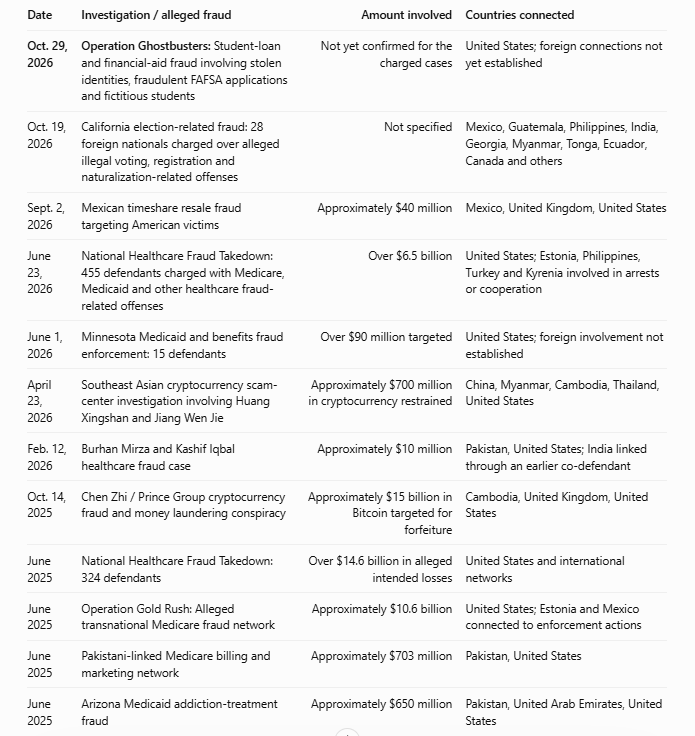
Source: United States Department of Justice. The list is a selection of major announcements, not a complete inventory of every fraud indictment. Some investigations and charges predate the announcement dates. All defendants are presumed innocent unless convicted.
In the most recent instance in St. Cloud, Treasury Secretary Scott Bessent, FBI Director Kash Patel, Centers for Medicare & Medicaid Services Administrator Dr. Mehmet Oz, and other federal officials laid out details of alleged organized fraud networks that sounded like something out of a mafia movie. They also emphasized that these schemes weren’t simply stealing taxpayer dollars; they were diverting resources from vulnerable Americans who genuinely needed assistance.
One of the people we can thank for doing what local officials apparently had no interest in is independent journalist Nick Shirley. His viral investigation put the scale of the Great Minnesota Rip-Off on the national radar, including of course the “Quality Learing Center.”
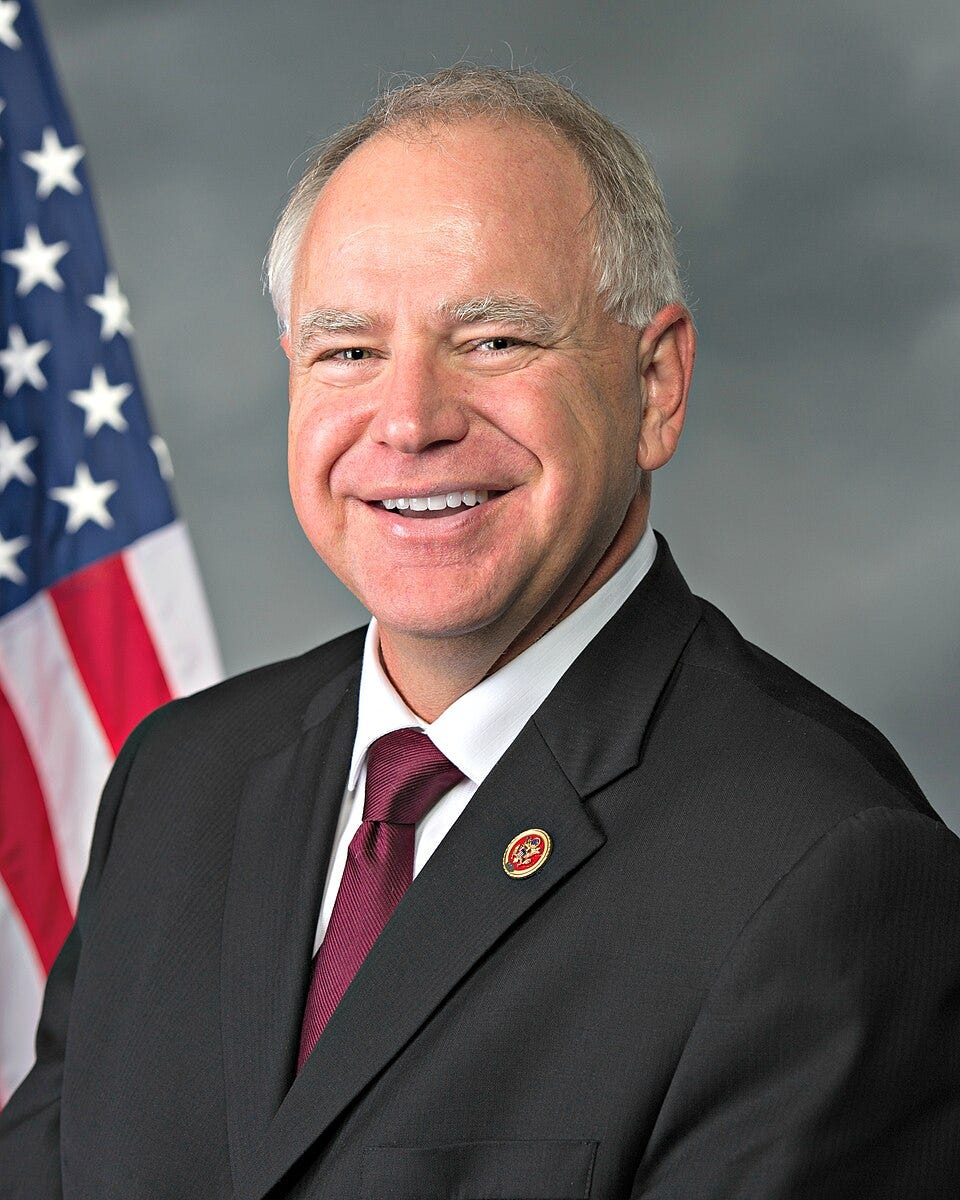
And it had political repercussions. Shortly after Shirley’s videos went viral, Minnesota Governor Tim Walz announced that he would not seek reelection.
Now, Minnesota taxpayers couldn’t have been happy with the revelations and allegations surrounding the Quality Learing Center, either. Will Michelle Tafoya see the benefits? Considering that one of the fraud’s central figures, Salim Said, was just sentenced to 30 years in federal prison and ordered to pay more than $44 million in restitution, the issue remains in the news up there. Will it matter enough?
In the wake of all this, and at the national level, taxpayers have to ask themselves: How could so much fraud happen in one state without elected officials recognizing the scale of the problem? Was it simply incompetence, or was something much worse going on?
And is it going on elsewhere?
Because Shirley later traveled to California, where he investigated allegations there of healthcare, daycare, and hospice fraud. Instead of simply welcoming additional scrutiny, California lawmakers circled the wagons and passed Assembly Bill 2624, which critics have dubbed the “Stop Nick Shirley Act.” Governor Gavin Newsom signed it into law on August 22, 2026, and the expanded confidentiality program is scheduled to begin operating on October 1, 2027.
This legislation—almost certainly headed for a constitutional showdown—seeks to protect the personal information of those involved in immigration and other social welfare services.
Shirley has now sued California officials, arguing that the law violates his First Amendment rights and threatens legitimate investigative reporting. Supporters of the legislation maintain that it protects workers from harassment and threats. California, clearly, has chosen its side.
Let’s recall that Democrats have long championed expansive and expensive social programs and the taxes needed to fund them. But it seems with every week, new revelations of blue-state fraud emerge. So while Dems demand more and more taxpayer money, they’re not just failing to protect the money they’ve already collected—they then lecture Americans about affordability!
America has become the world’s ATM. Fraud schemes, including sophisticated international operations, are targeting American taxpayers on a scale unprecedented in history. Even the U.S. doesn’t have a bottomless wallet. And it will take more than Donald Trump and his administration to address the problem.
Especially under Democrats who will be more interested in investigating the Trump administration than the international players who are robbing us blind.
Nightwatch Live: A Hang With Real Law Enforcement
Friends, join Paul for a conversation with former Director of ICE, Jonathan Fahey, and former Secret Service Supervisor, Rich Staropoli.
In case you missed it live on Saturday, we’re posting it HERE so you can see what three cranky coppers talk about when there’s no filter on…!
So click below for clips, or HERE for the full rant!

Ops Wire Editor: What The Heck Is Happening In Poland?
Poland is in the middle of a constitutional crisis, with competing political factions fighting for control of the country’s highest court. The situation is complicated, with years of legal disputes, rival claims of constitutional authority and accusations of an attempted coup. But beneath all of this is a much more familiar struggle: the fight between national sovereignty and the internationalist movement that has dominated European politics for decades.
It is the same struggle playing out across Europe, particularly in Germany, where conservative nationalist movements are challenging the established political order. It is also very much in line with the movement championed by Donald Trump, which emphasizes national borders, national identity and resistance to international institutions that increasingly influence domestic policy. Think “nationalism” versus “globalism.”
Poland’s conservative nationalists want to preserve their country’s independence, while Prime Minister Donald Tusk and his pro-European Union allies favor closer integration with Brussels. Indeed, many now suspect that powerful European interests, including Germany, are encouraging the current crisis to push for Polish integration.
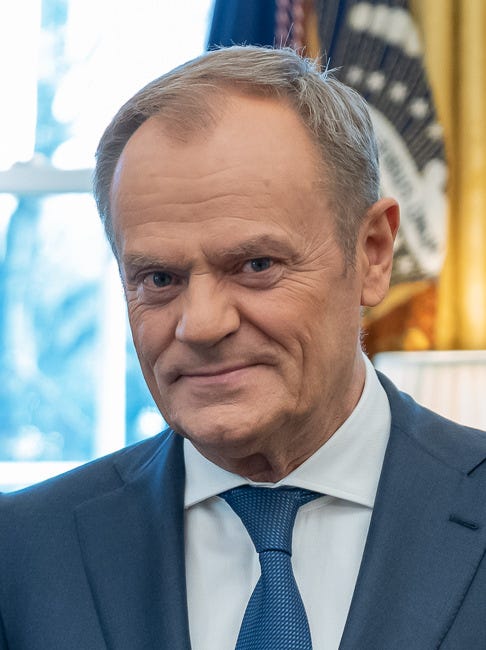
So, who are the players?
On the nationalist side is Polish President Karol Nawrocki, who was endorsed by President Trump, and the conservative Law and Justice party, known as PiS. They favor strict border controls, Polish sovereignty and resistance to expanding EU authority.
On the other side is Prime Minister Donald Tusk, whose pro-EU governing coalition favors closer European integration and has been attempting to reverse judicial changes made when PiS controlled the government.
The immediate fight is over Poland’s Constitutional Tribunal, roughly comparable to America’s Supreme Court.
The dispute dates back to judicial appointments made under PiS, which European authorities accused of undermining judicial independence. Tusk says he is restoring the rule of law, while conservatives accuse him of attempting to seize the judiciary. In sum, Tusk is attempting to remove judges who stand in the way of his desire for a more “europeanized” Poland.
On Friday, October 30, the dispute erupted into a dramatic confrontation when newly appointed judges moved to suspend the Tribunal’s existing leadership (sort of sounds like “packing the court,” no?). Police were deployed, protesters gathered, and President Nawrocki cut short an overseas trip, denouncing what he called a forcible takeover.
But there’s another issue underlying this struggle: money.
Poland still uses its own currency, the zloty, rather than the euro. Article 227 of its Constitution, as examined by the European Central Bank, gives Poland’s central bank monetary powers that conflict with the legal requirements for adopting the euro.
And this is where the constitutional struggle becomes particularly interesting.
Senior PiS leader Przemysław Czarnek, a major nationalist, has explicitly warned that control of the Constitutional Tribunal could pave the way for introducing the euro. His argument is that a politically sympathetic court could uphold legislation transferring monetary authority toward the EU despite the existing constitutional obstacles.
Tusk’s government denies that it is planning to introduce the euro. Indeed, its own finance minister has publicly argued that Poland is better off keeping the zloty. Is he being truthful? Unclear.
At its heart, this is another front in the struggle by the old internationalist world order to retain its power, influence, and relevance, in an era of rampant migration, social disatisfaction, and Trumpian anti-globalism.
So keep an eye on Poland. Because the struggle unfolding there almost certainly presages similar conflicts coming in Germany, France, and yes—the U.S.
And finally…
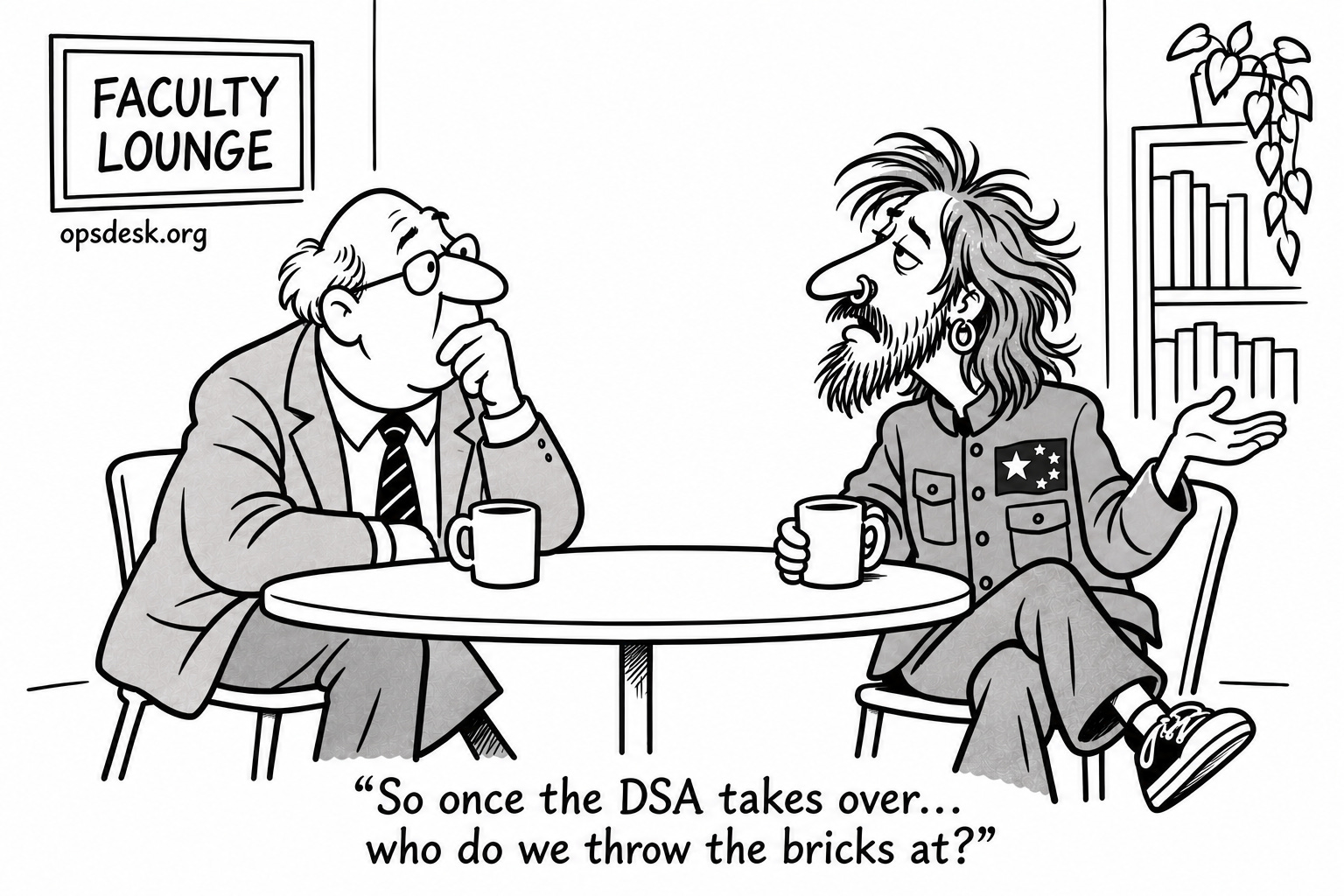
Alas, we may find out after Tuesday, unless sanity turns out in force.

Thank you for your thorough explanations of current facts regarding absolute corruption in American leftist politics. This has to be confronted and stopped.
I especially enjoyed your explanation of current global facts and for explaining the situation in Poland and across the EU.
Globalist are attempting to overthrow society's across the world with their rampant free immigration rules destroying the Wests sovereignty.
Thank you and God bless America 🇺🇸🙏