


So all the signs point to a U.S. attack of some sort on Venezuela. Do we know what we’re getting into?
Generally — we don’t.
Can we avoid doing it again?
Let’s start in Sicily, 1943.
Before U.S. troops ever set foot on the island, American intelligence had a problem: What if the locals didn’t welcome us? What if ports were sabotaged? What if the invasion turned into a mess?
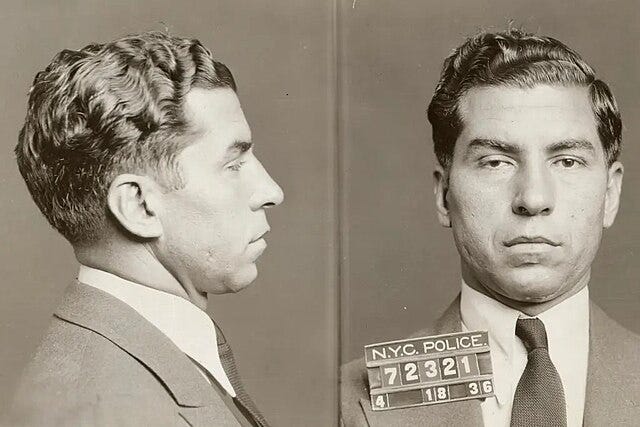
So Washington launched Operation Underworld — and cut a deal with the mafia.
Specifically, with Lucky Luciano, then rotting in a New York prison. The U.S. Navy and Office of Naval Intelligence believed Luciano could “manage” Sicilian organized crime to smooth the invasion. Luciano agreed, passed the word along, and—amazingly—it worked. Luciano also secured the safety of the New York docks, crucial for sending war materiel to Europe. In return, the gangster was eventually freed and deported.
When General George Patton’s forces landed, they weren’t met with resistance. They were greeted as liberators.
Mission accomplished… right?
Not exactly.
Once the fighting stopped, Patton and U.S. occupation officials faced a problem they barely understood: who actually ran Sicily. And in the confusion, they made a catastrophic error. Many imprisoned mafia figures — Mussolini had all-but broken the “honored society” — were released, empowered, and, in some cases, appointed mayors of Sicilian towns, mistaken for legitimate “anti-fascist leaders.”
Historians credit this period with the revival of the Sicilian Mafia, setting Italy back decades.
In other words: America won a war… and accidentally resurrected organized crime.
Keep that pattern in mind.
Fast-forward to Somalia in the early 1990s. What began as a humanitarian mission quickly collided with clan politics Washington didn’t understand. American forces assumed stability could be imposed from the outside. Instead, they walked into a blood feud. The result was the infamous Black Hawk Down incident, American casualties, and a rapid withdrawal.
Somalia remains a failed state to this day, with our stolen federal tax dollars from the Somali community in Minnesota supplying more funding to that nation than Somalia’s entire homegrown GDP.
Then came Iraq.
Toppling Saddam Hussein was the easy part. What followed was a masterclass in wishful thinking. U.S. planners dismantled Iraqi institutions, assuming democracy would magically bloom. Instead, a power vacuum invited sectarian violence, insurgencies, and Iranian influence. Trillions of dollars and thousands of American lives later, Iraq is still highly unstable.
And then of course, Afghanistan.
Twenty years of nation-building. Elections. NGOs. Training missions. New constitutions. And then, within weeks of U.S. withdrawal in 2021, the Taliban were back in charge—as if none of it ever happened.
Oh, and with over $7 billion worth of our most advanced gear.
The U.S. government’s own watchdog later admitted the mission was built on unrealistic assumptions from the start.
Same script. Different country.
Which brings us to Venezuela.
Let’s get one thing straight: the Maduro regime deserves to go. It’s corrupt, authoritarian, and responsible for the collapse of a once-prosperous nation. It’s also perhaps the main narco transshipment point in the Caribbean. So supporting regime change diplomatically and economically makes sense.
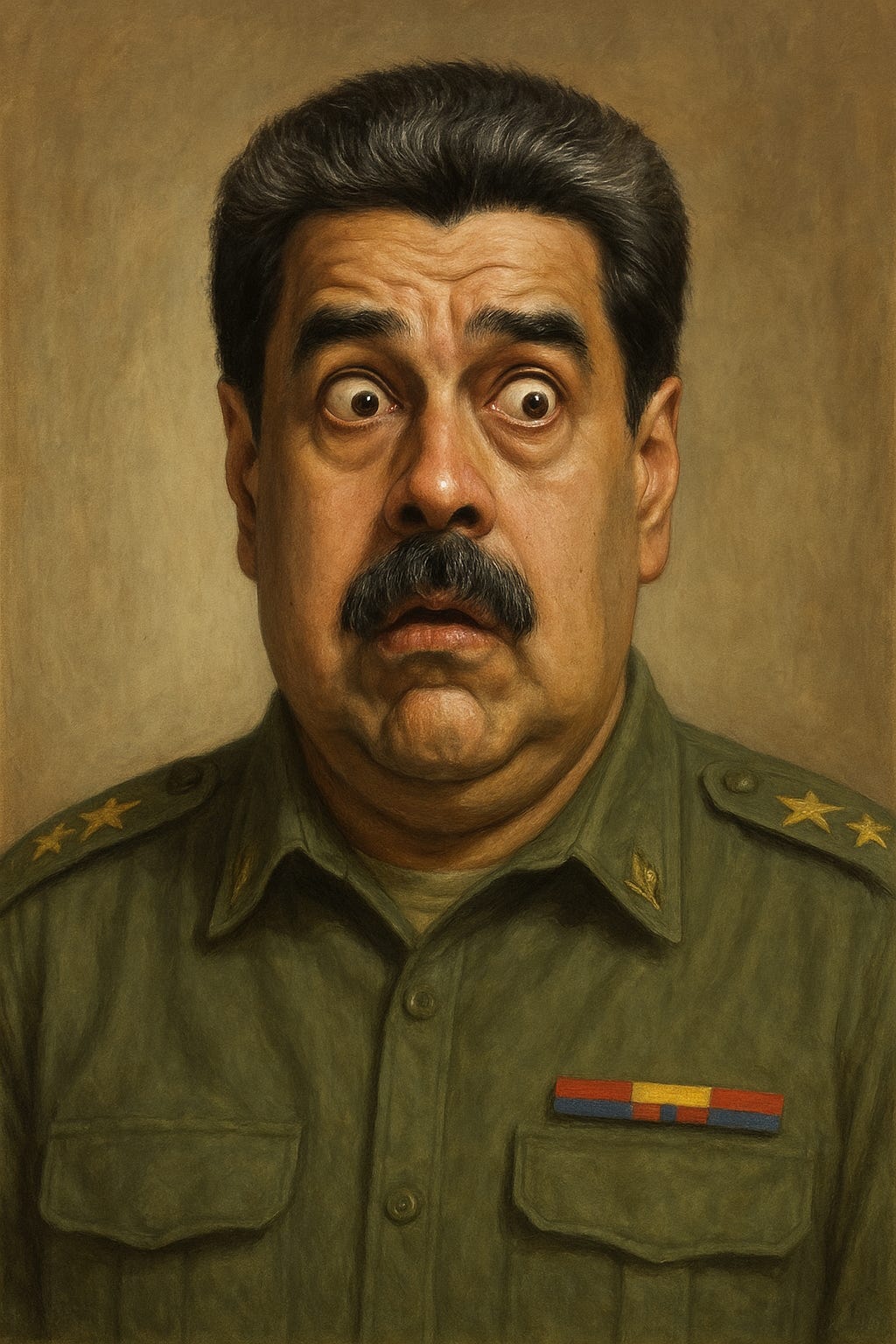
What doesn’t make sense is pretending America can—or should—rebuild Venezuela afterward.
We cannot vet every opposition faction. We cannot distinguish future democrats from future strongmen. We cannot know which “freedom fighters” become tomorrow’s cartel allies or authoritarian rulers once power shifts.
And we absolutely should not promise American citizenship or mass resettlement in America in return for sectarian support in-country.
We’ve already seen how that movie ends.
From Somalia and Afghanistan, the United States has absorbed tens of thousands of migrants who often struggle to assimilate, strain (or steal) public benefits, and—in the worst cases—pose serious security risks.
Good intentions don’t override hard realities. And generosity, when paired with naïveté, has domestic consequences.
This isn’t an argument for isolationism. It’s an argument for humility.
America is very good at destroying regimes. It is not so good at reshaping foreign societies in its own image — no nation ever really is. Sicily taught us that empowering “temporary allies” creates permanent problems. Somalia, Iraq, and Afghanistan confirmed that nation-building works mostly on PowerPoint slides inside the Beltway.
Support Venezuelan change. Apply pressure. Use diplomacy. Rally regional allies.
But don’t assume we understand a country better than the people who live there—and then act shocked when reality reminds us otherwise.
All we ever get is blame — and broke.
Chris Writes: Atta Boy FBI
With the arrest of Brian Cole Jr. this week, the FBI pulled off something it hasn’t done in a while: it reminded Americans why it was once considered the nation’s premier investigative agency.
Public trust in the Bureau has been fading for years—and not without cause. From the systemic failures laid bare by the 9/11 Commission to more recent bouts of political drift and self-inflicted wounds, the FBI lost much of its old mystique.
Which is exactly why this case matters.
This arrest was a real investigative win—earned the old-fashioned way, through grind, persistence, and organization. Credit where it’s due. Solving a politically radioactive, years-old domestic terrorism case is no small feat, and the agents and analysts who worked it deserve recognition.
I know how cases like this go.
Back in the NYPD’s Major Case Squad, we handled large-scale investigations—terrorism, cop shootings, multiple homicides. A small core of investigators chased the critical leads, while dozens—sometimes hundreds—of detectives handled canvassing, video review, and tip follow-ups.
That work is exhausting and mostly dull. Nobody dreams of spending days locked in a room watching endless hours of grainy video. But that’s often where the break comes from. Someone has to do it—and do it right.
That appears to be exactly what happened here.
This case shows the FBI can still put its head down, shelve the egos, and solve the big one when it chooses to. That’s worth applauding.
But the success of this bomb case also throws into sharp relief a leadership failure under former Director Christopher Wray.
This was as serious an incident as it gets. Functional pipe bombs were planted at both political parties’ headquarters. One device was placed within feet of then–Vice President-elect Kamala Harris. Had either bomb detonated—especially amid the chaos of January 6th—the consequences could have been catastrophic.
Instead of treating the bombings as the priority, the Bureau poured the bulk of its resources into the broader Capitol investigation. That probe ultimately involved more than 5,000 agents and analysts, making it the largest in FBI history.
Yes, the Capitol riot warranted investigation. Assaulting police officers and disrupting the electoral process are serious crimes. The Bureau was right to pursue violent offenders, and blanket pardons were a mistake—some participants absolutely intended real harm.
But the FBI went far beyond that mission.
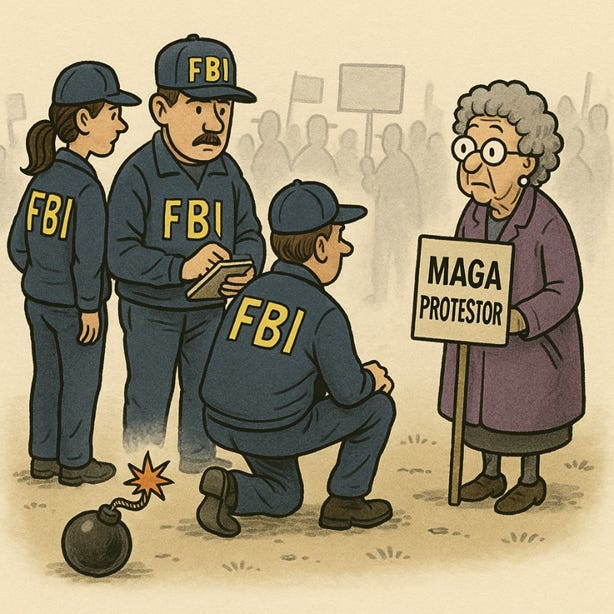
Rather than focusing narrowly on violent actors, the Bureau tried to identify everyone: people on the steps, people ushered inside by Capitol Police, people who believed—rightly or wrongly—they were lawfully protesting. Some crossed lines, no doubt. But federal resources are finite, and federal power should be reserved for the most serious crimes.
It’s hard to argue that any conduct inside the Capitol that day matched the severity of planting functional bombs meant to kill elected officials.
No deadly weapons were used inside the building. No elected officials were killed or injured. Meanwhile, authorities later found that Cole allegedly possessed additional bomb-making materials at his residence.
That reality makes the resource allocation even harder to defend.
While agents chased cases like Pamela Hemphill, a 68-year-old Boise cancer patient sentenced to 60 days for demonstrating, a legitimate bomb-maker remained free. In an NYPD precinct, a desk sergeant would’ve tossed that arrest right back and told the cop to find a real collar. He’d have been right.
To make matters worse, CNN cited anonymous law-enforcement sources suggesting the bombs may have been a diversion tied to Trump—a theory that treated an attempted mass-casualty attack as a political subplot.
Politics seemed to matter more than public safety. That mindset cost time—and it easily could have cost lives.
Old-Guard Politics at the Hoover Building
That’s why it was refreshing to hear Kash Patel talk plainly about arrest statistics this week. Arrests are up—and despite what criminal-justice-reform activists insist, that’s often a sign things are moving in the right direction.
I can’t remember an FBI Director ever emphasizing arrest numbers. Coming from the NYPD—where everything was measured—that silence spoke volumes about what used to matter inside the Hoover Building. Hint: it wasn’t always public safety.
Patel is clearly pushing a different approach, and predictably, the knives came out immediately.
Anonymous FBI sources leaked a story claiming Patel had a “meltdown” over a missing raid jacket on an FBI plane taking him to the scene of the Charlie Kirk homicide—a case that, not coincidentally, resulted in a fast arrest.
Patel denied it. Even if it happened, the outrage is laughable. If you’re staffing an FBI aircraft—especially one carrying the Director—you damn well make sure basic operational gear is onboard. If that had been my responsibility, I’d have had six jackets and a backup suit ready just in case leadership decided to show up.
The same anonymous critics labeled Patel and Dan Bongino “clowns,” accused them of chasing media attention, and claimed they’re too focused on résumé-building.
That one nearly made me spit out my coffee. From my experience, media spin and career positioning have long been favorite pastimes inside the Bureau.
More troubling is the allegation that Patel misused Bureau resources to protect or transport his girlfriend, Alexis Wilkins. If true, that deserves scrutiny. FBI history shows misuse of resources ends poorly for Directors.
That said, given the volume of leaks and internal hostility, skepticism is warranted. The first question should be simple: is Wilkins receiving credible threats? Given the constant vitriol aimed at Patel, that wouldn’t surprise anyone.
Still, Patel would be wise to stay strictly within the lines. FBI resources are taxpayer dollars, and his critics are eager for an excuse. Don’t give them one.
Bottom Line
From a former law-enforcement perspective, Kash and Dan appear to be steering the FBI back toward actual policing: fewer press theatrics, more cases, more arrests. That’s a shift most Americans can support.
And while I’ve never been blind to the Bureau’s flaws, I’ve worked alongside many dedicated, professional agents who deserve real respect. The FBI is full of them. When they do the job right—as they clearly did here—that work should be acknowledged.
More collars. Less politics.
That’s a philosophy the FBI could use again.
This Week’s Podcast: Chasing the Case With The FBI’s Jim Clemente
Join us for another installment in our “Chasing the Case” series, this time with retired FBI Special Agent Jim Clemente.
Jim had one heck of a career — but when we asked him the one case that stood out, he went right to this one: A Russian organized crime extortion racket in New York’s Diamond District. And wow, did it go in an unexpected direction.
Jim was undercover for the case, dressed as — wait for it — an Hasidim. Not an easy task, and one that took some schooling for someone who isn’t even Jewish (we have to admit — the photo in the podcast is pretty convincing…).
So join us for a fascinating “Chasing the Case” with a great agent — former FBI undercover Jim Clemente!
(Click below for a Preview… and HERE for the full thing).
Mamdani vs. Reality: NYC Chooses to Ignore Reality
New York City mayor-elect Zohran Mamdani says he will not clear homeless encampments. As a matter of law, that’s his choice—and that’s exactly the point.
Because the Supreme Court just ruled that cities are allowed to do the opposite.
In Grants Pass v. Johnson (2024), the Court held that municipalities may enforce bans on camping in public spaces without violating the Eighth Amendment—even if shelter beds are limited. The justices rejected the idea that clearing encampments constitutes “cruel and unusual punishment.”
This case didn’t come from conservative states. It came from left-leaning Western cities—places like Grants Pass, Portland, San Francisco, and cities across California—after years of letting encampments metastasize in the name of compassion. Those cities learned the hard way that refusing to enforce basic public-space rules didn’t reduce homelessness. It cemented it, overwhelmed services, and destroyed parks, sidewalks, and transit corridors.
Eventually, they asked the Court for clarity. They got it. And many of them are now reversing course—clearing camps, enforcing ordinances, and reclaiming public space.
Now comes New York.
Mamdani’s position doesn’t defy the Constitution. It defies common sense.
At the exact moment when progressive cities elsewhere are admitting the old approach failed, New York’s incoming mayor — himself the product of an extremely privileged background — is choosing to relive the failed experiment of “no rules homelessness.” He’s already showing his inexperience, pretending the West Coast didn’t already run the trial, rack up the costs, and publish the results.
This isn’t moral bravery. It’s policy naïveté.
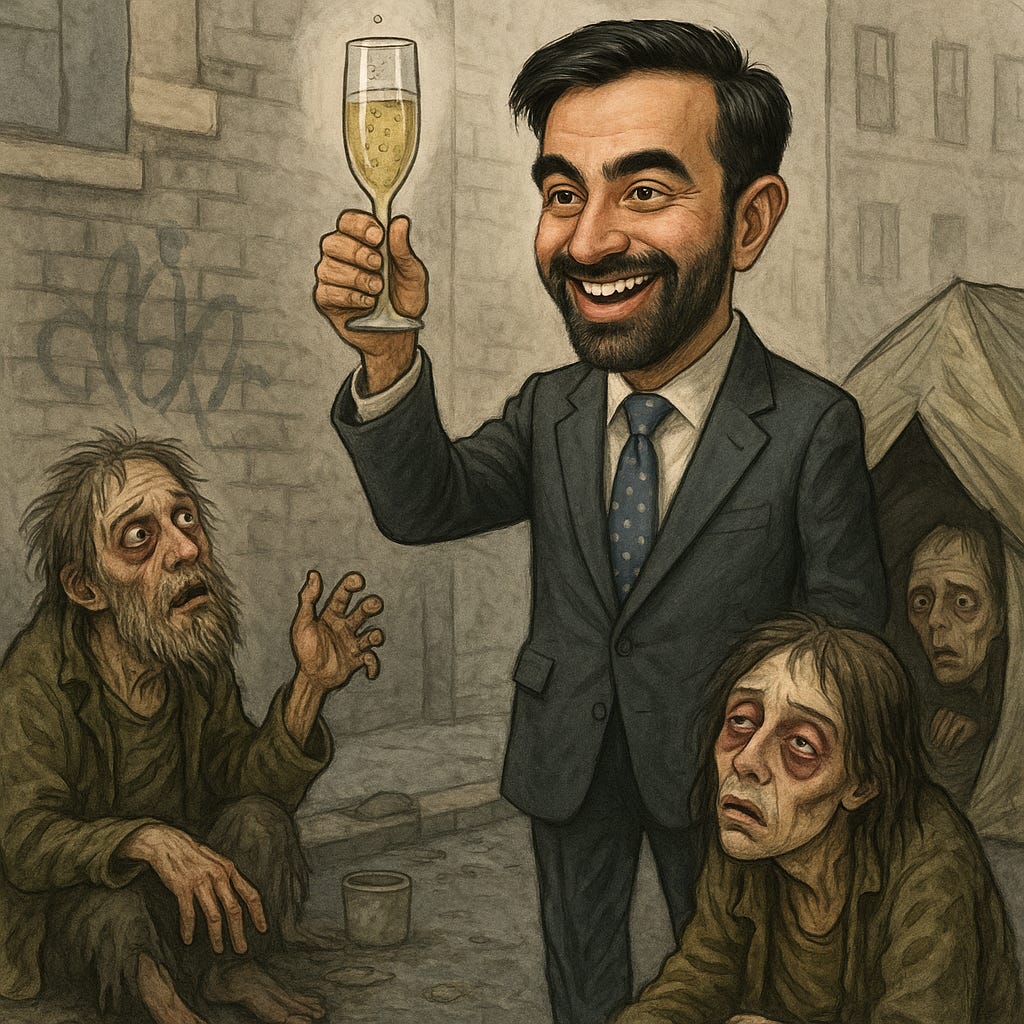
Public spaces aren’t meant to become permanent campsites. Parks aren’t housing policy. Sidewalks aren’t social-services infrastructure.
The Supreme Court handed cities a gift — the legal authority to act on behalf of residents and to defy the (ever-growing) homeless-industrial complex. Mamdani is choosing not to—while framing inaction as virtue.
That’s not illegal.
It’s naive, foolish… and his first political mistake.
There will be more.
The Tunnel-to-Towers Gala
The Tunnel-to-Towers Gala held this year in the Times Square Marriott was a great success — and a reminder of why this organization is so crucial. Special thanks to the great Frank Siller and his team for having us there.
Here’s a shot of Frank delivering his remarks, which came after a moving moment when the young daughter of slain NYPD Officer Wenjian Liu, Angelina, began the event by singing “God Bless America.” What a moment.
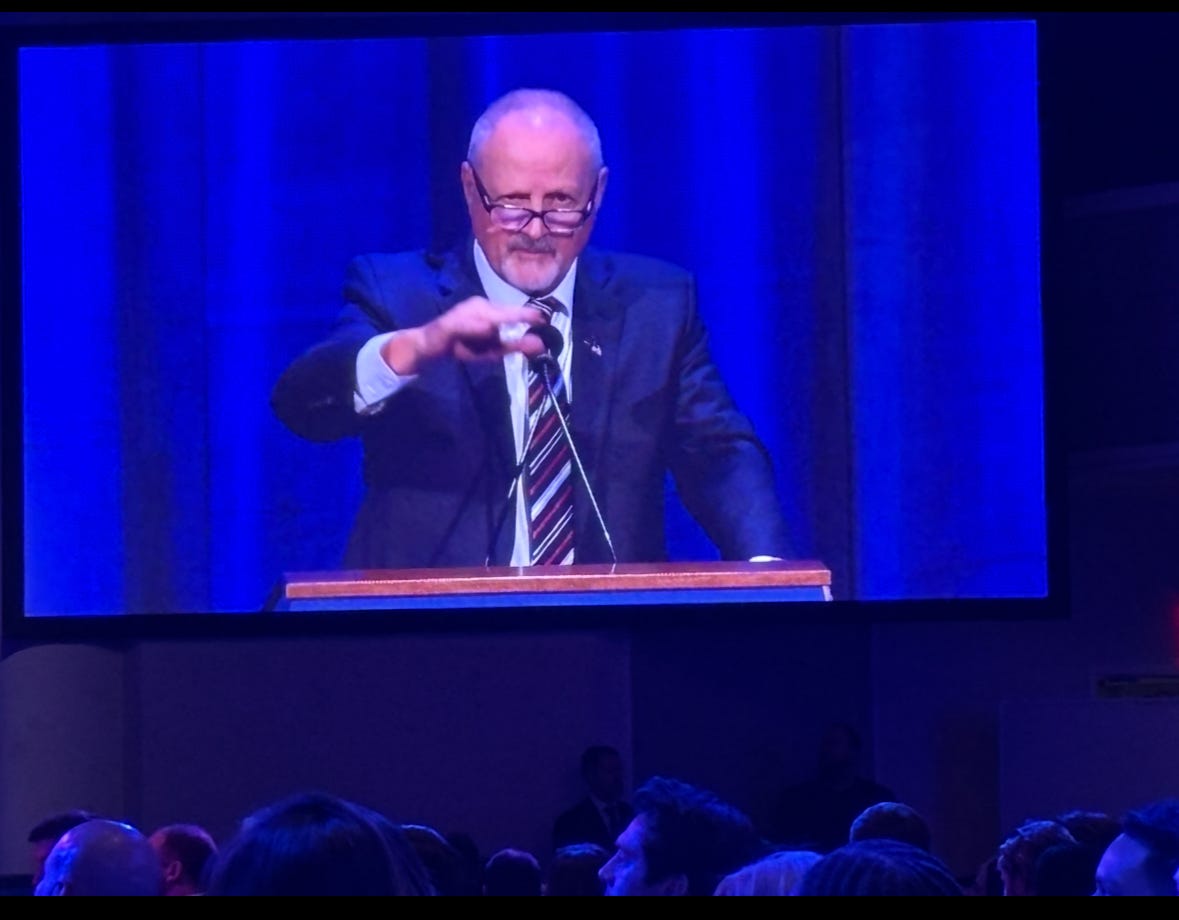
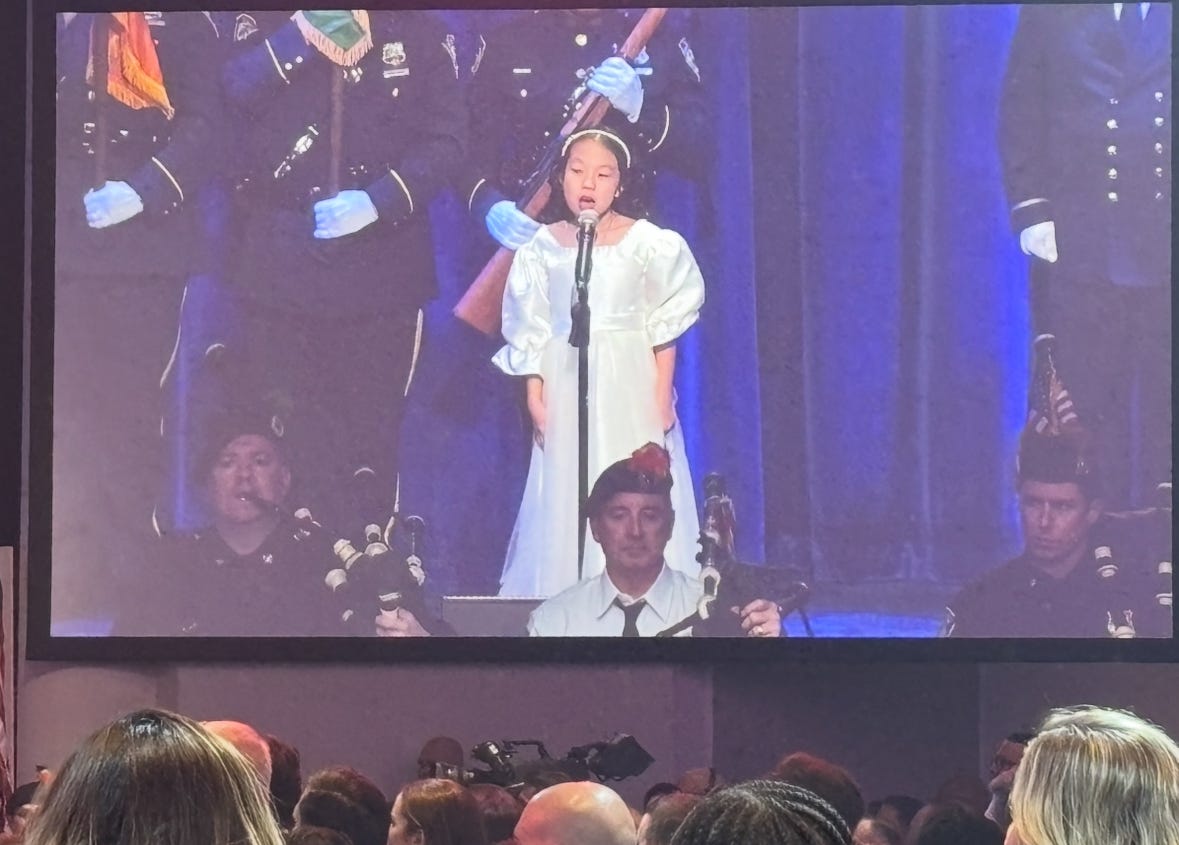
If you can, please consider donating to this fine organization by clicking on the image below. This is a charity you can trust. God bless them.

And Finally….
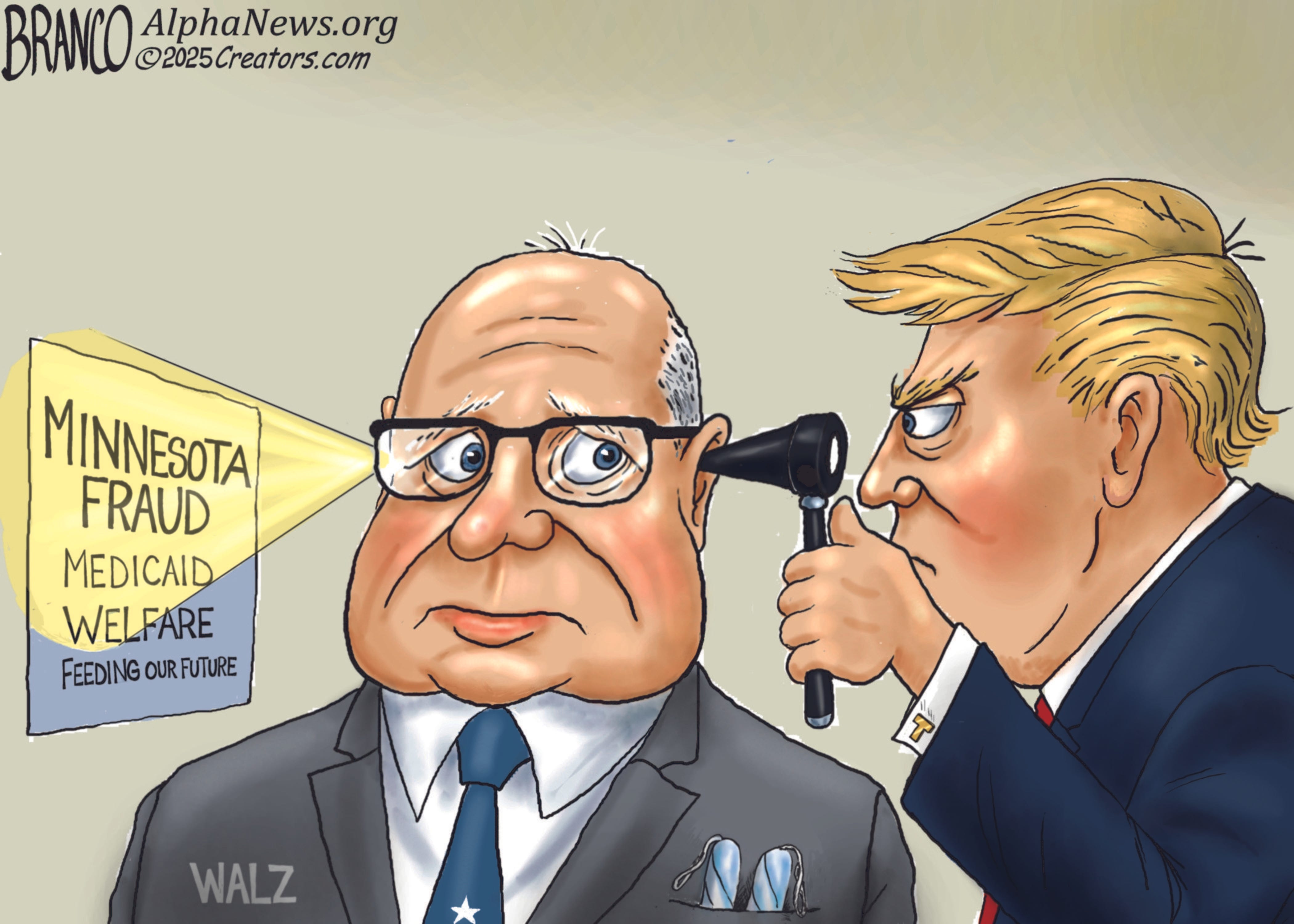
No matter what Governor Jazz Hands pretends… this one isn’t going away.
But thankfully: his national-level career is.
Maybe he can become Vice President of Somalia.

So true, and thanks for reminding us.
Phenomenal job by Paul Mauro in reporting on the Brown University active shooter and MIT homicide investigations. Makes me proud to say I used to work for him while at Intelligence Division. Now that the perp ate his gun I can't wait to read about the case once all the pieces of the puzzle are put in place.